How matching helped one coastal homeowner prepare for storm season
This is a typical composite story based on the kind of coastal homeowner who wanted to get ready for storm season but did not know where to start. It shows how free matching can make the search simpler while the homeowner still compares options, checks credentials, and chooses who to hire.
The homeowner's situation before storm season
The homeowner in this story lived in an older coastal house with a raised floor, an attached garage, and windows that had seen many years of salt air and strong winter storms. The home had done fine through normal weather, but each year the owner worried about heavy rain, stronger wind, and water getting in around older openings.
What made the stress worse was uncertainty. The homeowner was not asking, "Will this house definitely survive a major storm?" They were asking more practical questions: where are the weak points, which upgrades matter most first, and how much might the work cost before signing anything.
Like many people, this homeowner had heard terms such as impact-rated windows, roof tie-downs, and garage door bracing, but did not know which items were relevant for this specific home. They wanted someone local to look at the property and explain the options in plain language, without pressure.

What made finding the right contractor difficult
The hard part was not just finding a contractor. It was finding the right kind of contractor for storm-related exterior and structural hardening work, then figuring out who actually worked in that neighborhood, who was licensed, and who would show up to assess the house.
Online searching brought up a mix of companies, ads, and general home improvement services. Some seemed focused on windows only. Others talked mostly about roofing. A few had very little information about license status, insurance, or whether they handled permit-related work through the local building department when required.
The homeowner also worried about wasting time. They did not want to call ten different businesses, repeat the same details, and still end up confused about scope. As a non-expert, they wanted a shorter list of local contractors already screened for basic business qualifications, then enough space to compare on their own.
How free matching narrowed the options
Using get matched, free, the homeowner submitted basic details about the house, location, and the storm concerns they wanted to discuss. BedrockMatch did not tell them what retrofit the home needed and did not choose a contractor for them. It simply introduced participating local contractors that appeared to fit the job type.
That changed the process from an open-ended search into a manageable comparison. Instead of chasing dozens of leads, the homeowner spoke with a small number of contractors willing to review storm-prep upgrades for an older coastal home.
What BedrockMatch did: introduced vetted local contractors for the homeowner to contact, compare, and choose from. The homeowner kept full control over who to meet, what bids to request, and whether to hire anyone at all.
For this owner, the biggest benefit was clarity. They could ask the same questions to each contractor and listen for differences in scope, timeline, and communication style. They also read more stories at /stories/ to understand how other homeowners had approached similar decisions.
What the contractor looked at during the visit
During the site visit, the contractor the homeowner eventually preferred did not make dramatic promises. Instead, they walked the exterior and key interior access points and explained what they could inspect visually, and what might require a more detailed evaluation or another specialist.
The discussion focused on common storm-vulnerability areas such as:
- the roof covering and visible edge conditions
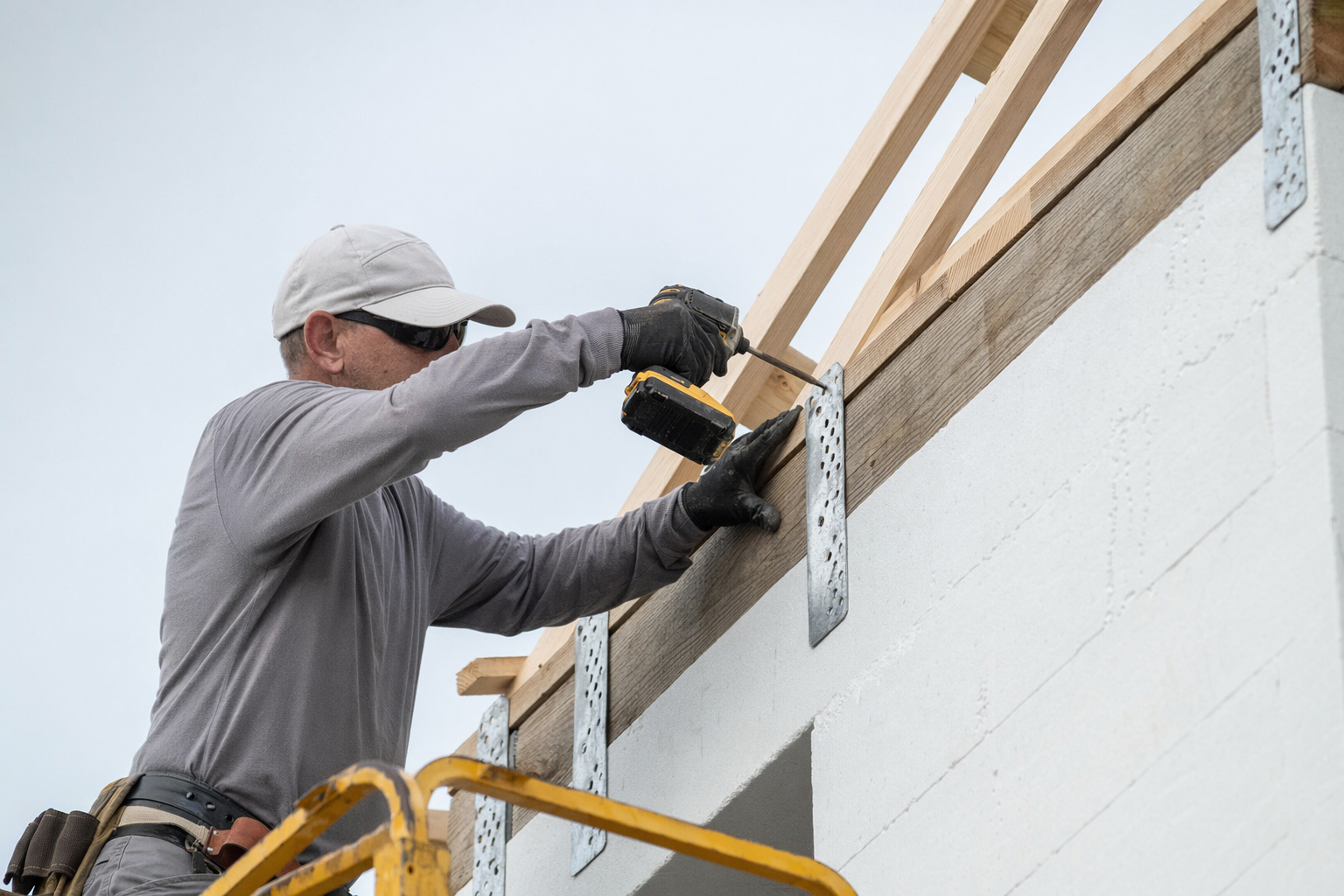
- connections between roof and wall framing where accessible
- the garage door and whether it appeared vulnerable to wind pressure
- older windows and exterior doors
- signs of water intrusion near openings or lower walls
- drainage, grading, and areas where wind-driven rain might enter
The contractor also explained that some improvements are about reducing common failure points, not eliminating all risk. If the homeowner wanted a formal engineering opinion on structural capacity or a specific design recommendation, the contractor said a licensed engineer could assess that separately. That helped the owner understand the limits of a contractor walkthrough while still getting useful, practical information.
The upgrade options and typical cost ranges discussed
After the visit, the conversation turned to phased options. The contractor did not say every item was necessary. Instead, they outlined what could be done now, what could wait, and what might make sense only if the homeowner was already planning related work.
Typical illustrative ranges discussed included:
- Garage door reinforcement or replacement: about $1,500-$6,000+ depending on size, wind-rated product choice, and installation details.
- Selected window or exterior door upgrades: about $800-$2,500+ per opening for higher-performance replacements, depending on size, materials, and finish.
- Roof-related fastening or reroof-related upgrades: costs varied widely and could range from a few thousand dollars to much more if tied to larger roofing work.
- Water-management improvements such as flashing, sealing, or drainage corrections: often hundreds to several thousand dollars, depending on conditions.
The homeowner appreciated that the contractor separated lower-cost maintenance-type items from larger capital upgrades. Instead of feeling pushed into a full package, they could build a plan around budget and urgency. The contractor also noted that permit requirements, product choices, and final pricing depend on the home, local rules, and the exact scope confirmed in writing.
How the homeowner compared bids and checked credentials
The homeowner asked for written proposals from more than one contractor. That made it easier to compare not just price, but also what was actually included. One bid looked cheaper at first, but it left out haul-away, finish work, and some product details. Another was more complete and easier to understand.
The homeowner used a simple checklist:
- confirm the contractor's license status directly with the state licensing board
- ask for proof of bond and insurance
- make sure the proposal clearly listed materials, model or performance level if relevant, labor, and cleanup
- ask who would pull permits if needed
- confirm payment schedule and estimated timeline in writing
This step gave the owner confidence. They were not choosing the lowest number on a page. They were choosing the clearest scope from a contractor whose paperwork checked out. That is also why many homeowners compare a few stories before deciding, including another retrofit story, then move forward only when the written details make sense.
What changed after the work was completed
The final project in this story was not a whole-house rebuild. It was a practical package the homeowner felt they could afford: a stronger garage-door solution, replacement of a few older openings in the most exposed areas, and targeted water-entry improvements around vulnerable spots.
The total cost landed in a typical illustrative range of roughly $8,000-$22,000, depending on product selections and the final scope. For this homeowner, the value was not a guaranteed outcome or a promise of damage prevention. It was feeling better prepared, understanding the home's more obvious weak points, and having clearer documentation of the work that was done.
Afterward, the homeowner said storm season felt less confusing. They still knew severe weather can damage any house, and no contractor could honestly promise otherwise. But they had a written scope, completed upgrades they chose themselves, and a local contractor relationship they could call on for future phases if needed.
Always verify a contractor's license, bond, and insurance, and confirm the scope and price in writing before any work starts.