The common weak points in a home — and the work that strengthens each one. Which ones apply depends on your home; a licensed contractor confirms after an on-site look.
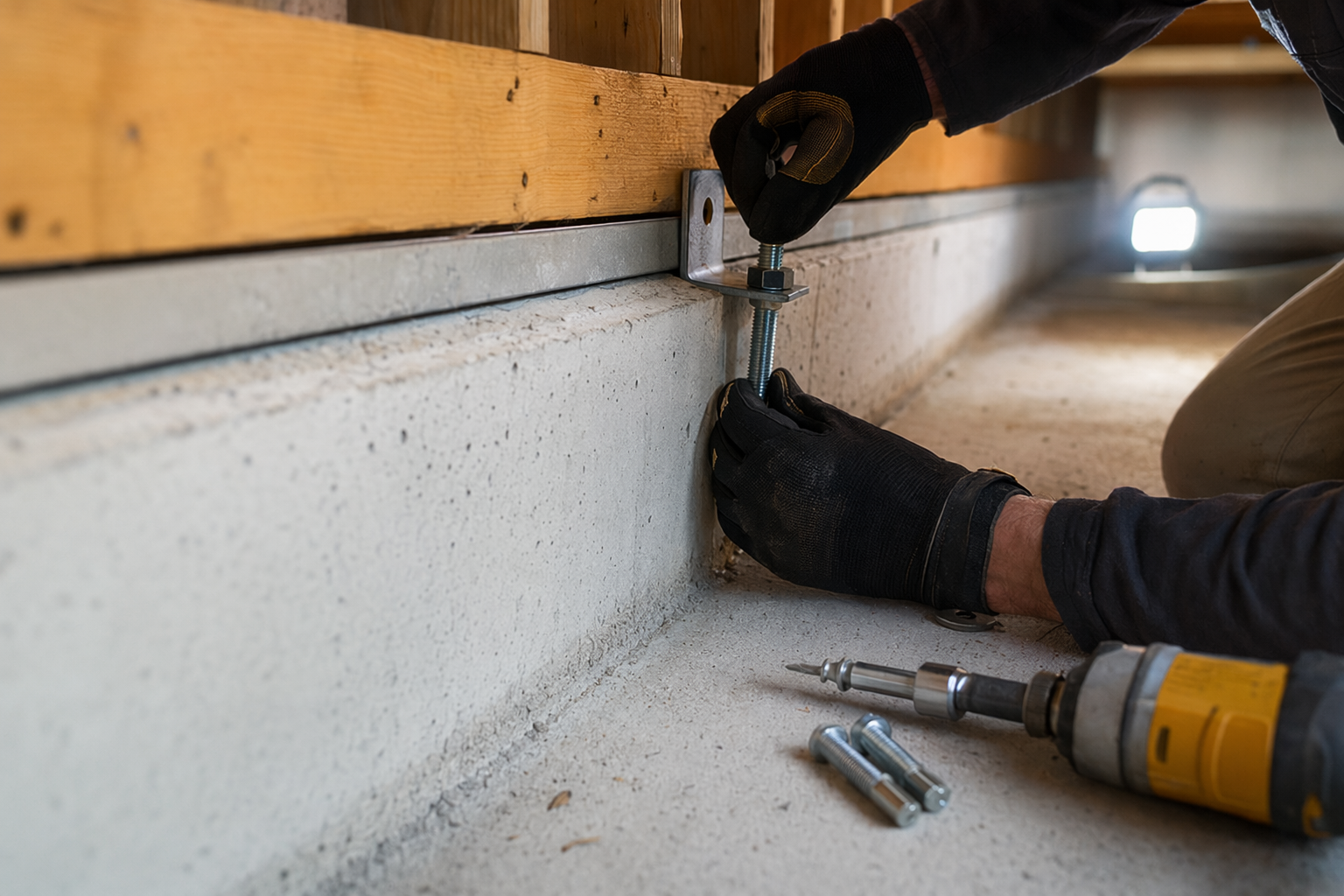
Foundation bolting
What it does Anchors the wooden house frame to its concrete foundation with anchor bolts so it can't slide off in a quake.
Which homes need it Older homes on a raised (crawl-space) foundation that were built before modern bolting was required.
Cripple-wall bracing
What it does Adds plywood bracing to the short stud walls between the foundation and the first floor so they don't buckle.
Which homes need it Houses with a crawl space and unbraced 'cripple' walls — a very common weak point in older homes.
Soft-story strengthening
What it does Reinforces a weak ground level — usually an open garage or carport under living space — with a steel frame.
Which homes need it Homes and small apartment buildings with a tuck-under garage or large open first floor.
Hurricane straps & roof tie-downs
What it does Metal connectors tie the roof to the walls and the walls to the foundation so high winds can't peel them off.
Which homes need it Homes in hurricane, high-wind, and severe-storm zones, especially older wood-frame houses.
Chimney & water-heater bracing
What it does Braces an unreinforced masonry chimney and straps the water heater so they don't topple or rupture a gas line.
Which homes need it Almost any older home — these are low-cost fixes that prevent fire, gas leaks, and falling-debris injuries.
Garage & wall reinforcement
What it does Adds shear panels and hold-downs at weak wall lines so the structure resists side-to-side shaking and wind.
Which homes need it Homes with large openings, wide windows, or additions that left a wall line under-supported.