Cripple Wall Bracing for Older Homes
If your home has a crawl space and short wood-framed walls between the foundation and the floor, a contractor may call those cripple walls. Bracing and anchoring work is one common seismic upgrade for some older homes, but whether it applies to your house depends on an on-site assessment by a licensed professional.
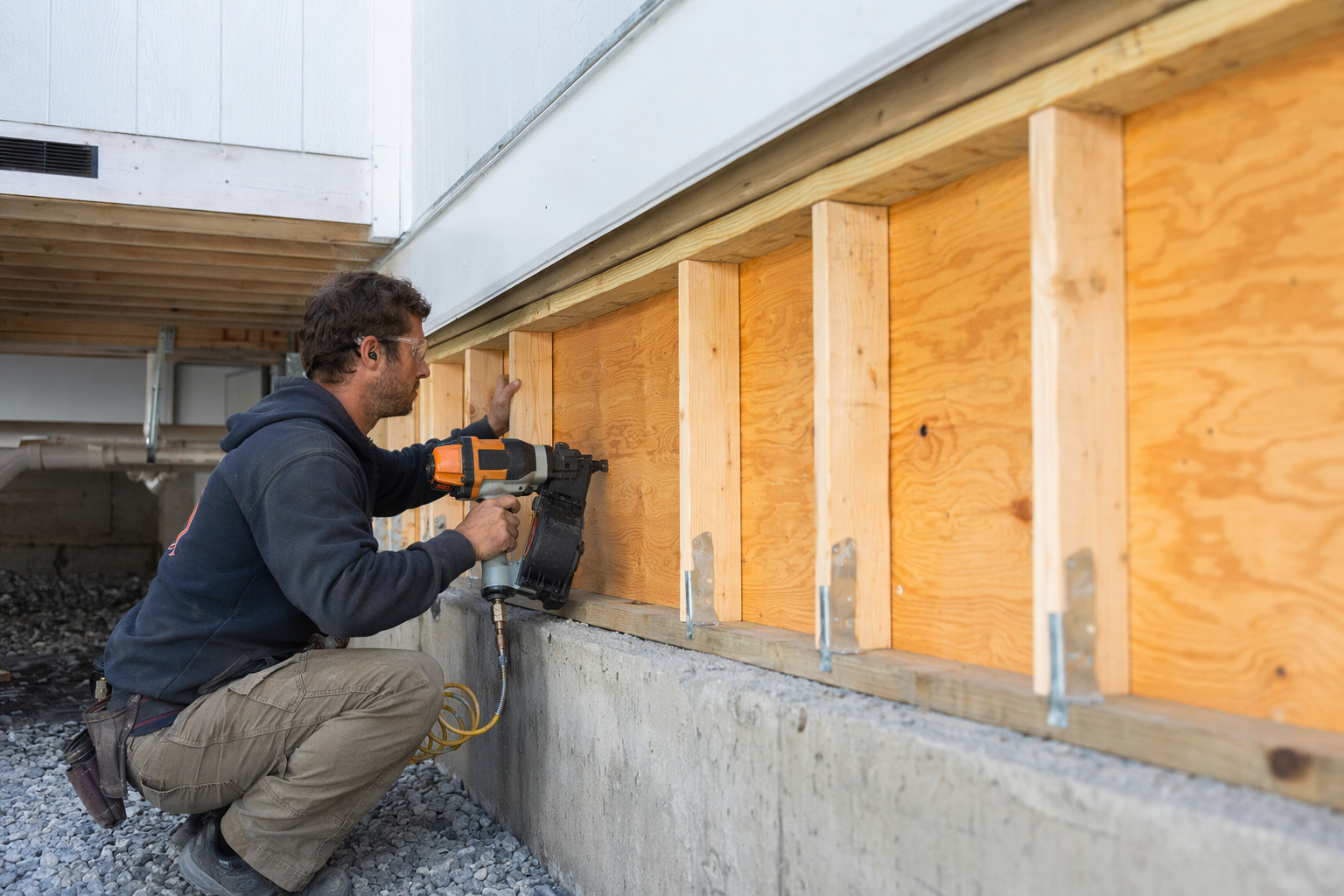
What cripple wall bracing is and why homeowners ask about it
A cripple wall is a short wall in the crawl space, usually between the concrete foundation and the first floor of the home. In some older houses, these walls may have little or no plywood bracing, and the wood framing may not be firmly connected to the foundation. During earthquake shaking, that area can be a weak point.
When homeowners ask about cripple wall bracing, they are usually trying to understand whether their house may benefit from adding plywood panels, connectors, and better anchorage to the foundation. The goal is typically to strengthen the connection between the home and the base below it, but only a licensed contractor or engineer can confirm what is appropriate after seeing the home in person.
This type of work is often discussed along with other seismic upgrades such as foundation anchoring or, in different building types, soft-story retrofit. If you are not sure what kind of retrofit your home may need, you can get matched, free to local contractors for an initial conversation.

Homes that may be more likely to have cripple walls
Homes more likely to have cripple walls are often older single-family houses with raised foundations and crawl spaces. In many neighborhoods, these are wood-frame homes built decades ago, especially before modern seismic details became common. Not every raised-foundation house has the same condition, and not every crawl space needs the same work.
A contractor may look more closely if your home has some of these traits:
- a crawl space under the first floor
- short stud walls between the foundation and floor framing
- older anchor bolts, few bolts, or hard-to-see connections
- sloping floors, out-of-square door frames, or signs of past movement
- unfinished crawl-space framing with little visible panel bracing
These signs do not prove that your house needs a specific retrofit. They simply help explain why a homeowner may want a professional inspection. If your home is in storm country rather than earthquake country, contractors may also talk about other upgrades such as hurricane retrofit, since the right scope depends on the local hazard and the building itself.
What a contractor may inspect in the crawl space
During a site visit, a contractor will usually inspect the crawl space and foundation area to see how the house is framed and how it is attached. They may check the height and condition of the cripple walls, the size and spacing of framing members, the condition of the sill plate, and whether there are existing anchor bolts or connectors.
They may also look for moisture, rot, insect damage, past repairs, plumbing or ductwork conflicts, and whether there is enough access to work safely. These practical conditions can affect both the recommended scope and the cost. If the house has unusual geometry, additions, masonry issues, or signs of significant movement, a contractor may suggest that you ask a licensed structural engineer for plans or further evaluation.
Common items a contractor may document include:
- foundation type and visible condition
- wall height and framing layout
- current anchorage to the foundation
- existing bracing, if any
- access, clearance, and obstructions in the crawl space
This inspection is important because two homes on the same street can have very different conditions under the floor.
Common bracing and anchorage work you may hear discussed
If a contractor decides this type of retrofit may fit your home, you may hear terms like plywood shear panels, anchor bolts, mudsill anchorage, blocking, hold-downs, framing repairs, and hardware connectors. In simple terms, the work often focuses on strengthening the short crawl-space walls and improving how the wood framing is attached to the concrete foundation.
A typical scope may include adding structural plywood to selected cripple wall sections, fastening it with a specific nailing pattern, and improving the anchorage at the base. Some homes may also need repairs to damaged wood before bracing can be installed. The exact materials and layout depend on the existing framing, access, and local permit requirements.
Important point: this page is general information, not engineering advice. A licensed contractor can explain what they propose for your home, and if needed, a licensed engineer can provide design details. You can also browse related retrofit topics on our services page if you are comparing different types of work.
What the job can cost and what affects price
For a straightforward older home with accessible crawl space conditions, homeowners may hear rough price ranges starting around a few thousand dollars. A common illustrative range for cripple wall bracing and related anchorage work is about $3,000 to $10,000+, but costs can go higher if access is tight, the home is large, repairs are needed, or engineering and permit requirements are more involved. These are typical ranges only, not a quote.
Price often depends on:
- size of the home and length of walls being braced
- crawl space height and ease of access
- amount of new anchorage and hardware needed
- wood rot, insect damage, or other repairs found on site
- permit fees, engineering, and local labor costs
Some homeowners in California check whether they qualify for the Earthquake Brace + Bolt grant, which may provide up to about $3,000 toward certain qualifying seismic retrofit work. In some areas, FEMA-related hazard-mitigation funding may also be worth asking about. These programs are not guaranteed, and eligibility rules can change, so it is best to check whether you qualify before counting on assistance.
Permits, timing, and how the work is usually scheduled
Many cripple wall bracing projects require a permit from the local building department, and some may also require plans or engineering depending on the home and jurisdiction. Your contractor should explain whether permitting is part of their proposal, what inspections may be needed, and whether the quoted price includes permit handling. Ask for that scope in writing.
The actual construction time for a simple project may be fairly short, sometimes a day or two of field work, but the full timeline can be longer because of scheduling, permit review, inspections, and material lead times. Homes with difficult crawl-space access or repair issues can take longer.
A common sequence looks like this:
- site visit and proposal
- permit or plan preparation, if required
- scheduling and prep
- installation in the crawl space
- final inspection or closeout, if required
If you are planning other work, ask whether it makes sense to coordinate it at the same time. For example, plumbing repairs, drainage corrections, or moisture work in the crawl space may affect access and sequencing.
How to compare local retrofit contractors
When you compare contractors, focus on clarity and documentation, not just the lowest number. Ask each company to explain what they found in the crawl space, what work they are proposing, what is included, what is excluded, and whether they expect engineering, permits, or wood repair costs beyond the base price. Good bids are specific and easy to compare.
Before you hire anyone, verify the contractor's license, bond, and insurance yourself, and confirm the scope and price in writing. You should also ask who will pull permits, who will do the work, and what cleanup or patching is included when the job is done. The homeowner keeps control over who to hire and what proposal to accept.
Helpful questions to ask:
- What did you see under my house that led to this recommendation?
- Does this price include permit fees, inspections, and hardware?
- Are repairs for rot or termite damage included or separate?
- Do you expect an engineer to be needed for my home?
- Can you provide a written scope with payment terms?
If you want to compare local options without spending hours searching, you can get matched, free with vetted contractors in your area.
Always verify a contractor's license, bond, and insurance, and confirm the scope and price in writing before any work starts.