Hurricane Retrofit Work for Existing Homes
Hurricane retrofit work can strengthen parts of an existing home that are more likely to be damaged by high wind and wind-driven rain. The right scope depends on the home’s age, design, roof shape, location, and condition, so a licensed contractor or engineer needs to assess the property on site.
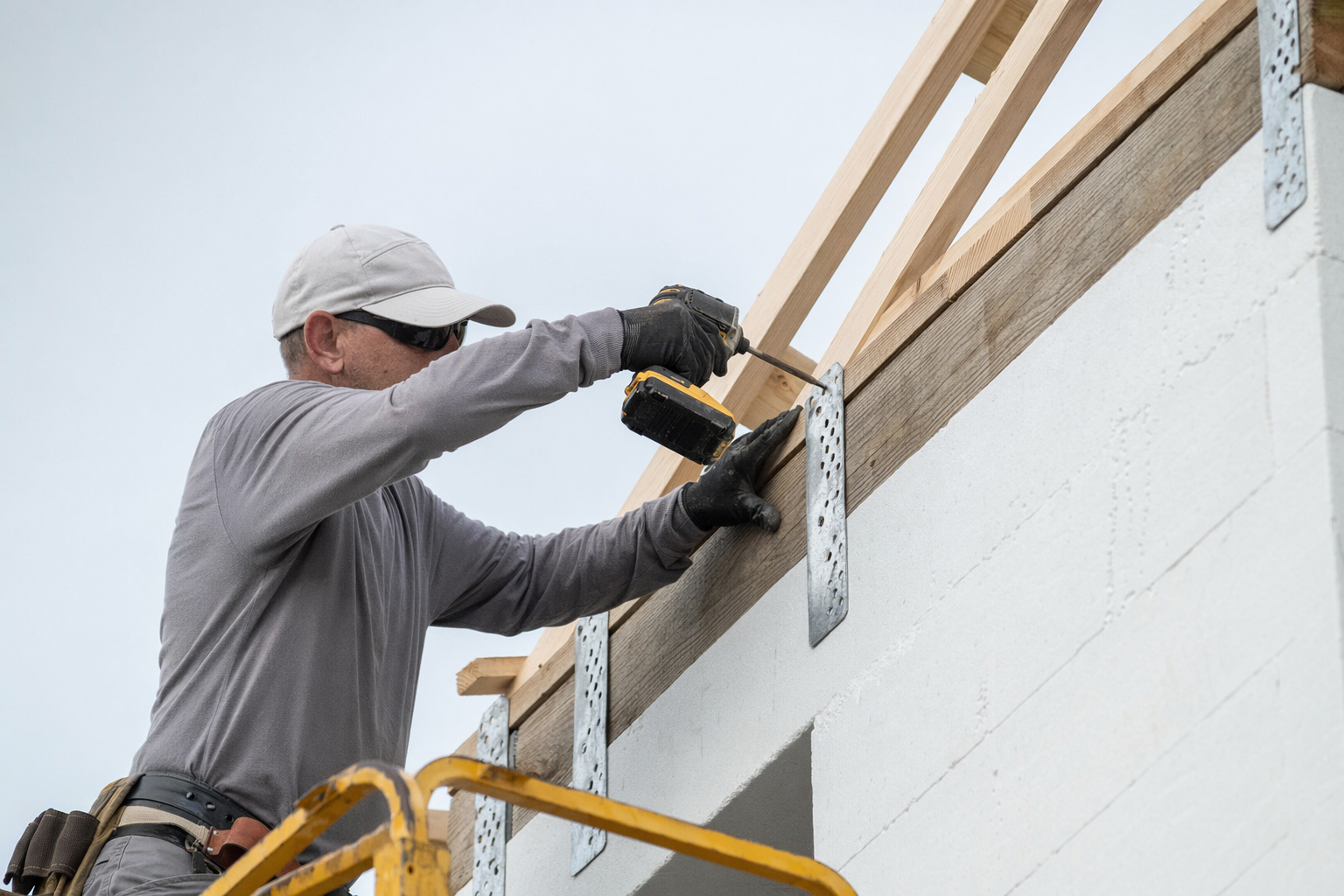
What hurricane retrofit work usually includes
For existing homes, hurricane retrofit work often means improving how key parts of the house are connected and protected so they perform better in strong storms. A contractor may look at roof-to-wall connections, gable end bracing, roof deck attachment, opening protection, and areas where water can enter.
Some jobs are small and focused, such as adding clips or straps in accessible attic areas. Others are broader projects that combine several upgrades at once, especially if a roof replacement or exterior repair is already planned.
Typical retrofit scopes may include:
- adding or improving metal connectors between the roof and wall framing
- strengthening parts of the roof deck attachment
- bracing certain gable end walls where appropriate
- improving protection for garage doors, entry doors, or windows
- sealing vulnerable roof or wall penetrations to help limit water intrusion
Not every home needs every item on this list. Whether a measure is appropriate for your house can only be confirmed after an on-site review. If you are comparing different types of hazard work, you can also see our broader service options.

Why homeowners consider retrofitting before storm season
Many homeowners look into retrofit work before storm season because it is easier to schedule inspections, permits, and construction before local contractors get overloaded. It can also be practical to coordinate this work with planned roof, siding, or garage door projects.
Another reason is peace of mind. A retrofit does not guarantee a home will avoid damage in a hurricane or severe storm, but homeowners often want to address known weak points before the next weather event rather than after emergency repairs become more expensive and harder to schedule.
People also ask whether upgrades might help with insurance or grants. That varies by insurer, state, and project details. If public funding is available in your area, check whether you qualify. California's Earthquake Brace + Bolt program is a real example for qualifying seismic work, and some FEMA hazard-mitigation programs may help in certain situations, but availability and eligibility depend on the program and your property.
Common parts of the home contractors may upgrade
Contractors usually focus on parts of the home where wind forces or water entry can cause bigger problems. The goal is often to improve the load path and reduce common failure points, but the exact work depends on what the contractor can access and what they find on site.
Common areas that may be reviewed include:
1. Roof framing and roof deck for attachment strength and connection details
2. Gable ends where bracing may be considered on some homes
3. Garage doors because wide openings can be vulnerable in high winds
4. Windows and exterior doors for impact resistance or shutter options
5. Attic and crawlspace connections where hardware upgrades may be possible
Some homeowners also combine storm work with other safety upgrades when the house is already open for repairs. For example, if a contractor is in the attic or garage, they may also discuss related bracing work such as chimney and water heater bracing where that is relevant. A contractor can explain what is feasible for your home and what would be a separate project.
Typical cost ranges and what affects the price
Costs vary widely based on the house size, roof shape, access, local labor rates, permit requirements, and how much existing finish material must be opened and repaired. Small targeted upgrades may cost a few hundred to a few thousand dollars, while a broader package of storm-hardening improvements can run several thousand dollars or more.
Typical illustrative ranges homeowners may hear include:
- attic-access connector upgrades: roughly $800 to $3,500
- limited gable end bracing or roof deck attachment improvements: roughly $1,500 to $6,000
- garage door reinforcement or replacement with a rated assembly: roughly $1,500 to $6,000+
- opening protection such as impact-rated products or shutters: often $5,000 to $20,000+ for a whole house
- combined projects done with reroofing or exterior renovation: costs can be higher but may reduce duplicate labor
These are only typical illustrative ranges, not quotes or promises. The price can change a lot depending on whether the contractor can work from the attic, whether drywall or exterior finishes must be removed, and whether existing conditions need repair before retrofit work can start. Always get the scope and price in writing.
How a contractor evaluates your home
A licensed contractor usually starts with the home’s basic facts: year built, location, roof type, number of stories, prior repairs, and any visible signs of moisture or structural wear. Then they look at accessible areas such as the attic, garage, crawlspace, or exterior to understand how the home is put together.
During that visit, the contractor may document connection details, measure openings, note access limits, and identify any conditions that could affect pricing. In some cases, they may recommend that you also consult a licensed engineer, especially if the home has unusual framing, prior storm damage, or questions about load paths.
A typical evaluation may include:
- photos of existing framing or attachment points
- notes about what is visible and what is concealed
- a proposed scope with options, if more than one approach is possible
- permit needs and a rough schedule
Because retrofit work depends so much on existing conditions, online checklists are only a starting point. If you want to compare local companies, you can get matched, free with contractors who handle this kind of work. If your concern includes earthquake-related issues instead of wind, you may also want to read about seismic assessment.
Questions to ask before you hire
Before signing a contract, ask clear questions in plain language and request written answers when possible. This helps you compare bids on scope, not just price.
Useful questions include:
- What specific parts of my home are you proposing to upgrade, and why?
- What can you confirm from inspection, and what will only be known after opening the area?
- Will you handle permits and inspections?
- What repairs to finishes are included, and what is excluded?
- What product ratings or hardware specifications are you using?
- How will change orders be priced if hidden conditions are found?
- What warranty do you offer on your workmanship?
Also verify the contractor's license, bond, and insurance yourself, and confirm who will actually perform the work. The homeowner keeps control over who to hire, what scope to approve, and whether to proceed at all.
Permits, timelines, and what to expect during the job
Permit rules vary by city and county, and the contractor should explain what is required for the proposed scope. Some smaller tasks may be faster to schedule, while projects involving roof work, garage doors, or multiple trades can take longer because of product lead times and inspection scheduling.
For a small attic-based job, the on-site work may take a day or two. Larger projects can take several days to a few weeks depending on access, weather, material delivery, and whether finish repairs are included. If hidden damage is uncovered, the timeline and cost may change.
During the job, it is normal to see some noise, ladder access, attic traffic, and limited opening of finishes in certain areas. Ask the contractor to explain:
- where crews will enter the home
- whether power or garage access will be interrupted
- how dust and debris will be controlled
- when city or county inspections are expected
Before final payment, review the completed scope, any permit sign-offs that apply, and your written invoice. Make sure the final paperwork matches what was installed.
Always verify a contractor's license, bond, and insurance, and confirm the scope and price in writing before any work starts.