Soft-Story Retrofit for Homes and Small Buildings
A soft-story retrofit is work contractors may recommend when part of a home or small building has a weak, open lower level, such as a garage or carport. Whether this applies to your property depends on an on-site assessment by a licensed contractor or engineer, but this page can help you understand the process before you ask for bids.
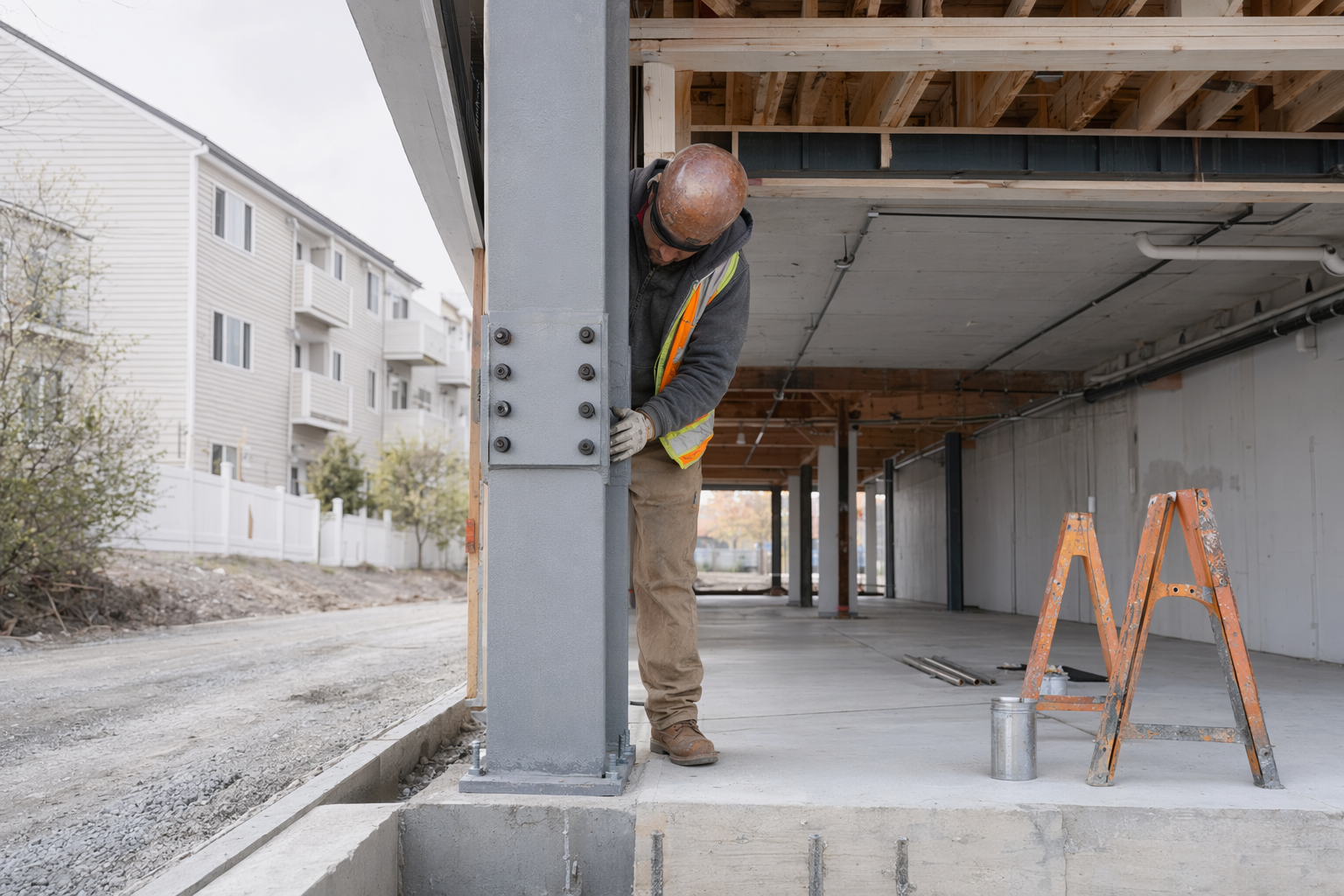
What a soft-story retrofit addresses
A soft-story retrofit is meant to strengthen a lower level that may move more than the floors above it during an earthquake. Homeowners often hear this term when a house, duplex, or small apartment building has large openings at the ground level, especially garage doors, carports, or wide window walls.
The goal is usually to improve how the building transfers earthquake forces down to the foundation. It is not a promise that a building will avoid damage or remain usable after a major quake. The right scope depends on the building's layout, age, foundation, framing, and condition.
If you are not sure whether this issue applies to your property, start by getting local help through our seismic services or get matched, free. A contractor can look at the building in person and tell you whether a licensed engineer should be involved.

Why some homes and small buildings are considered vulnerable
Some buildings are considered more vulnerable because the lower level has fewer solid walls than the floors above. A common example is living space over a garage, or units above an open parking area. In that setup, the upper floors may be stiffer than the ground floor, creating an uneven response in shaking.
Older construction can also matter. Some homes and small buildings were built before modern seismic practices became common in many areas. Materials may still be sound, but the original design may not include the bracing or connections a contractor would typically look for today.
A contractor or engineer may pay close attention to things like:
- large garage or carport openings
- narrow wall segments beside doors
- weak or deteriorated framing connections
- foundation connection details
- signs of past movement, rot, or water damage
Not every house with a garage is a soft-story building, and not every open lower level needs the same repair. Only an on-site assessment can confirm what is appropriate.
Common retrofit approaches contractors may propose
The scope can vary a lot. In some cases, contractors may propose adding new wood structural panels, strengthening existing wall lines, improving hold-downs and anchor connections, or tying framing together more effectively. In other cases, an engineer may design a steel moment frame or another specialized system where a wide opening needs to stay open for parking or access.
Contractors may also recommend related work if they find other weak points during the inspection. For example, they may suggest chimney and water heater bracing or foundation-related upgrades as part of a broader seismic plan. That does not mean every item is required for your building; it means different weaknesses are sometimes addressed together.
Common proposals may include:
1. adding or reinforcing shear walls
2. installing new anchor bolts or hold-down hardware
3. replacing damaged framing members
4. adding steel frames at large openings
5. improving connections between the floor, walls, and foundation
Ask the contractor to explain why each item is included, what problem it is meant to address, and whether a licensed engineer designed or reviewed the plan.
Typical project costs, timeline, and disruptions
Costs vary widely by region, building size, access, engineering needs, and whether hidden damage is found after walls are opened. As a very general illustration, a simpler soft-story retrofit for a home or small building may start in the high thousands of dollars, while more complex projects involving steel frames, major access limits, or extensive structural work can run into the tens of thousands. These are only typical ranges, not quotes.
The construction timeline is also variable. A straightforward project may take several days to a couple of weeks of on-site work, while more complex jobs can take longer once engineering, permits, inspections, and material lead times are included. If drywall, siding, stucco, or finishes need to be opened and repaired, that can add time and cost.
Disruption depends on where the work happens. Garage access may be limited for a period, parking may need to move, and contractors may need access to lower-level walls or ceilings. Ask in advance about noise, dust, storage, and whether you can stay in the home during the work.
If cost is a concern, ask whether grant or assistance programs may apply in your area. For some qualifying seismic work, California homeowners can check whether they qualify for the Earthquake Brace + Bolt program, and some areas may have FEMA-related mitigation funding. These programs have rules and are not guaranteed.
How inspections, engineering, and permits usually fit in
Many soft-story projects start with a site visit. A contractor may measure openings, look at the foundation and framing, and note visible cracks, movement, or water damage. If the building appears to need structural design, the next step is often a licensed engineer who can prepare calculations and plans for the specific property.
Permits are commonly required for this kind of structural work, but the exact rules depend on your city or county. The contractor should tell you who is responsible for plans, permit submission, inspections, and corrections if the building department asks for changes. Get that in writing before work starts.
A typical sequence may look like this:
- site visit and initial scope review
- engineering, if needed
- permit application and approval
- construction work
- city or county inspection
- final repairs to finishes, if included
If a contractor says engineering or permits are not necessary, ask them to explain the local requirement clearly. When in doubt, ask your building department or a licensed engineer.
Questions to ask before hiring a contractor
Before you sign anything, ask practical questions in simple language and request written answers when possible. You do not need to be a structural expert to compare professionalism, communication, and clarity.
Useful questions include:
- Is your license active for this type of work?
- Are you bonded and insured, and can you show proof?
- Will a licensed engineer be involved, if needed?
- Who pulls the permit?
- What exactly is included in the price?
- What repairs to drywall, stucco, or siding are included or excluded?
- How long should the job take?
- How will change orders be priced?
- What access will you need to the garage or lower level?
The homeowner keeps control over who to hire. Verify the contractor's license, bond, and insurance yourself, and make sure scope, payment schedule, permit responsibility, and cleanup are all confirmed in writing. If your property also faces wind or storm concerns, you can separately review hurricane retrofit options.
How to compare local soft-story retrofit bids
Do not compare bids by total price alone. A lower bid may leave out engineering, finish repairs, permit fees, steel fabrication, or inspection corrections. A higher bid may include items another contractor treated as extras. The best comparison is line by line.
Ask each bidder for a written scope that lists the main structural elements, permit handling, engineering assumptions, finish repair allowances, and estimated schedule. If one proposal includes a steel frame and another does not, ask why. The difference may reflect a different design approach, not just markup.
When reviewing bids, compare:
1. scope of structural work
2. whether engineering is included
3. permit and inspection responsibility
4. finish repair and cleanup
5. payment schedule and change-order terms
6. estimated start date and duration
If you want help finding contractors who work on seismic upgrades in your area, you can get matched, free. BedrockMatch is a flat-fee matching service for participating contractors, and the homeowner remains free to choose any contractor or none at all.
Always verify a contractor's license, bond, and insurance, and confirm the scope and price in writing before any work starts.