Chimney and Water Heater Bracing
Chimney and water heater bracing are common earthquake-safety upgrades homeowners ask about, especially in older homes or after a move, remodel, or inspection note. The right scope depends on the home, the chimney or water heater type, and local rules, so a licensed contractor or engineer should confirm what applies on site.
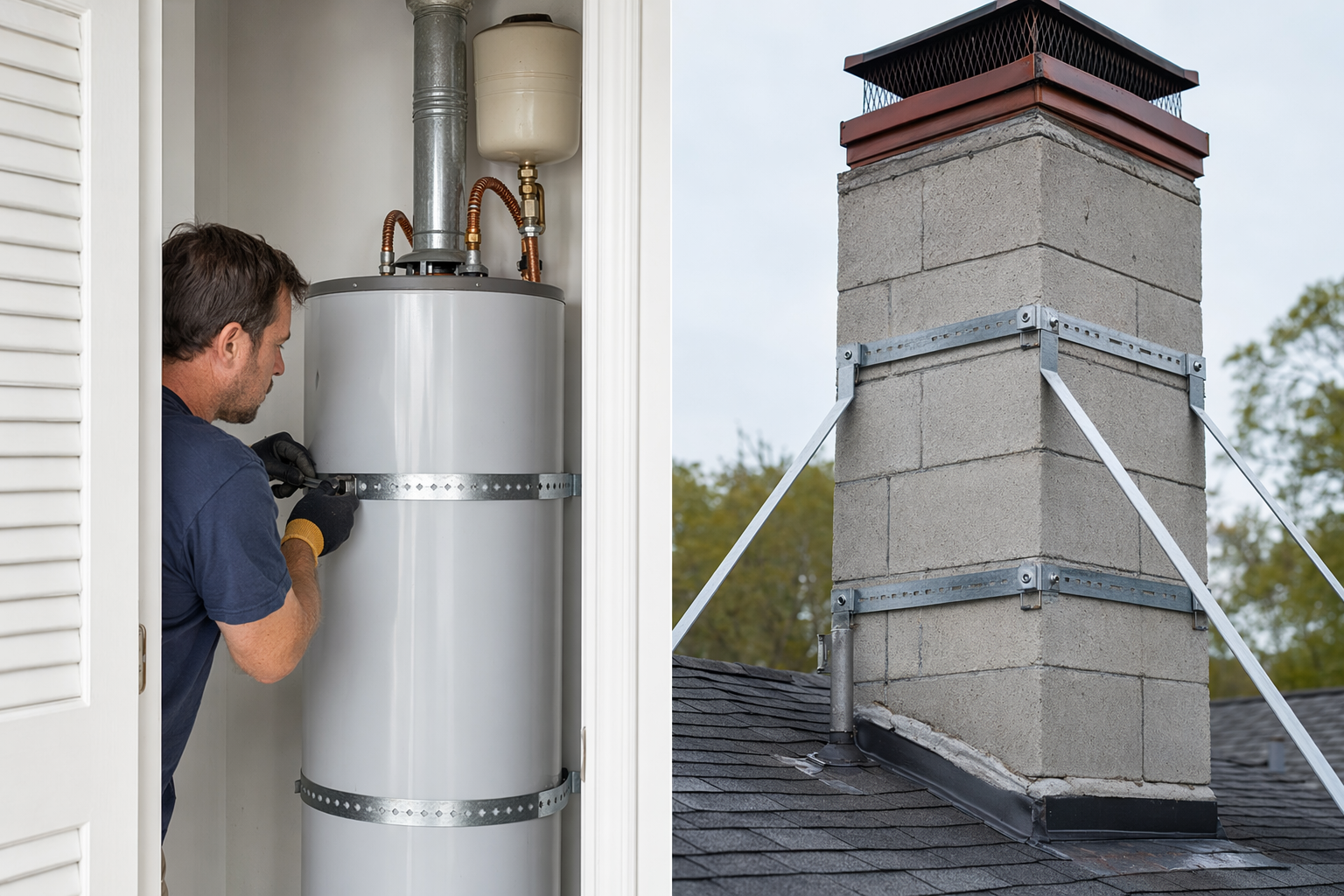
Why homeowners ask about chimney and water heater bracing
Many homeowners worry about heavy items that could shift, crack, or fall during shaking. A masonry chimney is tall and rigid, and a water heater can tip or pull on gas and water lines if it is not properly restrained.
People often ask about this work after buying an older home, seeing movement or cracking, or hearing that simple bracing may reduce common earthquake-related hazards. In some homes, this work is done together with other seismic upgrades such as a seismic assessment or foundation bolting.
This does not mean every home needs the same repair. Whether chimney bracing, strapping, anchorage, partial rebuilding, or related work makes sense depends on an on-site assessment by a licensed professional.

What this type of work may include
The scope can vary a lot. For water heaters, contractors often look at strapping or bracing, anchoring, clearance, and whether gas, water, and vent connections appear appropriate for local requirements. For chimneys, the work may involve bracing, anchoring, repair of damaged sections, or in some cases a recommendation for further engineering review.
A contractor may also look for related issues nearby, because bracing works best when it fits the condition of the surrounding structure. That might include framing connections, roof-to-chimney interfaces, or the condition of the base where the water heater sits.
Common examples of work a contractor might discuss are:
- Securing a water heater with approved straps and hardware
- Checking connectors and shutoff access
- Evaluating chimney cracks, lean, separation, or loose masonry
- Recommending repair, partial rebuild, or added support if needed
Because this page is general information only, it cannot tell you which option is right for your home. A licensed contractor can confirm the actual scope and give you a written proposal.
Common warning signs homeowners notice
Homeowners often notice small clues before they know the technical name for the problem. A water heater may look loose, have old or missing straps, or sit in a garage or utility area where movement could damage nearby lines or walls.
With chimneys, common concerns include visible cracks in brick or mortar, a chimney that looks slightly out of line, gaps where the chimney meets the house, or pieces of masonry that seem loose. Some people also notice water stains, past patching, or rust around connectors and flashing.
A few signs people mention are:
1. The water heater rocks when touched
2. Metal straps look thin, loose, or homemade
3. Bricks or mortar are cracked, flaking, or falling out
4. The chimney appears to pull away from the house
5. You were told the issue came up during a home inspection
These signs do not prove what repair is needed, but they are good reasons to ask for a professional evaluation. If you want to start by understanding local options, you can review nearby services on our retrofit services page.
How contractors usually assess the job
Most contractors start with a site visit. They will look at the age and type of chimney or water heater, visible condition, access, previous repairs, and how the unit or chimney connects to the house. They may take measurements, photos, and notes for an estimate.
For a water heater, the contractor may check the location, tank size, current restraint method, and whether nearby piping and venting allow for a safe, code-compliant installation. For a chimney, they may inspect cracking, leaning, attachment points, roof penetration details, and the condition of the masonry above and below the roofline.
In some cases, the contractor may say the next step is not immediate construction but further review by a licensed engineer, mason, or chimney specialist. That is normal when damage is more than minor, when access is difficult, or when the structure is unusual.
If you want to talk with local companies that handle this kind of work, you can get matched, free. You keep the choice of who to contact and who to hire.
Typical cost factors and project timelines
Costs vary widely because the work can be very simple or much more involved. A basic water heater bracing job may be a relatively small project, while chimney work can range from modest repairs to substantial masonry or reinforcement work. Typical illustrative ranges depend on your home, region, access, materials, and whether hidden damage is found.
Homeowners often see water heater bracing priced in the low hundreds of dollars, while chimney-related work may range from a few hundred dollars for limited repairs to several thousand dollars or more for larger repairs, partial rebuilding, or added structural support. Those are not promises or quotes, only broad examples of how scope changes price.
Common cost factors include:
- Height and condition of the chimney
- Whether masonry repair or rebuilding is needed
- Roof access and safety setup
- Type and size of water heater
- Local labor rates and permit fees
- Whether other seismic work is done at the same time
Small water heater bracing jobs may sometimes be completed in part of a day. Chimney projects often take longer, especially if materials, weather, permit scheduling, or inspections affect the timeline. If your retrofit work may connect to a larger earthquake-upgrade plan, check whether programs such as California's Brace + Bolt or FEMA hazard-mitigation funding apply to your situation, if eligible.
Permits, inspections, and questions to ask
Permit rules vary by city and county, and the answer may differ for a simple restraint upgrade versus chimney repair or rebuilding. Ask the contractor whether a permit is needed, who will pull it, and whether inspections are expected. If you are unsure, your local building department can explain the process.
It is also smart to ask what is included in the price and what is not. For example, some estimates include hauling debris, patching finishes, permit handling, and inspection coordination, while others do not.
Helpful questions to ask include:
- What exact work are you recommending, and why?
- What assumptions are built into this estimate?
- Will you handle permits and inspections if required?
- Do you expect any follow-up work by another trade?
- How will you protect the work area and clean up?
- What warranty, if any, applies to your workmanship?
Before signing, confirm the scope, materials, timeline, and payment terms in writing. Homeowners should also verify the contractor's license, bond, and insurance themselves.
How to compare local retrofit contractors
When comparing bids, do not focus only on the lowest number. Look for a clear explanation of what problem the contractor observed, what work they propose, and what could change the price. Good estimates are usually specific about materials, attachment methods, cleanup, and whether permits are included.
It helps to compare at least two or three written proposals when possible. If one contractor recommends much more work than the others, ask what they saw on site that led to that recommendation. If the answer is unclear, a separate engineering opinion may be worth considering.
A practical checklist:
- Verify license status, bond, and insurance
- Ask for a written scope and itemized price
- Confirm who handles permits and inspections
- Ask about experience with seismic retrofit and older homes
- Make sure change-order terms are explained before work starts
BedrockMatch is a free matching service for homeowners. Participating contractors pay a flat fee to be introduced, and you stay in control of who you speak with, what bids you compare, and whether you move forward.
Always verify a contractor's license, bond, and insurance, and confirm the scope and price in writing before any work starts.