Foundation Bolting for Older Homes
Foundation bolting is a common earthquake retrofit method for older homes where the wood frame may not be securely connected to the concrete foundation. A licensed retrofit contractor can inspect your home and tell you whether this type of work, often paired with other seismic upgrades, makes sense for your specific structure.
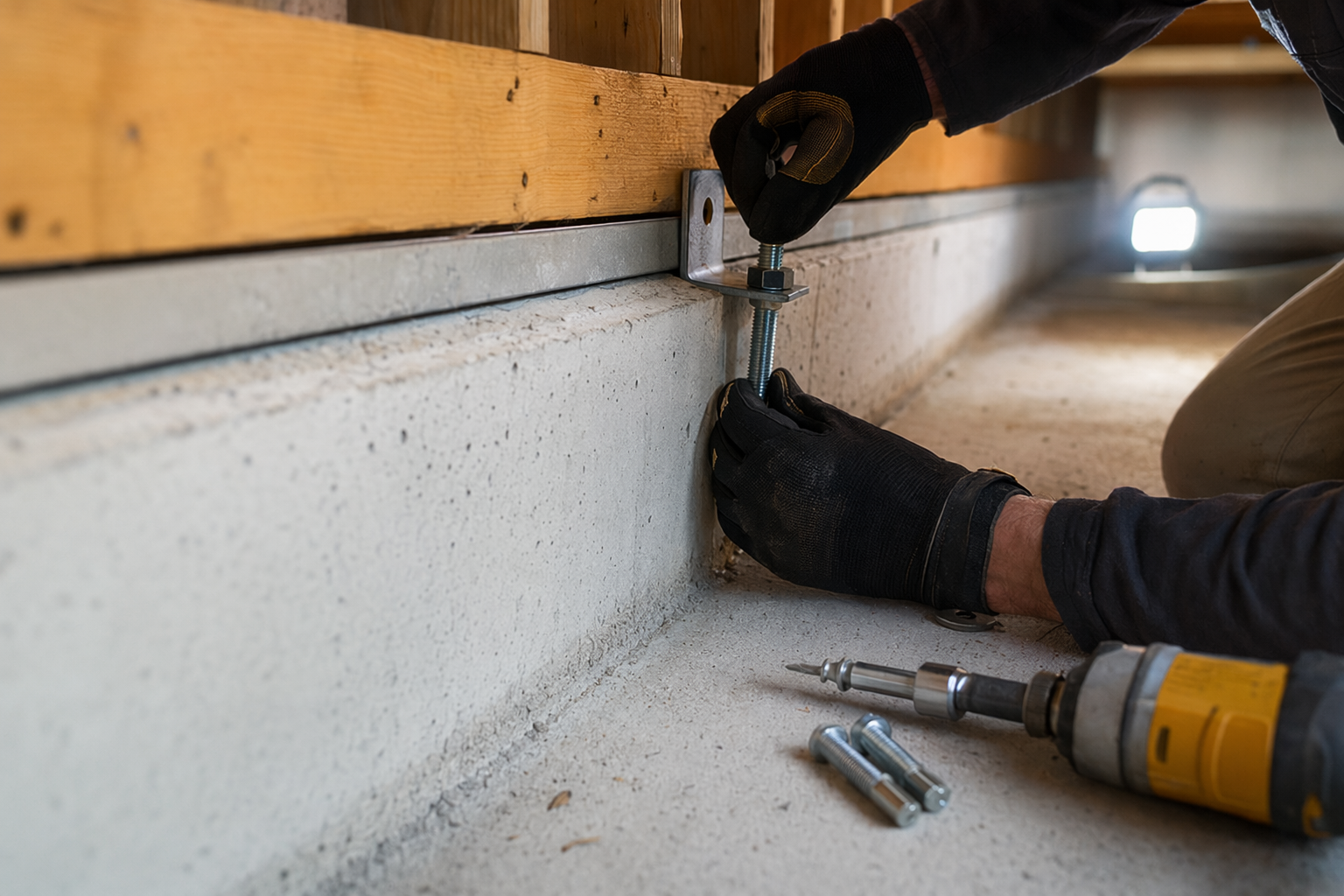
What foundation bolting does in an earthquake retrofit
In many older houses, the wood framing that sits on top of the foundation may have limited or outdated anchoring. Foundation bolting adds or upgrades anchor bolts and related connectors so the house and the concrete foundation are better connected during earthquake shaking.
The goal is to improve the load path between the house and the foundation. In plain terms, this means helping reduce the chance that the house shifts off its foundation during strong movement. It is not a guarantee of performance, and the result depends on the home's age, design, condition, soil, and the full scope of retrofit work.
Foundation bolting is often discussed together with cripple wall bracing because many raised homes need both systems evaluated together. A contractor or licensed engineer can confirm what applies after an on-site assessment.

Homes that may be evaluated for this type of work
This work is commonly considered for older wood-frame homes, especially houses built before modern anchoring standards were widely adopted. Raised-foundation homes with a crawl space are often easier to evaluate because the connections between framing and foundation can be seen from below.
A contractor may look more closely at homes with signs such as:
- an older raised foundation
- visible crawl-space access
- outdated or widely spaced anchor bolts
- short wood stud walls between the foundation and first floor
- past movement, settling, or previous unpermitted repairs
Not every house needs the same solution. Some homes may need only limited anchoring work, while others may also be evaluated for sill plate repairs, plywood bracing, or a different seismic upgrade such as a soft-story retrofit for certain building types. Only an on-site inspection can confirm the right scope.
How contractors typically inspect and price the job
A retrofit contractor usually starts with a site visit. They may inspect the crawl space, foundation type, sill plate condition, access points, existing anchors, and whether there is a cripple wall that should be addressed at the same time. If parts of the area are blocked by insulation, storage, ductwork, or finished surfaces, they may note extra labor for access.
Pricing is usually based on the home's layout and the actual install conditions, not just the square footage. Common cost drivers include:
- how much of the foundation perimeter needs work
- whether the crawl space is tight or difficult to enter
- whether damaged wood or moisture issues must be addressed first
- whether permits and engineering are required in that city or county
- whether bolting is combined with bracing or other seismic work
Ask for a written scope that lists what will be installed, what areas are included, what is excluded, and whether permit fees are separate. You can get matched, free to local contractors, but you should still compare bids carefully and verify license, bond, and insurance yourself.
What the installation process usually involves
The exact method depends on the home, but the contractor often works from the crawl space or foundation perimeter to install anchor bolts, plate washers, and other approved connectors where needed. In some homes, sections of framing or sill material may also need repair before new hardware can be installed.
A typical sequence may include:
- confirming access and protecting work areas
- cleaning or preparing sections of the foundation and sill
- drilling and setting anchors or adding approved retrofit hardware
- tightening and documenting connections
- arranging final inspection if a permit was required
Homeowners usually do not need to move out for this kind of work alone, but access can matter a lot. Contractors may ask you to clear stored items near crawl-space entries, garage edges, or perimeter walls. If the house has moisture, pest, or rot issues, those may need separate attention before or during the retrofit.
Typical cost ranges, timing, and access needs
For many single-family homes, foundation bolting is often discussed in a typical illustrative range of about $3,000 to $8,000 when the scope is relatively straightforward. If the home has limited crawl-space access, damaged wood, permit or engineering requirements, or if bolting is combined with bracing, the total can be higher. Local labor costs and the home's condition make a big difference.
Timing also varies. A simple job may take about 1 to 3 working days once scheduled, while more complex work can take longer. Permitting, engineering review, and inspection scheduling can add time before the crew starts or before the project is fully signed off.
Access is one of the biggest practical issues. Tight crawl spaces, low clearance, debris, old insulation, plumbing lines, and stored items can slow the job and affect price. Before signing, ask the contractor what you need to move, whether dust control is included, and if there are any conditions that could change the price after work begins.
If you want to compare related seismic options, you can also review other retrofit services before deciding which contractors to contact.
Questions to ask before you hire a retrofit contractor
A good bid should be specific enough that you can compare one contractor with another. It should explain what they observed, what they plan to install, and what assumptions they made about access and existing conditions.
Consider asking:
- Is foundation bolting the full scope, or do you recommend other work be evaluated too?
- Will you pull permits if required in my city or county?
- What hardware and spacing are included in the bid?
- Are repairs to rot, termite damage, or moisture damage included or separate?
- How will you handle change orders if hidden conditions are found?
- What cleanup is included when the job is done?
- Can you provide proof of current license, bond, and insurance?
Also ask for the contract price, payment schedule, and scope in writing before work begins. The homeowner keeps control over who to hire, so take time to compare bids, confirm credentials directly with your state licensing agency, and make sure any warranty language is clear and limited to the contractor's actual work.
Permits, financing, and grant programs to check
Permit rules vary by city and county. In some areas, foundation bolting and related seismic work may require permits and inspections, and in some cases a licensed engineer may be involved. A contractor can tell you what they believe is required locally, but if you want a final answer, check with your building department.
If cost is a concern, ask whether the project can be phased or whether the contractor offers payment options. Some homeowners also check credit-union or home-improvement financing, but terms vary and you should review them carefully.
For financial help, California homeowners can check whether they qualify for the Earthquake Brace + Bolt (EBB) program, which may offer up to about $3,000 toward qualifying seismic retrofit work. Some areas also have FEMA-related hazard-mitigation grants or local programs from time to time. Availability, eligibility, and covered scope can change, so treat these as options to research, not promises of funding.
Always verify a contractor's license, bond, and insurance, and confirm the scope and price in writing before any work starts.