How much does foundation bolting cost for a home?
Foundation bolting is one part of some seismic retrofit projects, and cost depends on the house, foundation, and how easy the work area is to reach. For many homes, the price is in the low-thousands, but an on-site assessment is the best way to know what applies to your home.
Short answer: typical foundation bolting cost ranges
A typical illustrative range for foundation bolting on a single-family home is often about $3,000 to $7,000, but some homes come in lower and others cost more. Price depends on the length of the foundation, access under the house, local labor rates, permit requirements, and whether other retrofit work is needed at the same time.
For example, a smaller home with good crawl-space access may be simpler than a larger home with tight access or extra repair needs. In some cases, bolting is part of a bigger seismic package, not a stand-alone job.
If your home may also need related work, you can compare nearby cost guides for cripple wall bracing or a soft-story retrofit. A licensed contractor or engineer can confirm what work, if any, is appropriate after seeing the home in person.

What foundation bolting usually includes
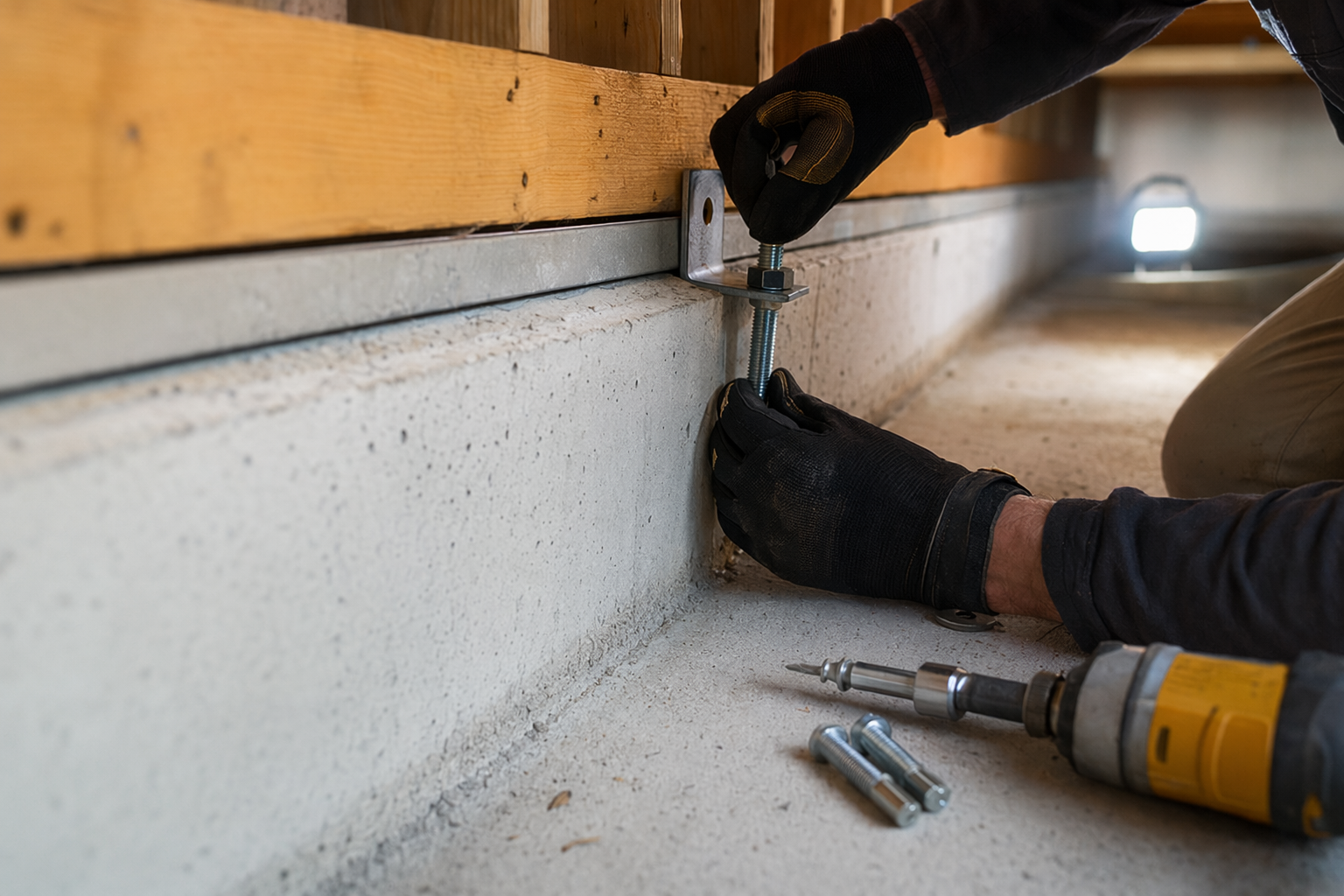
Foundation bolting usually means attaching the wood framing of the house more securely to the concrete foundation with anchor bolts or approved anchoring hardware. The exact method depends on the home and should be confirmed by a qualified professional on site.
A bid for this type of work often includes:
- inspection of accessible work areas
- layout and installation of anchor hardware
- drilling into concrete where needed
- washers, nuts, plates, and related materials
- basic cleanup
- permit or inspection coordination, if included in the contractor's scope
Some bids also include limited prep work in the crawl space. Others do not. Ask for a written scope so you can see exactly what materials, labor, permit handling, and patching are included.
What can make the price go up or down
The biggest cost drivers are usually house size, foundation length, access, and whether the contractor finds conditions that slow the job. Older homes can have uneven surfaces, blocked crawl spaces, or previous modifications that take more time to work around.
Price may go up when there is:
- a long perimeter or larger house footprint
- very tight crawl-space access
- debris, old insulation, or stored items in the way
- moisture issues or minor repairs that must be addressed first
- permit, plan, or inspection requirements in your city
Price may be more manageable when the work area is open, the foundation is straightforward, and the contractor can combine bolting with other planned work in one visit. Still, no one can tell from photos alone whether bolting is needed or enough for your specific home.
How foundation type and access affect cost
Not every home has the same foundation setup. A raised-floor home with a crawl space can be very different from a slab-on-grade home, and access conditions can change labor time a lot. Whether foundation bolting applies to your house depends on what a contractor or licensed engineer finds during an on-site assessment.
If workers can move under the house easily, the job may be faster. If the crawl space is low, narrow, damp, or obstructed, labor can take longer and the quote may be higher. Homes with older concrete or unusual framing details may also need a more careful review.
This is why two neighbors with similar-looking houses can get different estimates. The scope should match the actual conditions under the home, not a one-size-fits-all price.
Questions to ask when comparing contractor bids
When you compare bids, focus on scope, not just the total number. A lower price may leave out permit handling, access prep, or hardware details that another contractor includes.
Helpful questions to ask:
- What exact work is included in writing?
- Are permits, inspections, and cleanup included?
- What hardware and fastening method do you plan to use?
- What conditions could change the price after work starts?
- How long is the job expected to take?
- Will you recommend additional work only if needed after inspection?
You should also verify the contractor's license, bond, and insurance yourself, and confirm scope and price in writing before you hire anyone. If you want to compare local options, you can get matched, free through BedrockMatch; homeowners do not pay to be matched.
Can grants or retrofit programs help with cost?
Sometimes. In California, the Earthquake Brace + Bolt (EBB) program may offer up to about $3,000 toward qualifying seismic retrofit work for eligible homes. FEMA-supported hazard-mitigation funding may also exist in some areas. Check whether you qualify, because program rules, timing, and eligible work can change.
These programs do not automatically cover every project, and they do not guarantee approval. A contractor can tell you whether your home appears to fit the type of work a program is designed for, but you should review the current program requirements yourself.
If you are early in your research, the main help center can be a good place to compare related retrofit topics and questions before you request bids.
When to get an on-site assessment
Get an on-site assessment when you are ready for real numbers, or if you have an older home, visible crawl-space issues, or you are already planning other seismic upgrades. An in-person visit helps a contractor confirm whether foundation bolting is relevant to your home and whether other work should be priced separately.
Ask for a written estimate that clearly lists labor, materials, permit handling, and any assumptions about access or existing conditions. If two bids are far apart, ask each contractor to explain the difference line by line.
The key point is simple: foundation bolting can be a relatively modest retrofit cost for some homes, but the right scope depends on the house you actually have, not a generic online number.
Always verify a contractor's license, bond, and insurance, and confirm the scope and price in writing before any work starts.