How to Tell If Your Home May Need a Retrofit
Not every house needs the same kind of retrofit, and some homes may not need one at all. This page helps you notice common warning signs and understand what a contractor or licensed engineer may look at during an on-site assessment.
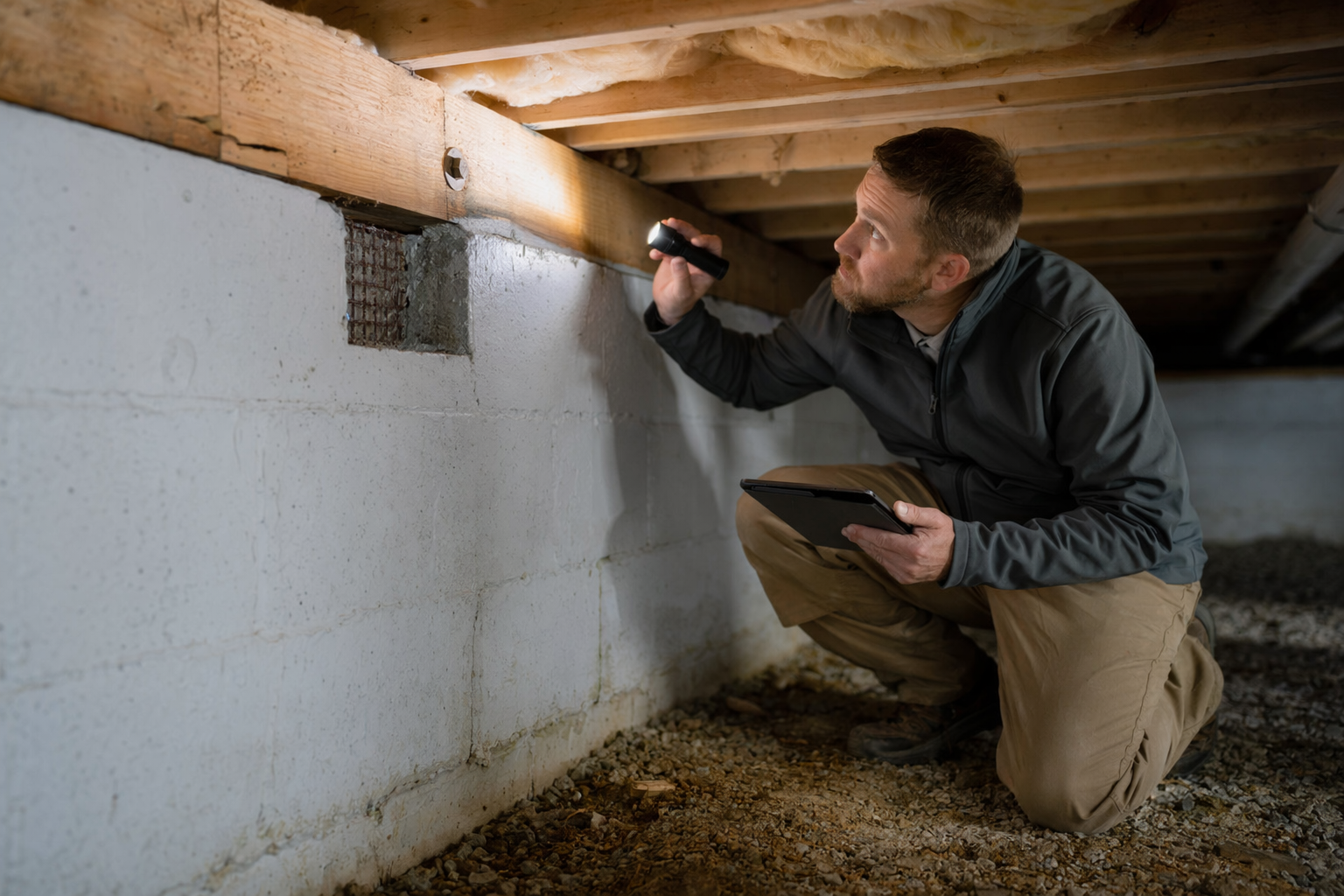
Why some homes are more likely to need retrofitting
Homes are more likely to be discussed for seismic or storm retrofit when they are older, built before newer local practices became common, or located in areas with earthquake, hurricane, high-wind, or severe-storm risk. The exact need depends on the home's design, soil, slope, additions, past repairs, and how well key parts are connected.
A few homes come up often in retrofit conversations: houses with raised foundations and crawl spaces, older wood-frame homes, homes with cripple walls, homes on slopes, and houses with attached garages or large openings at the front. In storm areas, contractors may also look closely at roof shape, roof-to-wall connections, and how doors, windows, and garage openings are protected.
That does not mean your home definitely needs work. It means your home may be worth a closer look. Only an on-site assessment by a qualified local professional can confirm whether any retrofit applies to your specific house.
If you are just starting, it may help to review other homeowner guides in the guides library before you contact anyone.

Common signs to look for around the foundation, crawl space, and roof
You do not need to diagnose your house yourself. But you can look for visible conditions that may be worth asking about. Around the foundation and crawl space, homeowners often notice missing or widely spaced anchor bolts, short stud walls in the crawl space without visible bracing, damaged wood, moisture, rusted connectors, or older repairs that do not look uniform.
Around the roof and exterior, signs may include loose or aging roofing materials, lifted edges after wind, damaged soffits, sagging areas, or an attached garage with a large door opening and little solid wall next to it. In some homes, additions or remodels may also create connection points that deserve a closer look.
Common things to note before you call:
- Cracks in foundation concrete or masonry
- Uneven floors or doors that suddenly stick
- Water damage, rot, or termite damage in framing
- No clear connection visible between wood framing and foundation
- Previous storm or earthquake damage, even if it was repaired
These signs do not prove a retrofit is needed, and some may have causes unrelated to seismic or wind resistance. A contractor can inspect what is visible, and a licensed engineer can advise if a design question needs engineering review.
What older construction can tell you about potential weak points
The year a home was built can offer clues, but it is only a starting point. Older homes were often built under different standards, with different materials, and sometimes without the kinds of connectors and bracing that are common today. Many older houses have also been altered over time, which can change how the home performs.
For example, some older raised-foundation homes may have wood framing that is not well connected to the foundation, or short walls in the crawl space that may need closer review. Some homes with tuck-under or attached garages have large openings that can become weak points. In storm-prone areas, older roofs and wall connections may also deserve attention.
Age alone is not enough to make a decision. Two homes built in the same year on the same street may need very different work depending on maintenance, past upgrades, and construction details hidden behind finishes.
If your home is older and you want to prepare for contractor conversations, this guide on questions to ask a retrofit contractor can help you stay organized.
Questions to ask before you call a contractor
A little preparation can make the first call more useful. Try to gather the home's approximate year built, foundation type if you know it, whether there is a crawl space or basement, and any history of earthquake, wind, water, or structural-related repairs. Photos of the crawl space, foundation perimeter, roof edges, and garage area can also help a contractor understand what they may be looking at.
Useful questions to ask yourself first:
1. Has the house had past damage or major repairs?
2. Has a room, garage, porch, or second story been added later?
3. Do I have permits, inspection records, or old contractor invoices?
4. Are there moisture, drainage, or pest problems that may affect the framing?
5. Am I looking for a basic assessment, or am I ready to request bids?
When you do contact a contractor, keep the discussion practical. Ask what they can assess during a visit, whether engineering may be needed, and what conditions could affect scope or price. If you want help finding local companies to contact, you can get matched, free.
It is also reasonable to ask whether there may be public funding options in your area. In California, some homeowners check whether they qualify for Earthquake Brace + Bolt grants, and in some places FEMA-related hazard-mitigation funding may exist. Availability, rules, and timing vary, so always check current program details yourself.
What a local retrofit assessment usually includes
A local retrofit assessment usually starts with the parts of the home that are accessible and most relevant to the type of risk in your area. The contractor may look at the foundation, crawl space, framing connections, cripple walls, posts, beams, roof framing, attic access, garage openings, and visible signs of damage, moisture, or past movement.
In many cases, the visit also includes measurements, photos, notes about access limitations, and questions about prior remodeling or repairs. If the home has features that are difficult to evaluate visually, the contractor may say that a licensed engineer should review the property before anyone finalizes a scope.
A typical assessment may include:
- What visible weak points the contractor sees
- Whether repairs are needed before retrofit work
- Which retrofit options may fit the home's layout
- Whether permits may be part of the process
- What can be priced now and what needs more review
This kind of visit is meant to identify likely options, not to guarantee an outcome. If you speak with more than one company, compare whether they looked at the same areas and whether they explained any exclusions in writing.
Typical retrofit options contractors may discuss
The right scope depends on the home. After an on-site assessment, contractors may discuss work such as foundation bolting, bracing short walls in a crawl space, adding or upgrading connectors between framing members, reinforcing certain garage or opening areas, or improving selected roof-to-wall or wall-to-foundation connections in storm-prone regions.
They may also separate true retrofit work from related repair work. For example, if there is rot, termite damage, drainage trouble, or cracked concrete, those issues may need repair before or during retrofit. That can affect the final scope and price.
Typical costs vary a lot by house size, access, materials, region, permit requirements, and whether repairs are needed first. As a broad illustrative range only, some simpler retrofit jobs may be a few thousand dollars, while more involved work can be significantly higher. Ask each contractor to show clearly what is included, what is excluded, and what conditions could change the price.
If cost is a concern, ask whether your home might fit any grant or assistance program and check whether you qualify. Programs such as California's Brace + Bolt may help some qualifying homeowners with part of the cost, but eligibility and funding are not guaranteed.
How to compare bids, licenses, and next steps
Try to get at least two or three written bids when possible. The goal is not only to find the lowest number. You want to understand whether each company is proposing the same scope, using the same assumptions, and including the same permit, repair, and cleanup items.
When comparing bids, look for:
- A clear description of the work area and materials
- Notes about permits, inspections, and engineering if needed
- Separate pricing for repairs versus retrofit work
- Start timeline and estimated job duration
- Payment schedule and change-order terms in writing
You should also verify the contractor's license, bond, and insurance yourself, and confirm who will actually perform the work. If something in the bid is vague, ask for clarification in writing before you sign. This is especially important if the contractor mentions hidden conditions that could increase cost later.
For a deeper checklist, read how to choose a retrofit contractor. The homeowner keeps control of the decision, and you can take time to compare options before hiring anyone.
Always verify a contractor's license, bond, and insurance, and confirm the scope and price in writing before any work starts.