What anchor bolts do for a house
Anchor bolts are one of the basic parts that help attach a wood-framed house to its concrete foundation. If you own an older home, this is a common item to ask about, but only an on-site assessment by a licensed contractor or engineer can confirm what your home has and whether any upgrade makes sense.
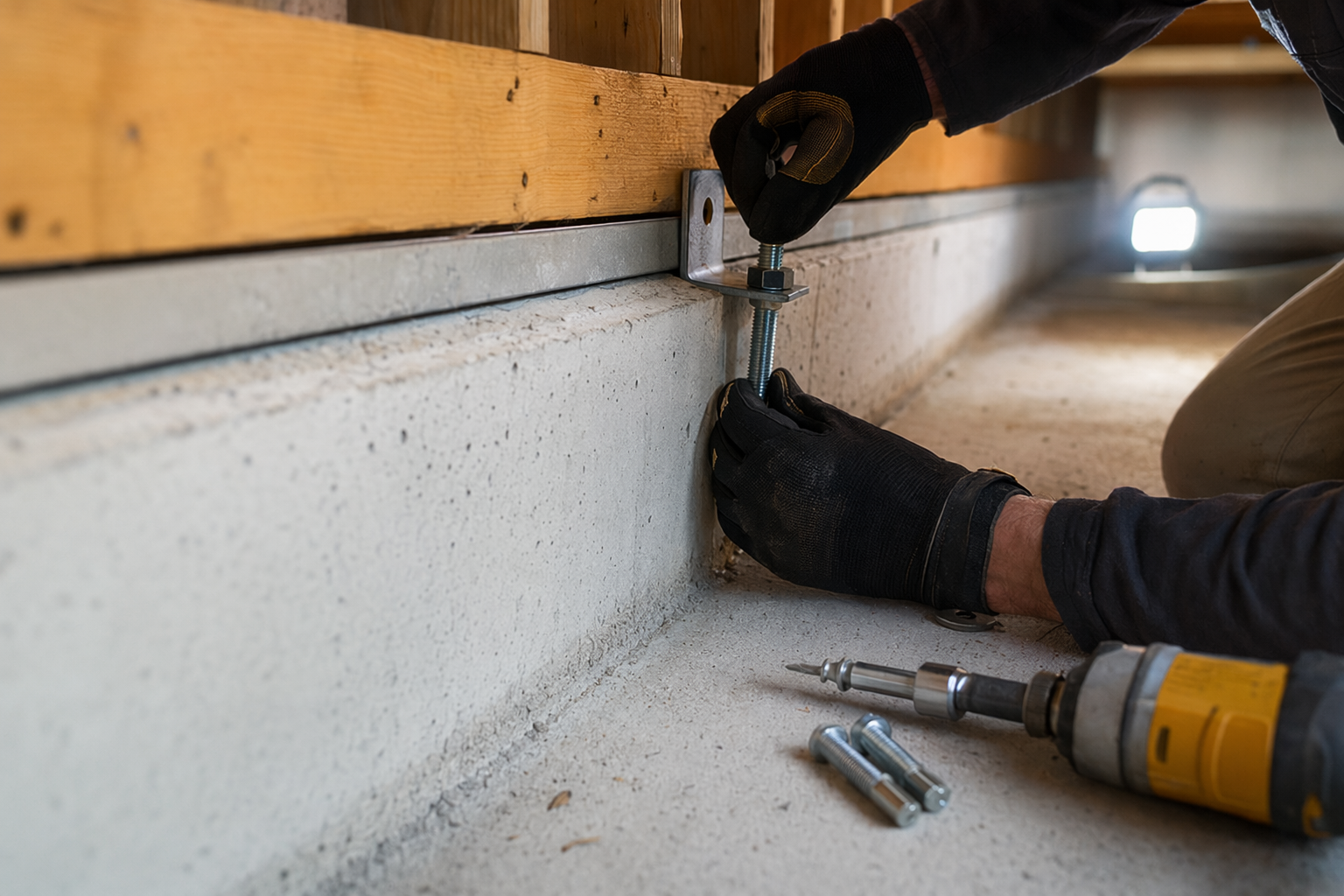
What anchor bolts are and where they are used
Anchor bolts are heavy metal bolts set into or attached to a concrete foundation. Their job is to connect the wood sill plate, the bottom piece of framing, to the concrete below.
In many houses, these bolts are found around the perimeter where the wood frame meets the foundation wall. You may hear them discussed along with washers, nuts, and other connectors that work together as part of a retrofit.
They are commonly mentioned in earthquake retrofit work, but they can also matter in areas with strong wind and storm forces. Whether anchor bolts are present, missing, spaced too far apart, or suitable for your home is something a contractor can confirm during a site visit.

Why they matter in earthquakes and strong storms
When the ground shakes or wind pushes and pulls on a house, the structure is under force from different directions. One weak point can be the connection between the house frame and the foundation.
Anchor bolts help that connection act more like one system. In general, they are intended to reduce the chance of the wood framing shifting relative to the concrete foundation during shaking or severe weather forces. That does not mean they can guarantee no damage or that every house needs the same work.
For some older homes, contractors may discuss anchor bolting as one part of a broader retrofit plan. Other items may also matter, depending on the home, such as cripple wall bracing or additional connectors. A licensed professional should evaluate the whole condition on site.
How anchor bolts help connect the house to the foundation
A simple way to think about it is this: the foundation is the base, and the wood frame sits on top of it. Anchor bolts help clamp the bottom wood member to the concrete so the house is better tied down.
A contractor may explain the connection in parts:
- the bolt connects into the concrete
- the sill plate is the wood piece being held in place
- the washer and nut help tighten the connection
- other hardware may be added nearby as part of the overall retrofit plan
If your home is being considered for earthquake retrofit work, the contractor may also look at related items beyond bolts alone. If you are exploring grant help, you can check if you qualify and read about the Earthquake Brace + Bolt program. Availability and eligibility depend on the property and program rules.
Common signs an older home may need a closer look
Many older houses were built before current retrofit practices became common. Age by itself does not prove a problem, but it can be a reason to ask questions.
Homeowners sometimes request an inspection or contractor visit when they notice things like:
- an older raised-foundation home with little or no visible anchoring hardware
- a crawl space with wood framing that looks loosely connected to the foundation
- past foundation work or signs of movement that make them want a professional opinion
- plans to buy, remodel, or apply for a grant and wanting to understand existing conditions
These are only signs to ask for a closer look, not proof that anchor bolt work is needed. A licensed contractor or engineer can identify what is actually there and whether any repair or upgrade is appropriate.
What a contractor or engineer may check on site
During an on-site assessment, a contractor or engineer may look at the crawl space or basement perimeter to see how the house is attached to the foundation. They may check whether bolts are present, how accessible the area is, and whether related framing or concrete conditions affect the scope.
They may also review items such as:
- the general age and type of foundation
- the condition of the sill plate and nearby wood framing
- whether there are existing washers, nuts, or other connectors
- whether there are cripple walls or other features that may need separate attention
- access limits, moisture issues, or previous repairs that could change the work
This kind of visit helps turn a general question into a written scope. If you want to speak with local companies, you can get matched, free and then compare the recommendations you receive.
Typical repair or upgrade cost ranges homeowners may hear
Costs vary a lot by region, foundation type, crawl-space access, and whether the work is just part of a larger retrofit. As a typical illustrative range, homeowners may hear figures from roughly $1,500 to $5,000+ for anchor-bolt-related work, with higher totals possible if there are access problems, concrete repairs, or additional seismic bracing in the same project.
Some contractors price this as part of a full retrofit package rather than as a stand-alone line item. That is why two quotes can look very different at first glance.
If your home is in California, check whether you qualify for assistance such as the Brace + Bolt grant, which may offer up to about $3,000 toward eligible work. Some homeowners also explore FEMA-related mitigation programs where available. These programs have rules and are not guaranteed.
When to compare bids and ask about permits
It is smart to compare bids whenever the scope is more than very minor repair work, or when one company says the job is simple and another says it includes added bracing, hardware, or concrete work. Ask each contractor to put the scope, materials, timeline, permit responsibility, and total price in writing.
You should also ask whether permits are required in your city or county for the proposed work. Permit rules vary by location and job scope, so the contractor and local building department can clarify what applies.
Before you hire anyone, verify the contractor's license, bond, and insurance yourself. The homeowner keeps control of the decision, and it is fine to ask questions until you understand exactly what is included.
Always verify a contractor's license, bond, and insurance, and confirm the scope and price in writing before any work starts.