What’s the difference between seismic and storm retrofitting?
Seismic retrofitting and storm retrofitting both aim to help a house handle severe weather or ground movement, but they address different kinds of force. The right work depends on where your home is, how it was built, and what a licensed contractor or engineer finds during an on-site assessment.
The short answer: they protect against different forces
Seismic retrofitting is meant to help a home deal with ground shaking. Storm retrofitting is meant to help a home deal with wind, rain, uplift, and flying debris.
In simple terms, earthquakes try to move a house side to side and can shift it off its supports. Storms often push, pull, and lift on the roof, walls, windows, doors, and connections between parts of the house.
Some homes need one type of work more than the other. Some may need both. A contractor can confirm what applies after looking at the home in person.

How earthquake motion affects a house
During an earthquake, the ground moves suddenly. A house may sway, rack sideways, or slide if key connections are weak. Older homes with unreinforced crawl spaces, weak cripple walls, or limited anchorage to the foundation are often the ones people ask about.
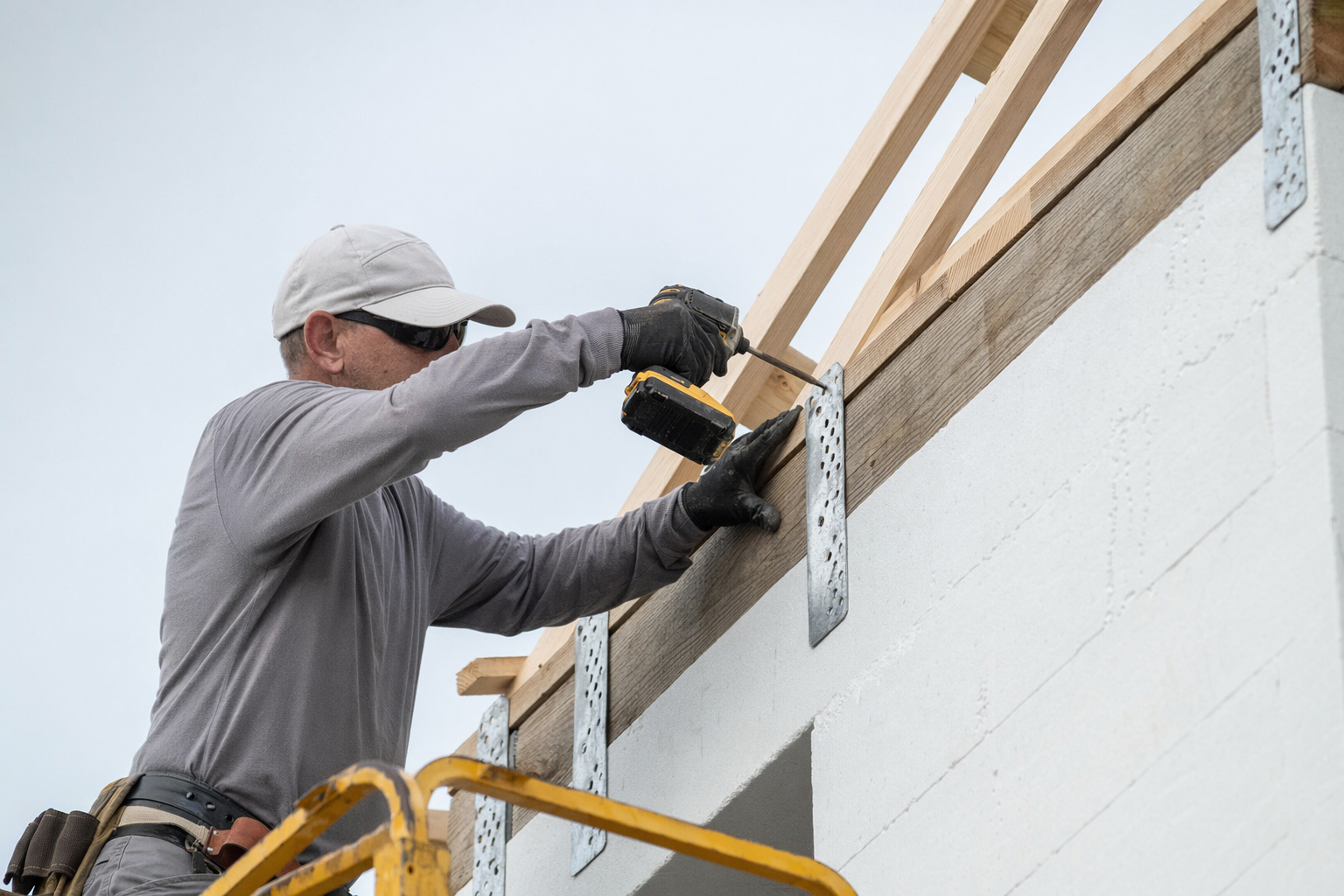
Typical seismic retrofit work may focus on the path from the wood framing down to the foundation. In some homes, that can include items such as:
- anchoring the house to the foundation
- strengthening short crawl-space walls
- improving connectors at certain framing points
The exact need is not something a matching service can determine online. A licensed contractor or engineer has to inspect the structure and confirm the recommended scope. If you are in California, you can also check whether you qualify for programs such as Brace + Bolt, which may help with part of the cost for certain eligible retrofits.
How wind and storm pressure affect a house
Strong wind does not act on a house the same way an earthquake does. Wind can press against one side, pull on roof edges, and create uplift that tries to peel parts of the home apart. Wind-driven rain can also enter through damaged roofing, vents, doors, or windows.
Storm retrofit discussions often focus on keeping the building envelope and structural connections more secure. Depending on the home and region, a contractor may look at:
- roof-to-wall connections
- roof covering condition and attachment
- opening protection for windows or doors
- garage door strength
- drainage and water-entry weak points
Not every house needs the same upgrades. Local wind zone, roof shape, age of the home, and prior repairs all matter.
What retrofit work may look like in each case
A seismic project often starts below the living space, such as in a crawl space, basement, or around the foundation line. The goal is usually to improve how the house is attached and how lateral movement is resisted.
A storm project often starts at the roof and outside shell of the home. The work may involve roofing details, fasteners, connectors, shutters or impact-rated components, or reinforcing openings and attached structures.
Sometimes the difference is easy to see:
- Seismic work often targets shaking resistance.
- Storm work often targets wind resistance and water entry.
- Both can involve metal connectors and fastening improvements, but for different hazards.
If you are unsure which category your concern falls into, get matched, free and speak with a local contractor who handles the hazard common in your area.
Can one home need both types of retrofitting?
Yes. A home in some parts of the US may face both earthquake risk and severe storm risk, or may simply have multiple weak points from age, past remodeling, or deferred maintenance.
For example, a house could need better foundation anchorage for shaking and also need roof connection upgrades for wind. Those are separate issues, even if they are found during the same visit.
Homeowners also sometimes ask how retrofit work relates to insurance. Coverage questions are separate from construction scope, and policy details vary. See does homeowners insurance cover earthquakes? or what is earthquake insurance? for a basic overview.
How inspections, permits, and pricing usually differ
The process can look different depending on the hazard and the local rules. Seismic work often requires careful inspection of the crawl space, foundation, framing connections, and access conditions. Storm-related work may involve roof review, attic inspection, exterior openings, and visible water-management details.
Permits may be needed for either type of project, depending on the scope and city or county requirements. Your contractor should explain what permits apply and what is included in the written proposal.
Pricing also varies a lot. A smaller, straightforward seismic anchorage project may cost far less than a larger job that includes access challenges or significant framing repair. Storm retrofit pricing can range from modest connector upgrades to much larger roofing and opening-protection projects. Any price range you hear is only a typical illustration, not a promise, because homes differ so much.
How to choose the right contractor for your situation
Start with a contractor who regularly works on the hazard you are trying to address in your area. Earthquake-focused work and storm-focused work are not always the same specialty, even when there is some overlap.
Before you hire anyone, ask for a written scope and verify the basics yourself:
- license status
- bond and insurance
- permit responsibility
- materials and connection details included in the bid
- cleanup, timeline, and payment terms
You stay in control of the decision. BedrockMatch can help you get matched, free, but you choose who to speak with, who to hire, and whether the proposal makes sense for your home.
Always verify a contractor's license, bond, and insurance, and confirm the scope and price in writing before any work starts.