Soft-Story Retrofit Guide: What Homeowners Should Know
A soft-story retrofit is often discussed for homes or small residential buildings with an open, weak first level, such as parking or large openings under living space. This guide explains what that usually means, how contractors evaluate it, and how to compare options without guessing what your own home needs before an on-site assessment.
What a soft-story building is and why it matters
A soft-story condition usually means one level of a home or residential building is much less stiff or strong than the floors above it. Homeowners often hear this term when the ground floor has large garage openings, carports, tuck-under parking, wide window walls, or fewer interior walls than the upper level.
In plain terms, the upper floors may be supported by a lower level that has less resistance to side-to-side movement from earthquake forces or, in some cases, strong wind loads. That does not automatically mean your home is unsafe or that a specific retrofit is required. A licensed contractor or engineer needs to inspect the home on site to confirm whether a soft-story condition exists and what, if anything, is recommended.
This matters because homes with a weak lower level can sometimes experience concentrated damage in that area during a major event. The goal of retrofit work is usually to improve how forces are transferred through the structure, but the right solution depends on the home's layout, age, foundation, and local requirements.
If you are just starting research, the main thing to know is this: soft-story work is highly specific to the building. General information is useful, but the decision should come from an inspection, plans if needed, and a written scope from qualified local professionals.

Common signs your home may have a soft-story condition
Some homes are more likely to be described as soft-story than others. A common example is living space above a garage where the first level has a large garage door opening and limited wall area on either side. Another is a home built over parking or a carport with open sides.
Other possible clues include:
- A first floor that is much more open than the floor above
- Long stretches of wall replaced by garage doors, sliders, or large windows
- Upper-story rooms sitting above posts or narrow wall segments
- Older homes with tuck-under parking or major remodels that opened the lower level
These signs do not confirm that your home needs retrofit work. They simply suggest that it may be worth asking a local professional to take a look, especially if your area has earthquake risk or strong storm exposure. A contractor can confirm whether the issue is truly a soft-story condition, or whether another part of the structure is the bigger concern.
If your home has more than one possible issue, the evaluation may also look at related items such as the foundation connection, cripple walls, framing details, and past modifications. A broad review helps avoid paying for the wrong work.
How contractors typically evaluate a soft-story retrofit
The first step is usually an on-site visit. The contractor may look at the lower-level layout, wall lengths, posts, beam connections, garage openings, foundation type, access, and signs of past movement or previous repair work. They may also ask when the home was built and whether walls or openings were changed during a remodel.
Depending on the home and local rules, the contractor may recommend that a licensed engineer prepare plans before pricing is finalized. For some projects, engineering is a key part of the process because the solution has to match the exact openings, loads, and existing framing. You can learn more about that process in retrofit permits and engineering plans.
A typical evaluation often includes:
- Measuring openings and wall segments
- Checking access to framing and foundation areas
- Looking for existing anchors, hold-downs, posts, or shear elements
- Reviewing whether permit drawings or engineering are likely needed
- Giving a preliminary scope and budget range
Ask whether the bid is based on a quick visual estimate or on engineered plans. That difference matters. A low early quote can change after walls are opened, engineering is completed, or permit comments require a revised scope.
Typical retrofit options you may hear about
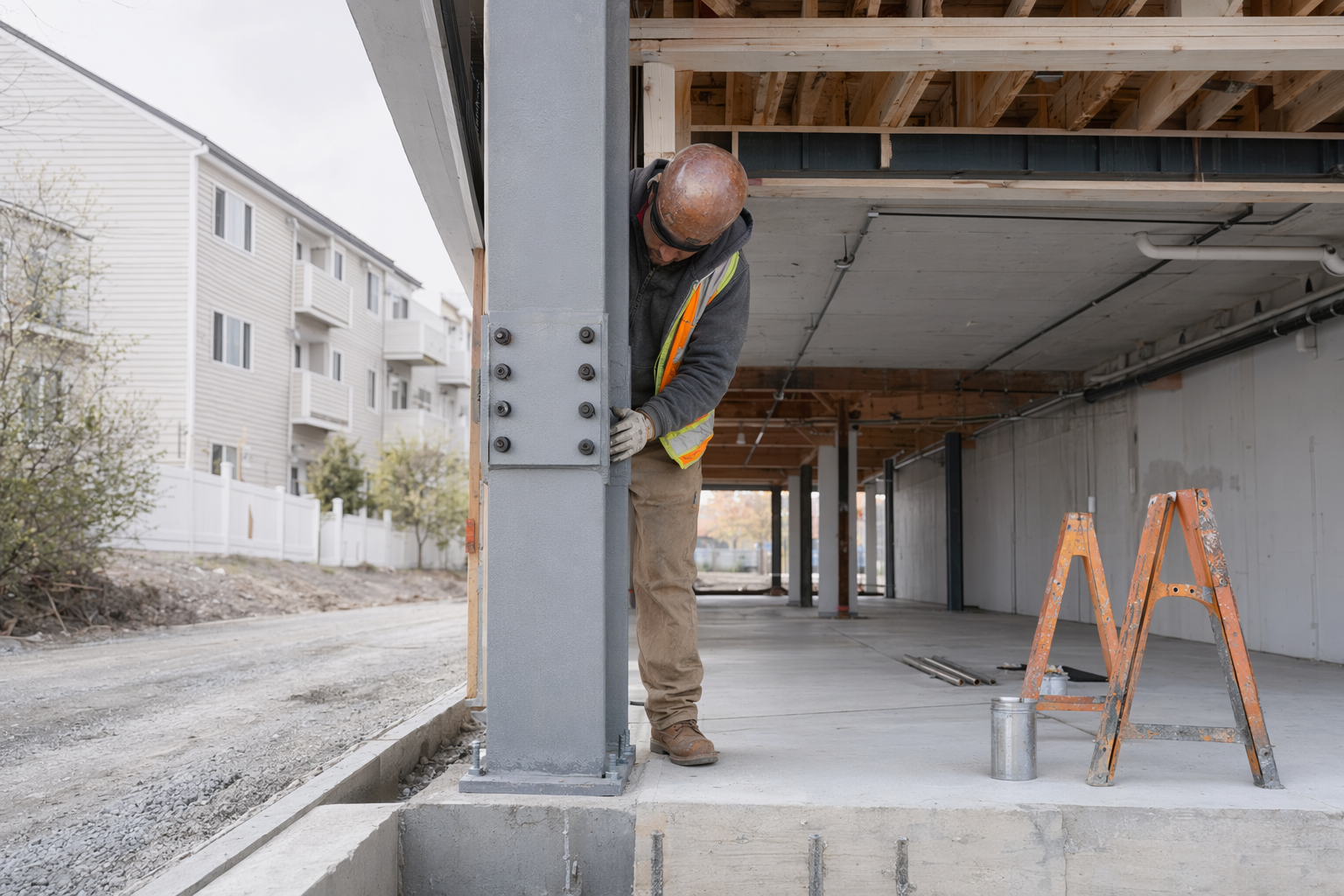
The exact retrofit depends on the building, but homeowners often hear about adding or upgrading shear walls, steel frames or special moment frames around large openings, stronger post and beam connections, hold-down hardware, and anchorage improvements that help transfer forces into the foundation. In some homes, the work may also include changes to finishes so the structural elements can be installed correctly.
For a garage-level soft-story condition, one common challenge is keeping usable access while strengthening the opening. That is why some projects use engineered steel or other specially designed framing rather than simply filling in the opening with more wall. In other homes, adding wall strength in carefully chosen locations may be part of the answer. A contractor or engineer can confirm which options fit your layout.
You may also hear about related work such as foundation bolting or cripple wall bracing if those issues are present too. That does not mean every soft-story project includes those items. The scope should be based on what your home actually has, not on a one-size-fits-all package.
If someone tells you there is only one fix for every soft-story home, be cautious. Good retrofit work is usually tailored to the building's dimensions, openings, existing framing, and permit requirements.
What soft-story retrofits often cost and what affects price
Costs vary a lot because soft-story work can range from a relatively limited strengthening project to a larger engineered structural upgrade. As a typical illustrative range, homeowners may hear numbers from roughly $10,000 to $40,000+ for a smaller residential project, while more complex designs with major openings, steel frames, finish repairs, or difficult access can go higher. Your actual price depends on the home, region, and scope.
Price is often affected by:
- The size and number of large openings at the lower level
- Whether engineered steel frames or specialty hardware are required
- Foundation condition and whether new concrete work is needed
- Permit and engineering requirements in your city
- Interior and exterior finish repair after structural work
- Access, parking, occupancy, and how easy it is to stage materials
Ask each bidder to separate structural work, engineering, permits, and finish repair in writing. That makes comparisons easier. It also helps you see whether one quote is cheaper because important items were excluded.
Some homeowners also ask whether retrofit work can lower insurance costs. Sometimes carriers consider mitigation work, but savings are not guaranteed and vary by insurer and policy. See does retrofitting lower home insurance? for general guidance. If you are in California, you can also check whether you qualify for programs such as Earthquake Brace + Bolt for eligible work, or look into FEMA-related hazard mitigation programs where available. Eligibility and covered scopes vary.
Permits, timelines, and how the construction process usually works
Most soft-story retrofit projects involve permits, and many require engineering plans. The normal sequence is: site visit, preliminary scope, engineering if needed, permit submission, approval, scheduling, construction, city inspections if required, and final sign-off. The exact order depends on local rules and the complexity of the project.
A typical timeline can look like this:
- Initial evaluation and budget discussion
- Engineering and plan preparation if required
- Permit review by the city or county
- Construction scheduling and material ordering
- On-site work and required inspections
- Final paperwork and closeout
Construction itself might take days for a smaller scope or several weeks for a more involved project, but permit review and engineering can add time before work starts. Homes with hidden conditions, older framing, prior unpermitted changes, or finish-heavy repair work often take longer.
Ask the contractor how much of the work will be visible after completion, whether drywall or siding patching is included, and whether you can remain in the home during construction. If you want help connecting with local companies familiar with this type of work, you can get matched, free.
How to compare bids and choose a qualified local contractor
When comparing bids, do not look at price alone. Look for clear scope, who is providing plans, whether permit fees are included, what structural elements are being installed, what finish repairs are included, and what assumptions the contractor made about access and existing conditions.
A practical checklist:
- Verify the contractor's license, bond, and insurance yourself
- Ask whether they regularly handle structural retrofit work in your area
- Check whether the bid is based on engineered plans or a preliminary assumption
- Confirm who pulls the permit and who attends inspections
- Ask for the expected start window and estimated duration
- Get scope, exclusions, payment schedule, and warranty terms in writing
It is also smart to ask what could cause the price to change. Common examples include hidden framing damage, concrete issues, or permit comments that require design revisions. A careful contractor should explain these possibilities without promising that surprises will never happen.
Finally, remember that you keep the choice of who to hire. Take time to compare written bids, ask questions in plain language, and avoid anyone pressuring you to sign quickly. If you want to keep researching first, browse more homeowner resources in our guides.
Always verify a contractor's license, bond, and insurance, and confirm the scope and price in writing before any work starts.