Can a home retrofit help protect against hurricanes?
A hurricane retrofit can sometimes help a home resist common storm forces like wind uplift, broken windows, and water entry. What makes sense for your house depends on its age, roof shape, openings, location, and condition, so a licensed contractor should confirm options after an on-site assessment.
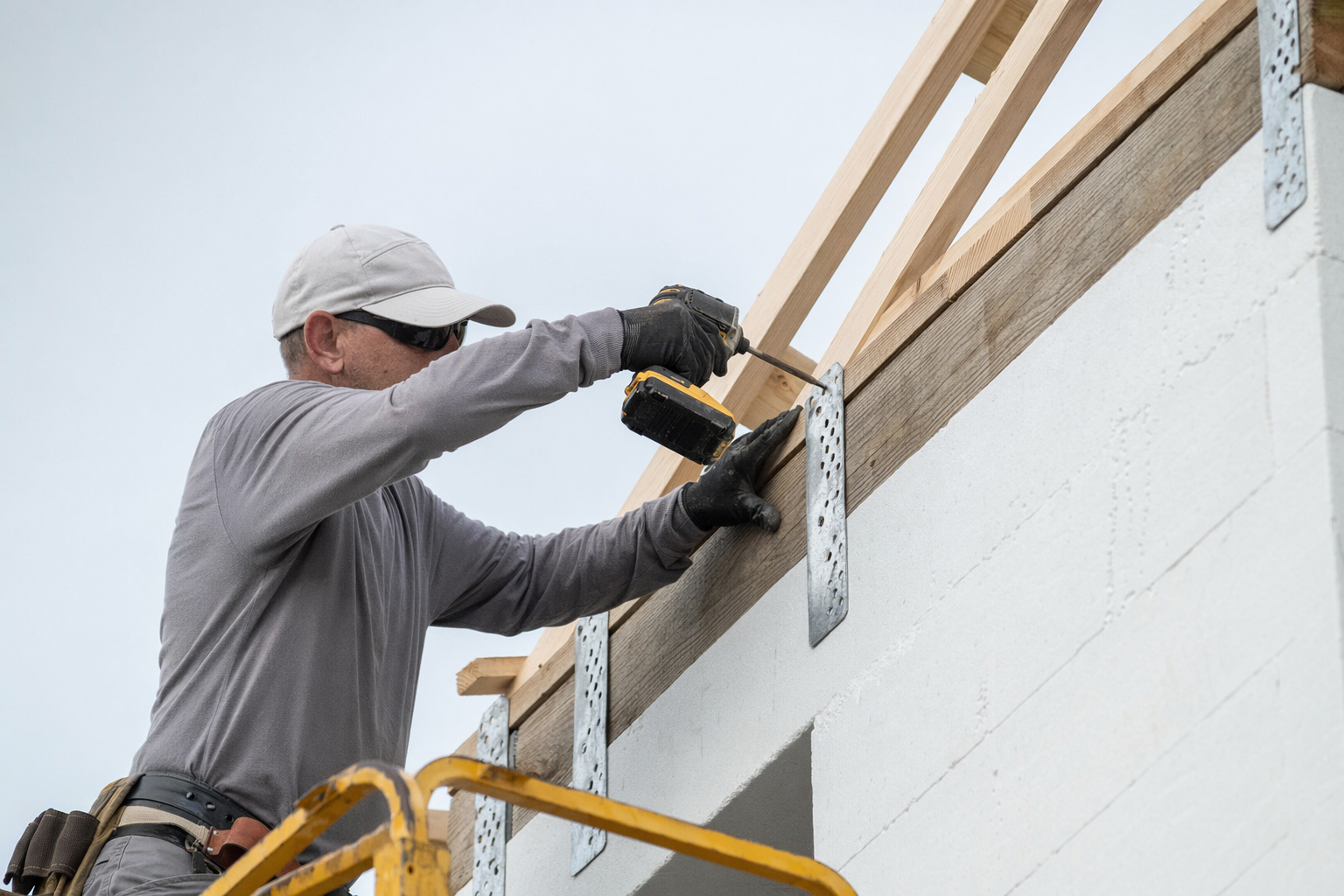
What a hurricane retrofit may help with
A storm retrofit is meant to improve how parts of the house work together when strong wind and wind-driven rain hit. In many homes, contractors look for ways to better connect the roof, walls, and foundation, and to reduce weak points around windows, doors, and garage doors.
Depending on the home, this work may help lower the chance of some common types of damage, such as roof lifting, failure at connections, or water getting in after an opening breaks. It can also help a house meet current best practices better than it did when it was first built.
Common goals include:
- strengthening roof-to-wall connections
- protecting openings from flying debris
- reinforcing vulnerable doors, especially large garage doors
- improving fastening or attachment details in key areas
If you are not sure what terms mean, pages like What is a roof tie-down? and Do I need storm shutters? can help you prepare for a contractor visit.

What it cannot promise during a major storm
No retrofit can promise that a home will survive a hurricane without damage. Storm strength, debris impact, flooding, workmanship, maintenance, and the home's original design all affect what happens.
A retrofit also does not automatically fix every risk. For example, a contractor may improve roof connections, but that does not mean flooding, fallen trees, sewer backup, or all forms of water intrusion are solved. Each house has different weak points, and some homes need broader repairs before retrofit work makes sense.
Be cautious with anyone who promises a specific safety result, a guaranteed insurance discount, or a one-size-fits-all package. A licensed contractor or engineer should explain what they observed on site, what they recommend, and what limits still remain.
Common upgrades contractors may evaluate
The right scope depends on the house. After an inspection, a contractor may evaluate several possible upgrades, but only an on-site assessment can confirm what applies.
Typical items they may review include:
- roof tie-downs or other roof-to-wall connection improvements
- secondary water barrier details at the roof, where appropriate
- impact-rated shutters or other opening protection
- stronger entry doors or reinforced garage doors
- fastening improvements for roof sheathing or exterior components
In some cases, contractors may also flag repair issues first, such as rot, corrosion, or damaged framing. That is important because retrofit work usually needs sound material to attach to. If you want to compare options from local companies, you can get matched, free.
Typical cost ranges for hurricane retrofit work
Costs vary a lot by region, house size, access, and how much of the home needs work. The numbers below are typical illustrative ranges, not quotes.
Small, targeted upgrades may run from a few hundred dollars to a few thousand dollars. Examples can include selected hardware, limited opening protection, or minor reinforcement where access is straightforward. Larger projects, such as whole-home opening protection, garage door reinforcement or replacement, and more extensive roof connection work, can reach several thousand dollars to well over $10,000.
Price often depends on:
- whether the work is done during a reroof or as a stand-alone job
- number and size of windows and doors
- attic access and roof shape
- existing damage or deferred maintenance
- permit requirements in your city or county
If you are checking affordability, ask each contractor to separate repair work from retrofit upgrades in writing. Some public programs may help with hazard-mitigation work in certain areas, so check whether you qualify for local or FEMA-related programs. California's Brace + Bolt program is for qualifying earthquake bracing, not hurricane retrofits, but it is still worth checking whether you qualify for any program that fits your location and hazard.
How contractors decide what to recommend
A good contractor should start with the home's actual conditions, not a canned sales package. They may look at the roof covering, roof shape, attic access, connection details, age of the home, type of windows and doors, and signs of past leaks or structural wear.
They should also consider where the house is located and what hazards are most relevant there, such as high wind exposure or wind-driven rain. In some cases, they may suggest that you ask a licensed engineer for design input, especially if conditions are unusual or hidden damage is suspected.
Useful signs of a careful recommendation are:
1. photos of the conditions they found
2. a written scope with materials and locations
3. explanation of what is repair versus retrofit
4. permit expectations and timeline
If a recommendation feels vague, ask them to show you exactly where the weak points are and what they plan to do there.
Questions to ask before you hire anyone
Before signing, ask direct questions in simple language. You want to know what the contractor saw, what work is included, and what is not included.
Helpful questions include:
- Are you licensed for this type of work in my state?
- Will you pull permits if they are required?
- What parts of my home are you upgrading, and why?
- Is any of this repair work rather than retrofit work?
- What product options do I have for shutters, doors, or hardware?
- What warranty applies to materials and installation?
- Can you give me the full scope and price in writing?
Always verify the contractor's license, bond, and insurance yourself, and confirm who will actually do the work. The homeowner keeps control over who to hire and what scope to approve.
How to compare local retrofit estimates
Do not compare estimates by price alone. Compare line by line so you can see whether two contractors are proposing the same scope, materials, and permit handling.
A fair comparison should include:
- exact locations of the work
- product names or performance descriptions where relevant
- repair items listed separately from retrofit items
- permit responsibility
- cleanup, disposal, and patching details
- payment schedule and change-order terms
If one estimate is much lower, ask what is missing. If one is much higher, ask whether it includes repairs or premium products the others did not include. You can also review more homeowner help topics at Help before choosing a contractor.
Always verify a contractor's license, bond, and insurance, and confirm the scope and price in writing before any work starts.