What Is a Roof Tie-Down and Why Does It Matter?
A roof tie-down is part of the hardware that helps connect the roof structure to the walls below it. Homeowners usually hear about it in high-wind areas, but whether it applies to your house depends on the age, design, and condition of the home and what a licensed professional finds on site.
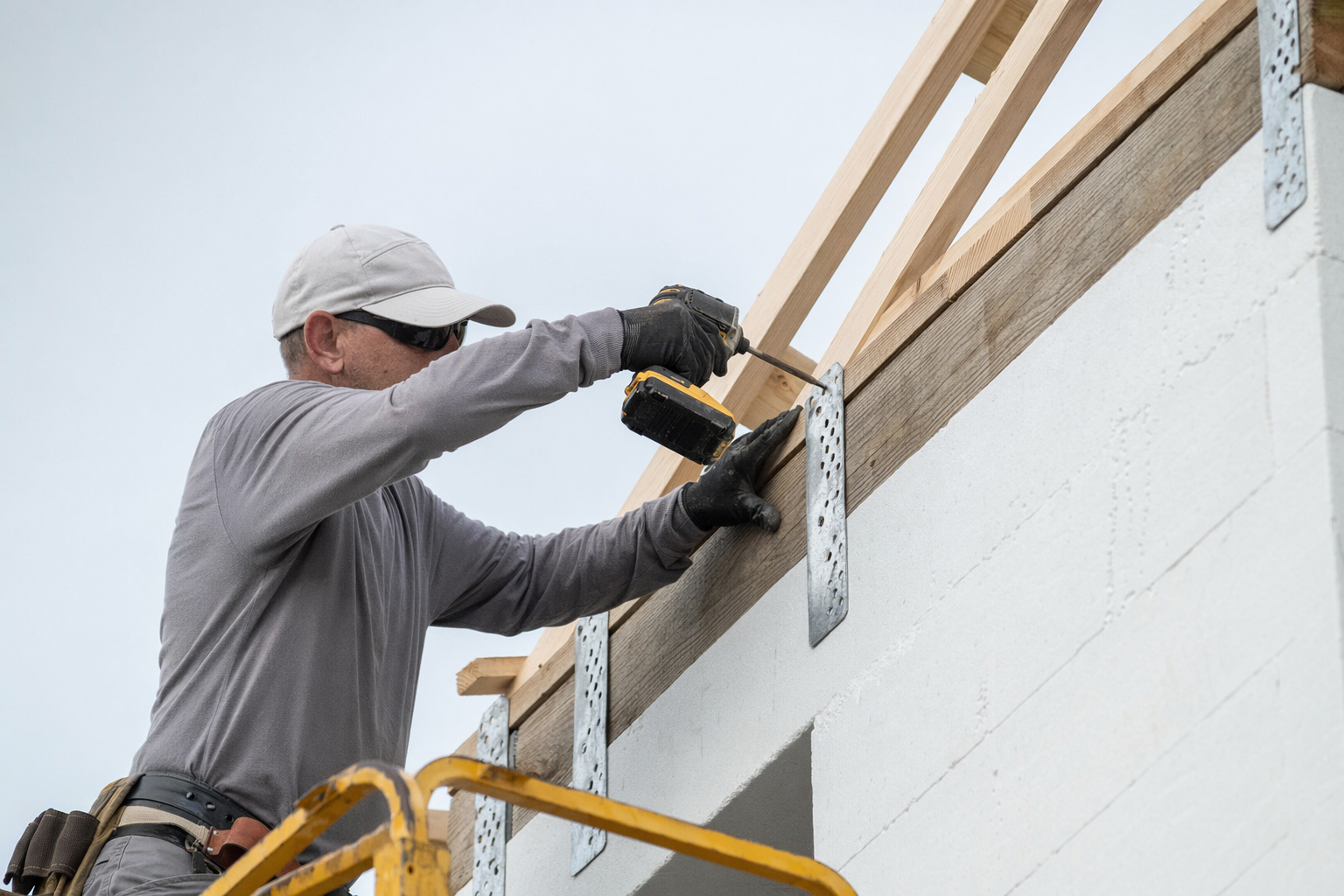
The short answer: what a roof tie-down is
A roof tie-down is a metal connector or fastening method used to help hold the roof framing onto the wall framing. Contractors may also call these clips, straps, or connectors, depending on the hardware and how it is installed.
The basic idea is simple: in strong wind, pressure can pull upward on parts of a roof. A roof tie-down is one part of the path that helps transfer that force from the roof into the walls and down into the rest of the house.
It is not a promise that a home will avoid damage in a storm. It is one possible upgrade that a contractor or licensed engineer may discuss after looking at your specific home.

How roof tie-downs fit into the roof-to-wall connection
When people talk about the roof-to-wall connection, they mean the way the roof framing and wall framing are joined together. Roof tie-down hardware is one part of that connection. Other parts of the house, including sheathing, nails, framing condition, and the rest of the load path, also matter.
That is why a contractor may look at roof tie-downs together with other wind-related details, not as a stand-alone fix. If you are trying to understand the bigger picture, it can help to read about how high winds damage a house.
Whether adding or improving connectors makes sense for your home depends on an on-site assessment. A licensed contractor can confirm what is already there, what is accessible, and what options are practical.
Why wind-prone areas talk about roof tie-downs
In coastal and storm-prone regions, homeowners often hear about roof tie-downs because strong wind can place uplift pressure on a roof. The concern is not just rain coming in. It is also whether key parts of the home stay connected when wind loads increase.
Older homes may have been built under different practices than newer homes. Some houses may already have visible connectors. Others may have limited access, or the framing may make upgrades more complicated. That is one reason two homes on the same street can get different recommendations.
If you are also comparing other storm upgrades, you may want to see do I need storm shutters?. Different upgrades address different weak points.
Common types you may hear about from contractors
Contractors may use different names for roof-to-wall hardware. The exact product and method depend on the framing style, access, and local requirements.
Common terms you may hear include:
- Hurricane clips
- Hurricane straps
- Metal connectors or ties
- Additional fastening at certain framing joints
The names can sound interchangeable in conversation, but the details matter. A licensed contractor can explain what hardware is proposed, where it would be installed, and why it is being recommended for your house. If you want options from local companies, you can get matched, free.
Signs a homeowner might ask about roof-to-wall connections
Most homeowners do not know what roof-to-wall hardware they have, and that is normal. You may want to ask about it if you live in a high-wind area, own an older home, are replacing part of the roof, or are already doing other storm-hardening work.
You might also ask if:
- A home inspector or contractor mentioned limited roof-to-wall connection details
- You are buying an older home and want to understand possible upgrades
- You have attic access and noticed metal connectors in some places but not others
- You are trying to plan a budget for storm-related improvements
These are only reasons to ask questions, not proof that work is needed. Only an on-site assessment can confirm what applies to your home.
What an inspection or contractor visit usually looks at
A contractor or licensed engineer will usually start by looking at the house type, roof shape, framing access, and visible connection points. In many homes, attic access is important because some connectors can only be seen clearly from inside.
They may also look at the overall condition of the framing area, whether there is damage, and whether there is enough access to install hardware without opening finished surfaces. In some homes, the practical question is not only "Is an upgrade helpful?" but also "Can it be installed reasonably here?"
During the visit, ask for plain-language answers on:
- What was found
- What work is being proposed
- What parts of the home would be opened or accessed
- What permits or approvals may be needed
- What the written scope includes and excludes
Costs vary a lot by home and scope. Small accessible improvements may be modest, while harder-to-reach work can cost more. Any price you hear should be treated as a typical illustrative range until a contractor sees your home and gives a written estimate.
Questions to ask before you approve any work
Before you sign anything, make sure you understand exactly what problem the contractor says they are addressing and how they plan to do the work. Keep the conversation specific to your house, not just general storm advice.
Useful questions include:
- What existing roof-to-wall connection did you observe?
- What connector or fastening method are you proposing?
- Why is this option appropriate for this home?
- What access will you need in the attic or interior?
- Will you provide a written scope, price, and timeline?
- Who pulls permits if required?
- What license, bond, and insurance information can I verify?
You should verify the contractor's license, bond, and insurance yourself and confirm the scope and price in writing before work starts. If you are exploring cost help for hazard-mitigation work more generally, check whether you qualify for any local, state, or FEMA-related programs. Some homeowners in California also check whether programs like Earthquake Brace + Bolt apply to other retrofit needs, but eligibility depends on the program and the home. For more homeowner help articles, visit the help center.
Always verify a contractor's license, bond, and insurance, and confirm the scope and price in writing before any work starts.