What Are Hurricane Straps on a House?
Hurricane straps are metal connectors that help tie parts of a house together so wind forces are less likely to pull them apart. They are common in storm-prone areas, but whether they matter for your home depends on the house design, age, and an on-site assessment by a licensed contractor or engineer.
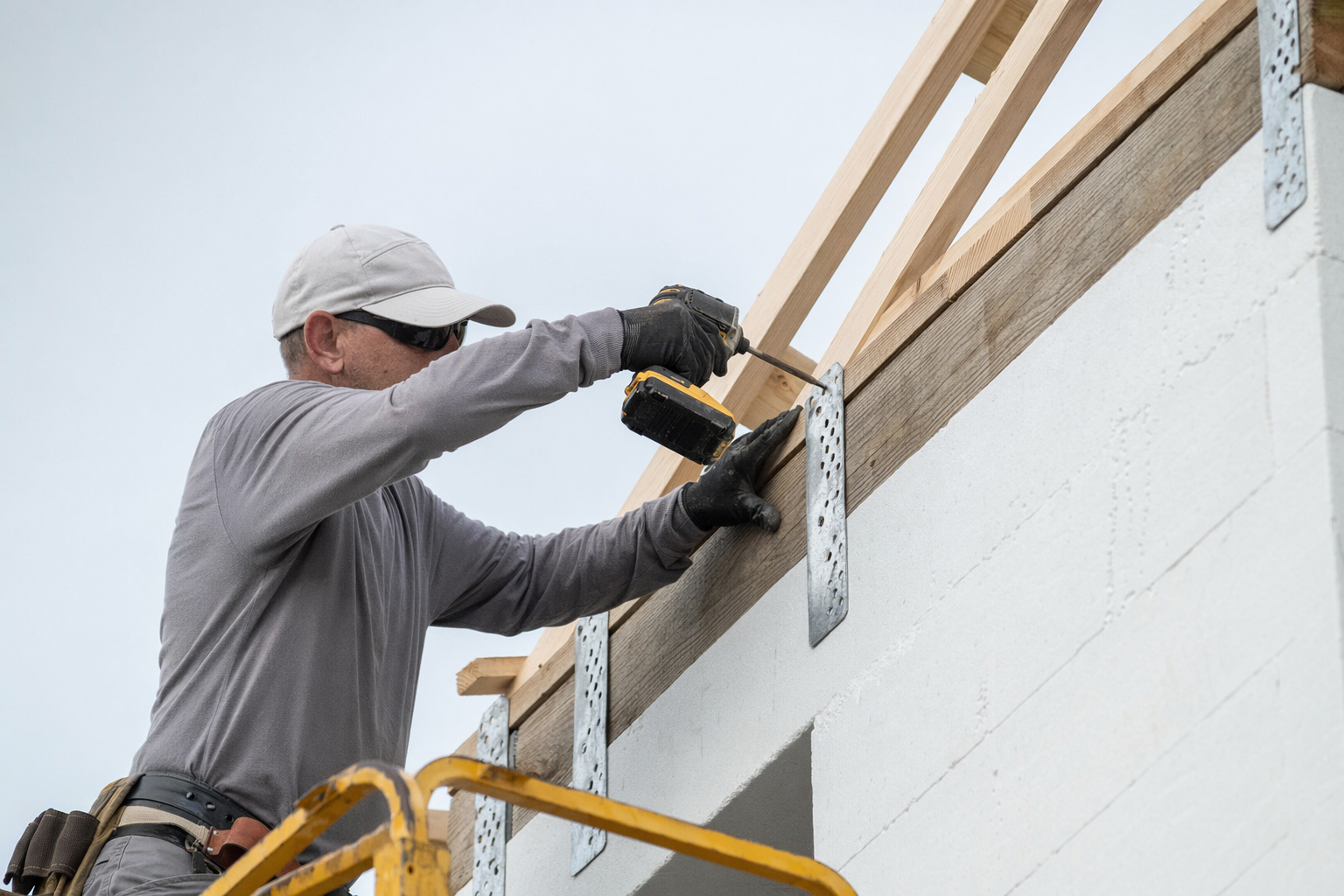
The short answer: what hurricane straps do
Hurricane straps are pieces of metal, usually steel, that connect framing members so the roof, walls, and sometimes floors are better tied together. In plain terms, they help create a stronger load path from the roof down toward the foundation when strong wind tries to lift or shift the house.
They do not make a home "storm-proof," and they do not guarantee a certain level of protection. They are one part of a larger system that can include roof sheathing attachment, wall framing connections, and foundation anchorage.
If you live in a wind-prone area, a contractor may look at straps along with other connectors. Homeowners who are also learning about basic tie-down hardware may want to compare them with anchor bolts for a house.

Where hurricane straps are usually installed
The most common place is where the roof framing meets the wall framing. On many homes, that means the connection between rafters or trusses and the top of the wall. The goal is to reduce the chance that wind uplift separates the roof structure from the walls.
Depending on the home, similar metal connectors may also appear at:
- roof-to-wall connections
- floor-to-wall connections
- porch or addition framing connections
- areas where an older repair or remodel added reinforcement
Not every home uses the same hardware in the same places. A licensed contractor can confirm what connectors are present and whether additional work is even relevant for your house.
How straps differ from clips and other connectors
Homeowners often hear terms like *straps*, *clips*, *ties*, and *hurricane connectors* used loosely. In everyday conversation, people may use them almost interchangeably, but they are not always the same exact product.
A strap is often a longer metal connector that wraps over or around framing members, while a clip is usually more compact and fastens at a joint. Other connectors may include hold-downs, framing angles, or specialty hardware designed for specific loads and framing conditions.
What matters most is not the nickname but whether the connector is the right type, size, and installation for that part of the house. That is something a qualified contractor or licensed engineer should evaluate on site, not something to decide from photos alone.
Why older homes may not have them
Many older homes were built before newer wind-focused construction practices became more common in some regions. Some houses may have limited metal connectors, older-style nailing patterns, or additions built at different times with different standards.
That does not automatically mean the house is unsafe or that it definitely needs hurricane straps added. It only means the connections may differ from what a contractor sees in newer construction.
Homes can also be mixed. For example, a reroof, room addition, or repair after a storm may have added connectors in one area but not everywhere. A site visit is the best way to understand what is actually there.
What a contractor looks for during an inspection
During an inspection, a contractor usually starts by identifying the type of framing and whether key connection points are visible. In some homes, attic access makes this easier. In others, finishes may hide the important joints.
They may look for:
- whether metal connectors are present at roof-to-wall joints
- whether the connectors appear properly fastened and not heavily rusted or damaged
- whether there are signs of past movement, water intrusion, or repairs
- how the roof, walls, and foundation connections work together as a system
A contractor may also mention related upgrades if they see them, but only a licensed professional who inspects the home can say what work is appropriate. If you want help finding someone local, you can get matched, free.
Typical cost ranges and what affects price
Costs vary a lot because access, house size, framing type, and local labor rates all matter. As a typical illustrative range, adding or improving hurricane straps or similar roof-to-wall connectors may run from a few hundred dollars for limited, easy-access work to several thousand dollars for more extensive work on a larger or harder-to-access home.
The main cost factors usually include:
- how many connection points need work
- attic or roof access
- whether finishes need to be opened and repaired
- corrosion or damage that must be addressed first
- local permit or inspection requirements, where applicable
Ask for the scope in writing so you can compare bids fairly. If you are also exploring hazard-mitigation help, check whether you qualify for local or public programs. For earthquake-related upgrades in California, some homeowners also look into the Earthquake Brace + Bolt program, but eligibility and covered work vary.
Questions to ask before hiring someone
Before you hire anyone, ask them to explain what they found, what they recommend, and what is optional versus required for the quoted scope. You should also verify the contractor's license, bond, and insurance yourself and make sure the final scope and price are written clearly.
Helpful questions include:
- What connections did you inspect, and which ones were visible?
- Are you recommending straps, clips, or another connector, and why?
- What parts of the home will need to be opened or repaired?
- Is permit work expected in my area?
- What is included in the written price, and what could change it?
- Who will perform the work, and what documentation will I receive at the end?
If you are still comparing options, you can browse more homeowner answers in our help center.
Always verify a contractor's license, bond, and insurance, and confirm the scope and price in writing before any work starts.