How do I brace a masonry chimney?
A brick or block chimney can be one of the more vulnerable parts of an older home during shaking or severe weather. Bracing may help reduce the chance of damage, but the right approach depends on the chimney, the house, and an on-site assessment by a qualified professional.
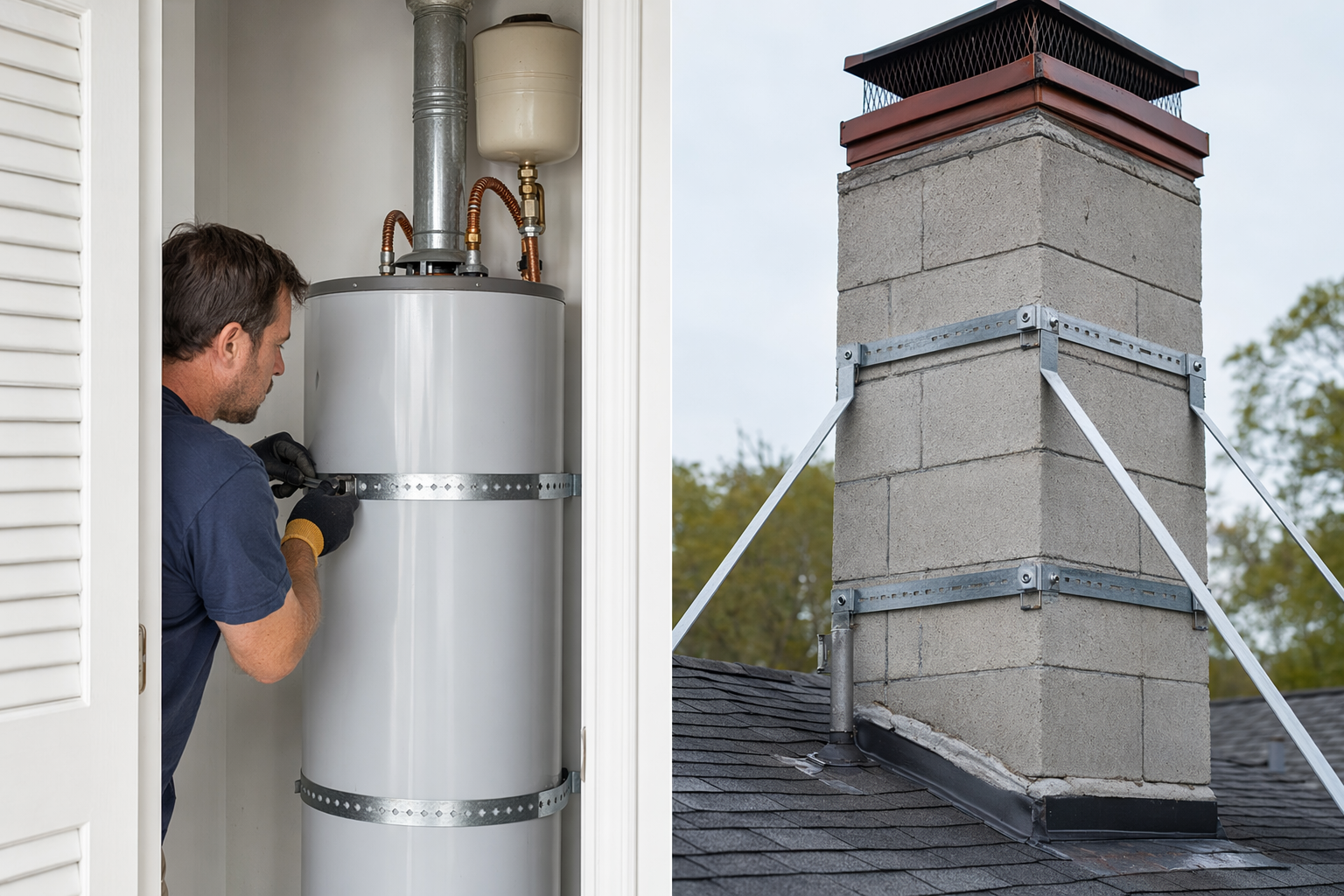
Why unreinforced masonry chimneys are a concern
Many older chimneys are made of brick or concrete block with mortar joints and little or no internal steel reinforcement. In an earthquake, that kind of chimney can crack, shift, or lose bricks. In strong wind and storm conditions, loose or deteriorated masonry can also become a problem.
The risk is not the same for every home. Height, age, condition, roof connection, past repairs, and local weather or seismic exposure all matter. A contractor or licensed engineer can confirm whether your chimney appears vulnerable and what options make sense.
If you are also learning about other house connections, pages like what is a roof tie-down and can a retrofit protect against hurricanes can help you understand the bigger picture.

What chimney bracing usually involves
Chimney bracing usually means adding hardware or support to help the chimney stay better connected and better supported. The exact method depends on the chimney design and the home's structure. This is not one single standard fix for every house.
Common possibilities a contractor may discuss include:
- metal brace kits or straps near the roofline
- repairs to damaged mortar or loose brick before any bracing
- partial rebuild of the portion above the roof if it is deteriorated
- reducing height or changing the chimney configuration in some cases
- adding or improving connections where the chimney passes the roof or attic area
A contractor may also tell you that bracing alone is not the right answer if the chimney is already badly cracked, leaning, or separating from the house. In that case, they may recommend further evaluation by a licensed engineer before any work starts.
How a contractor decides what options fit your home
The first step is usually an on-site visit. The contractor looks at the chimney inside and outside, the part above the roof, visible cracking, how the chimney connects to the home, and whether there are signs of movement or past patch repairs.
They may also ask about the age of the house, whether the fireplace is still used, and whether there have been leaks, falling mortar, or previous earthquake or storm damage. If access is limited, they may need attic or roof access to understand the condition.
A good quote should explain what they observed, what work is included, and what is not included. If the contractor believes design work is needed, ask whether you should speak with a licensed structural engineer before deciding.
Typical cost ranges and what affects the price
Costs vary a lot because chimney work can be simple or extensive. As a very typical illustrative range, basic bracing or minor stabilization may run from about $1,500 to $4,000. If the chimney needs significant masonry repair, partial rebuild, scaffold work, or roof-area repairs, the total can be much higher, often $4,000 to $12,000+.
Price usually depends on:
- chimney height and access difficulty
- visible cracking, leaning, or loose brick
- whether roof, attic, or flashing work is needed
- permit and inspection requirements in your city
- whether a licensed engineer's design or review is required
These are only broad ranges, not promises. Your actual price depends on your home, region, and scope of work. If you are already planning other retrofit work, ask whether the chimney work can be priced together. In some areas, programs such as California's Brace + Bolt or FEMA-related mitigation funding may help with eligible work, so check whether you qualify.
Questions to ask before hiring a retrofit contractor
Before signing anything, ask the contractor to explain the scope in plain language. You want to know what problem they believe they are addressing and what parts of the chimney or roof area they will touch.
Useful questions include:
- What condition issues did you see on-site?
- Is this a bracing job, a repair job, or partly a rebuild?
- Will you need to open walls, attic finishes, or roofing?
- Are permits or inspections required here?
- Is engineering review recommended for this chimney?
- What cleanup, patching, and weatherproofing are included?
- What warranty, if any, applies to your workmanship?
Also verify the contractor's license, bond, and insurance yourself, and make sure scope, materials, timeline, and price are in writing. The homeowner keeps the choice of who to hire and what work to approve.
Permits, inspections, and paperwork to expect
Many chimney projects require permits, especially if the work changes masonry, roof framing connections, or structural attachments. The rules depend on your city or county, so ask the contractor what is commonly required for your area and confirm with the local building department if needed.
Typical paperwork may include a written proposal, permit application details, change orders if hidden damage is found, and a final invoice showing what was completed. If engineering is required, there may also be drawings or calculations prepared by a licensed professional.
Do not rely on verbal promises alone. Ask for everything in writing, including who handles permits, whether inspections are scheduled by the contractor, and what happens if the inspector asks for revisions.
When to get quotes and compare local options
Get quotes before the chimney gets worse, especially if you already see cracks, leaning, loose brick, or water entry around the chimney. Work is often easier to schedule in calmer seasons, before peak storm periods or after local earthquake activity increases demand.
Try to compare at least two or three local options if possible. Look for contractors who explain the scope clearly and who do not rush you into a decision. If you want a starting point, you can get matched, free or browse more homeowner questions in the help center.
When you compare bids, do not look at price alone. Compare the exact work included, permit handling, expected timeline, and whether the contractor thinks an engineer should review the chimney.
Always verify a contractor's license, bond, and insurance, and confirm the scope and price in writing before any work starts.