How can I tell whether my house is bolted to the foundation?
If you are wondering whether your house is bolted to its foundation, there are a few signs you may be able to check yourself. But in many homes, the answer is not obvious without looking in a crawl space or having a licensed contractor inspect it.
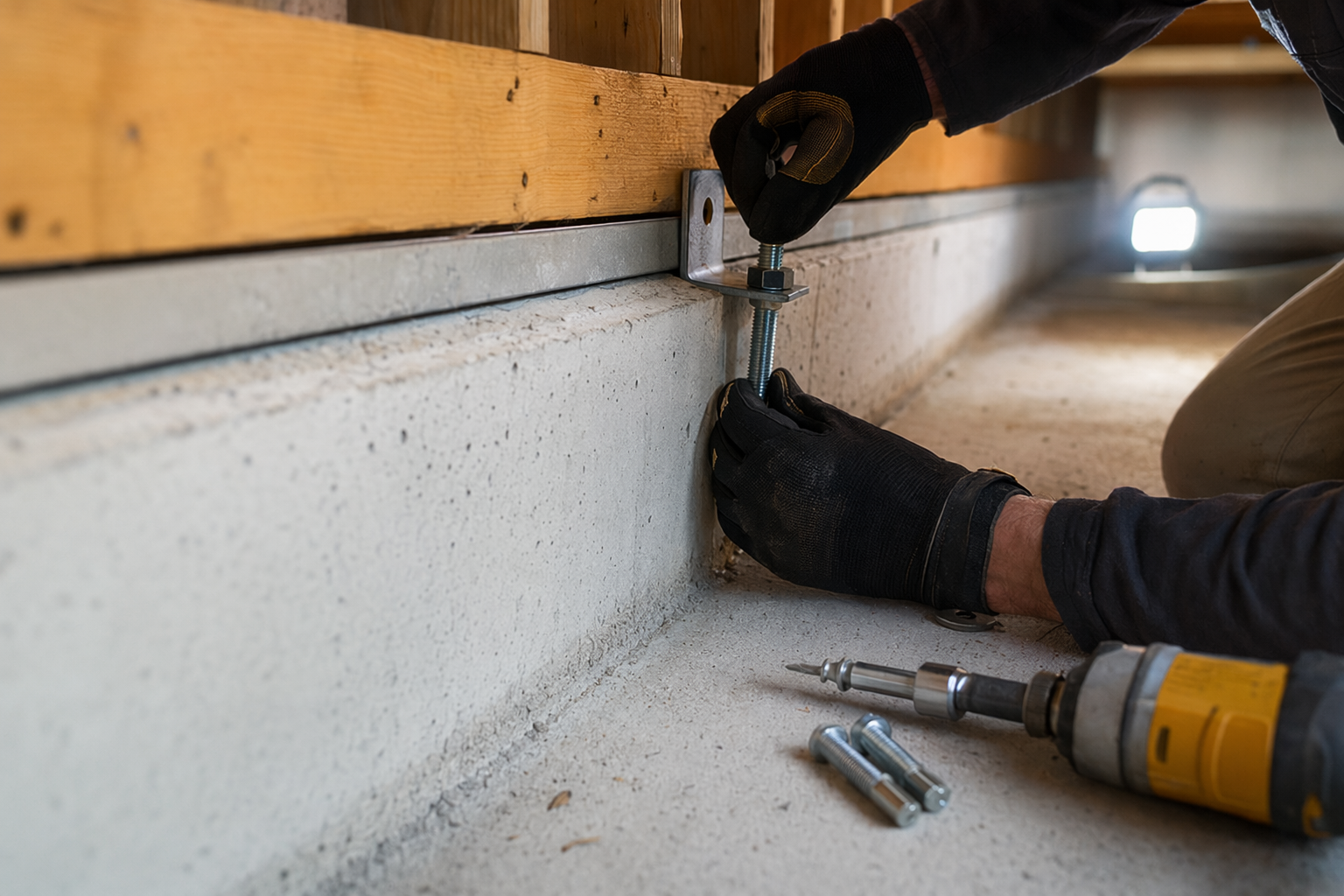
What “bolted to the foundation” usually means
When people say a house is "bolted to the foundation," they usually mean the wood framing at the bottom of the house is mechanically attached to the concrete foundation with anchor bolts or similar approved hardware. In many homes, this connection is part of a broader seismic retrofit, but the exact setup depends on the home, its age, and local construction practices.
In plain terms, bolts help connect the house to the concrete below it so the framing is less likely to shift relative to the foundation during ground movement. That does not tell you by itself whether your home has all the reinforcement it may need. A licensed contractor or engineer has to confirm what is present and whether any additional work is recommended after an on-site assessment.
If you are not sure whether this kind of work even applies to your home, start with which homes need a seismic retrofit.

Why homeowners ask about foundation bolts
Homeowners usually ask this question when they buy an older home, prepare for an earthquake, or hear terms like retrofit, cripple wall bracing, or anchor bolting. Older houses are more likely to raise questions because building practices changed over time, and some homes were built before modern retrofit methods became common.
People also ask because they want to understand possible costs before calling a contractor. That is reasonable, but a visual check can only tell you so much. Whether your house needs bolting or related work depends on what is actually there, the condition of the framing and foundation, and what a licensed professional sees on site.
If your home is older, you may also want to read are older homes more at risk in an earthquake.
Simple signs you may be able to check yourself
You may be able to do a basic first look, especially if your house has a crawl-space access door, basement, or unfinished utility area. This is only a screening step, not a formal inspection.
A few signs homeowners sometimes look for are:
- Large metal bolts with washers and nuts connecting wood to concrete
- Metal plates or brackets along the base of a wall near the foundation
- Repair tags, permits, or paperwork from past retrofit work
- Real-estate disclosures mentioning foundation bolting or seismic work
You can also look around the outside for clues that the house has a raised foundation and a crawl space below. That may make inspection easier. But even if you do not see obvious bolts, it does not automatically mean the home is unbolted. Hardware may be hidden by insulation, finishes, stored items, or limited access.
What you might see in a crawl space or basement
If you can safely view the area where the wood framing meets the concrete, you may be able to spot anchor bolts at intervals along the sill plate, which is the horizontal wood member resting on the foundation. In some homes, you may also see square or round washers, nuts, and other connectors.
In an unfinished basement or crawl space, homeowners sometimes notice:
- A wood sill plate sitting directly on top of concrete
- Metal bolts passing through the wood into the concrete below
- Plywood panels or other bracing on short wood walls above the foundation
If you cannot clearly identify these items, do not guess. Lighting is often poor, access is tight, and conditions may not be safe for a homeowner to judge accurately. A contractor can confirm what you are seeing and explain whether the visible hardware is older work, newer retrofit work, or something unrelated.
Common reasons it’s hard to tell
Many homeowners expect this to be easy to verify, but often it is not. Some crawl spaces are too tight to enter safely. In other homes, insulation, wall coverings, pipes, ductwork, or stored belongings block the view of the sill plate and foundation connection.
Another issue is that houses may have some hardware without having a complete retrofit. For example, a home might have a few visible anchors in one area, later repairs in another area, or mixed old and newer work. That is why a quick look or one photo may not answer the full question.
Paper records can also be incomplete. A seller may not know what was done decades ago, and permit history varies by city and county. If you are unsure, a licensed contractor's site visit is usually the clearest next step.
When to ask a licensed contractor to inspect it
It makes sense to ask a licensed contractor to inspect the home if you cannot safely access the crawl space or basement, if the house is older, if you see cracks or shifting and want a professional opinion, or if you are planning repairs and want the scope confirmed in writing.
Ask the contractor to explain, in plain language, what they observed, what they recommend, and what is optional versus necessary in their opinion. If needed, you can also ask whether a licensed engineer should evaluate the home. BedrockMatch can help you get matched, free with local contractors, but you should still verify the contractor's license, bond, and insurance yourself and confirm scope and price in writing.
If your contractor says your home may qualify for retrofit assistance, you can also check whether programs like California's Brace + Bolt or certain FEMA-related hazard-mitigation grants are available in your area. Eligibility depends on the home, location, and program rules.
What to do next if your house may not be bolted
Do not panic if it looks like your house may not be bolted. The next practical step is to get an on-site assessment so you know what is actually present and what work, if any, is being recommended for your specific home.
When you compare bids, ask each contractor for the same basic information:
- What they found during the inspection
- What work they propose and why
- Whether permits are expected
- The total price and what is included
- The estimated timeline
Typical retrofit costs vary widely depending on access, foundation type, repairs needed, and whether related work such as bracing is involved. A contractor can give you a project-specific estimate after seeing the home. If you want more background before calling someone, the main help center can guide you to related topics.
Always verify a contractor's license, bond, and insurance, and confirm the scope and price in writing before any work starts.