Which homes are more likely to need a seismic retrofit?
Some homes are more likely than others to be good candidates for seismic retrofit work, but no website can tell you for sure from age alone. The practical next step is an on-site review by a licensed contractor or engineer who can look at the foundation, framing, and layout of your specific home.
The short answer: some homes are more likely candidates
Homes that often raise retrofit questions include older wood-frame houses, homes with crawl spaces, houses built on slopes, and homes with open parking or large open first-floor areas. That does not mean every such home needs the same work, or any work at all. It means these homes are more likely to benefit from a closer look.
In many areas, houses built before modern seismic practices became common may have weaker connections between the wood framing and the foundation. Older cripple walls, unbraced crawl spaces, and irregular layouts can also be part of the picture. If your house is older and you are wondering about risk, this guide on older homes and earthquake risk may help.
A retrofit is not one single product. It can mean different improvements depending on the home, such as foundation bolting or bracing certain short walls in a crawl space. A contractor or licensed engineer can confirm what, if anything, applies to your home after an on-site assessment.

Older home features that often raise questions
One common question is whether the house was built before anchor bolts, plywood bracing, and other connection details became standard in that area. Many older homes perform differently from newer homes simply because of how they were built at the time.
Features that often lead homeowners to ask about retrofit options include:
- A house built decades ago with little record of seismic upgrades
- A raised foundation with a crawl space under the floor
- Short wood-framed walls between the foundation and the main floor
- A first floor with large openings, such as garage doors or open parking
These features do not prove a problem. They just make an evaluation more worthwhile. A licensed contractor can look for missing or limited connections, signs of previous retrofit work, and whether the visible conditions match the plans or permit history, if records are available.
Foundation and crawl-space conditions worth checking
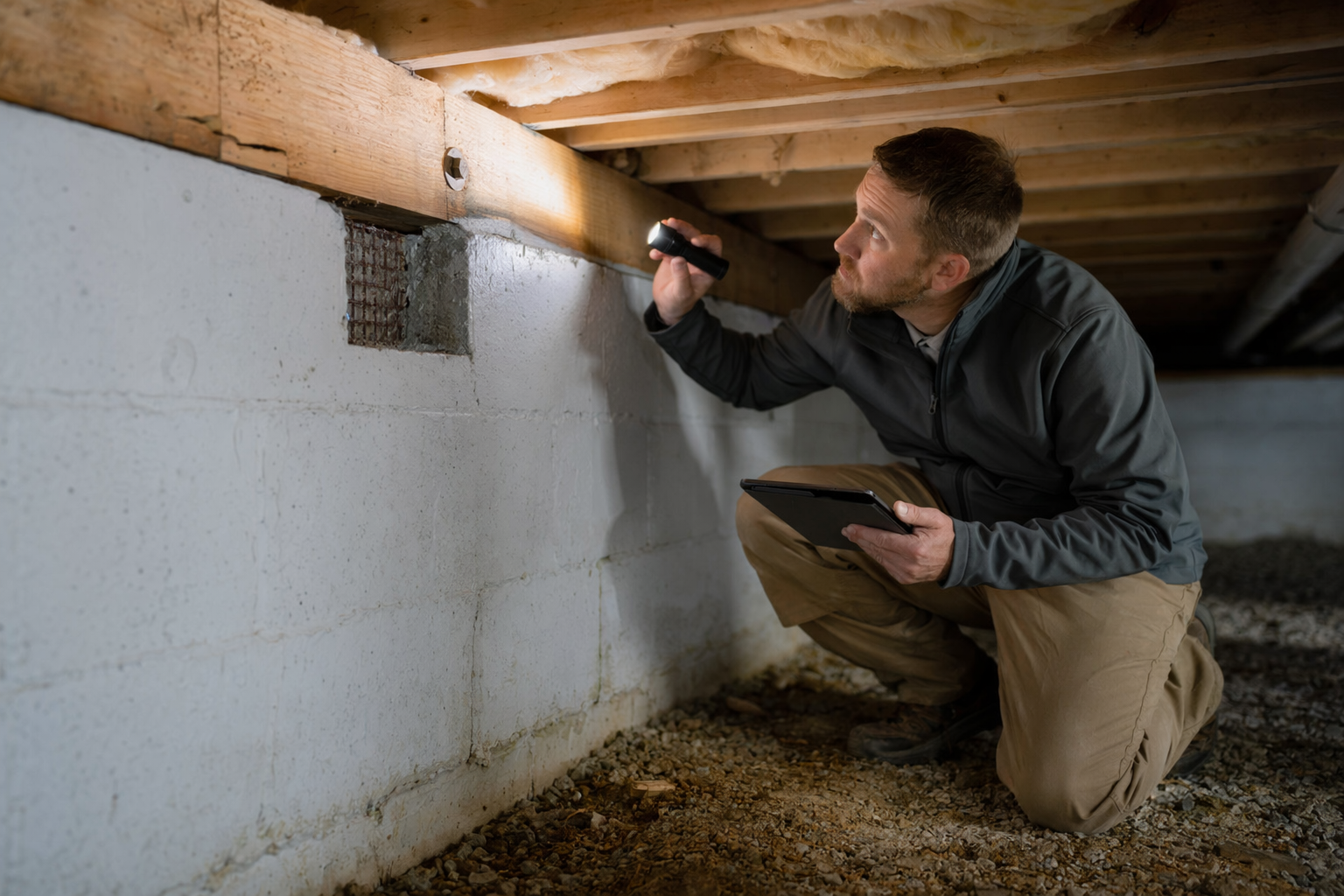
Many seismic retrofit conversations start at the bottom of the house. Contractors often look at how the wood framing connects to the foundation and whether the crawl-space walls are braced in a way that helps the house move as one unit during shaking.
Common items that may be reviewed include anchor bolts, sill plates, washers, plywood bracing, and the overall condition of the concrete or masonry foundation. Water damage, rot, termite damage, or heavy corrosion can also affect what work is possible and what should be repaired first.
If your home has a crawl space, access matters too. A contractor may need enough room to inspect the connections safely. If you are just starting, get matched, free to speak with local contractors who can inspect the space and explain whether any retrofit options are worth pricing.
If cost is your main concern, check whether you qualify for programs such as California's Earthquake Brace + Bolt grant or certain FEMA-related hazard-mitigation funding. Availability, amount, and eligibility depend on the program, your location, and the scope of work.
How slope, hillside, and soft-story layouts can affect risk
Homes on hillsides or sloped lots can have very different support conditions from one side of the house to the other. Some may use tall posts, stepped foundations, retaining elements, or mixed support systems. Those layouts can make the evaluation more specialized, which is why hillside homes often benefit from an experienced contractor and, in some cases, a licensed engineer.
Soft-story layouts also raise questions. In plain terms, this usually means one level is much more open or less stiff than the floors above it, such as tuck-under parking or a large open front with fewer walls. Whether a layout meets any local definition is a separate question, and local rules vary.
If you have heard about a city soft-story requirement, read what is a soft-story retrofit ordinance. A local contractor can explain whether a rule may apply in your area, but only an on-site review and local permitting process can confirm scope.
Why visible cracks do not tell the whole story
Homeowners often notice cracks in stucco, drywall, brick veneer, or concrete and wonder if that means they need a seismic retrofit. Sometimes cracks matter, and sometimes they come from normal settling, moisture, temperature changes, or past repairs. The pattern, location, and cause are what matter.
The opposite is also true: a house can look fine on the surface and still have weak or missing connections underneath. That is why visible signs alone are not enough to decide whether retrofit work is needed.
It helps to think of cracks as a reason to ask questions, not as proof. A contractor or engineer can look at the home as a whole and tell you whether the visible damage appears related to movement, deterioration, drainage, or something else.
What a contractor or engineer looks at during an assessment
A good assessment usually starts with the home's age, foundation type, crawl-space or garage layout, and any prior retrofit records. The person inspecting may also look for access limitations, moisture issues, damaged framing, and signs that earlier work was done without clear documentation.
They may review items such as:
- How the house is attached to the foundation
- Whether short walls in the crawl space appear braced
- Whether the first floor has large openings or weak areas
- Whether slope or hillside conditions change the support system
- Whether repairs are needed before any seismic work
If the home is straightforward, a contractor may be able to explain likely options during the visit. If the structure is unusual, heavily altered, or on a steep site, they may suggest that you ask a licensed engineer for design input. That is normal and can help you compare apples to apples when getting bids.
How to compare retrofit recommendations and estimates
If you get more than one recommendation, do not focus only on the total price. Ask each contractor to describe the exact scope in writing, including what areas will be accessed, what hardware or bracing is proposed, what repairs are excluded, and whether permits are included. Two estimates can look very different because they are pricing different work.
A useful comparison checklist is:
- License number, bond, and insurance information you can verify yourself
- Written scope with specific locations and materials
- Permit responsibility and inspection steps
- Estimated timeline and site access needs
- What is not included, such as rot repair or drainage corrections
You stay in control of who to hire and whether to move forward. BedrockMatch can help you meet local contractors, but it is still important to verify credentials yourself and confirm scope and price in writing before you sign. If you want a starting point, you can browse more homeowner topics in our help center.
Always verify a contractor's license, bond, and insurance, and confirm the scope and price in writing before any work starts.