How do I strap my water heater?
Water heater straps help keep a tank from tipping or shifting during shaking or impact. For many homes, this is a small but practical safety upgrade, but the right setup depends on the tank, wall, and local rules.
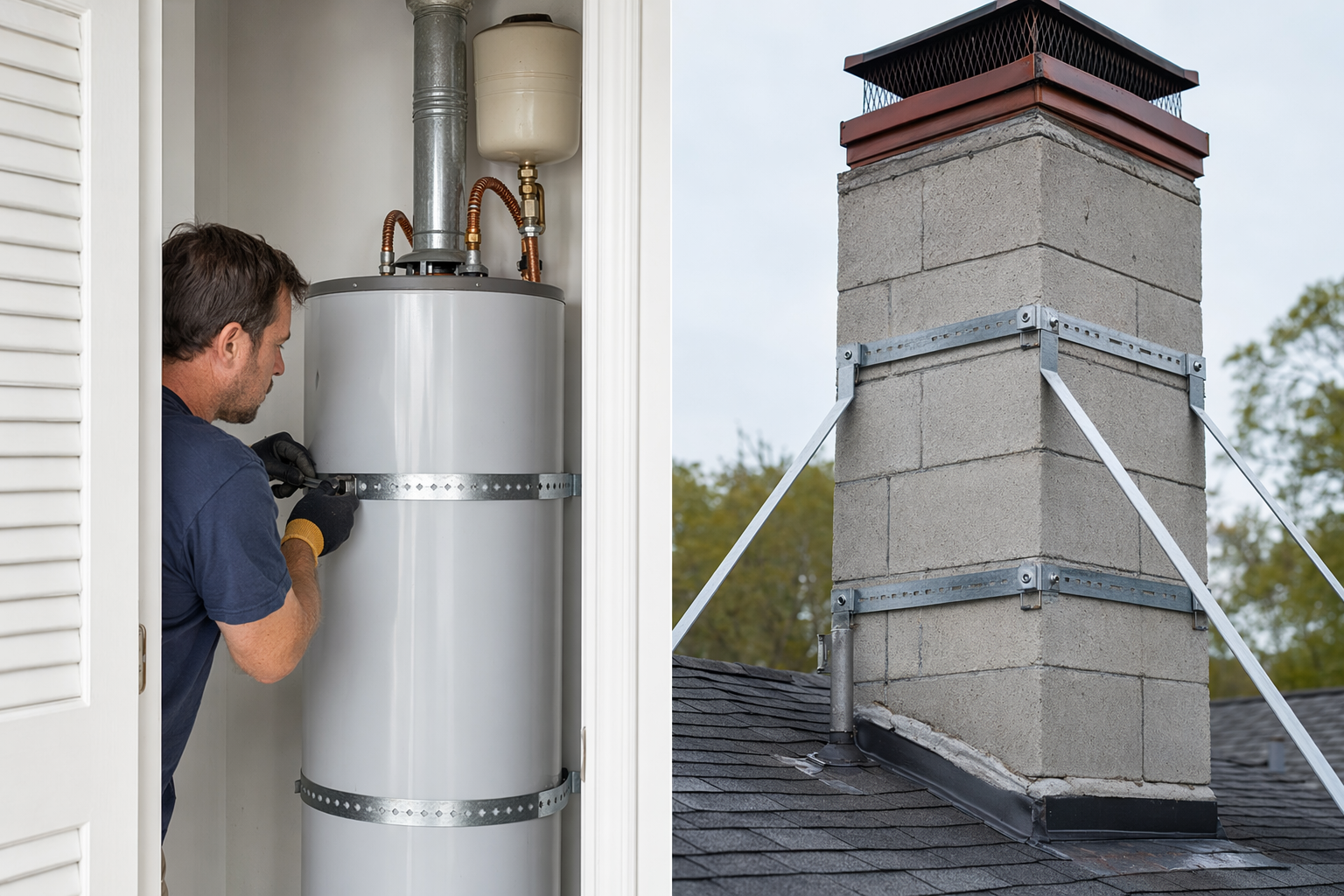
What water heater strapping does
Water heater strapping is meant to help hold the tank in place so it is less likely to move, tip, or pull away from the wall during an earthquake or other sudden force. It does not make a home disaster-proof, and it does not replace a full retrofit when one is needed.
A licensed contractor can confirm whether strapping applies to your home and what kind of hardware is suitable for your wall and water heater. If you are working on several safety upgrades, you can also get matched, free to compare local licensed contractors.

Why unsecured water heaters can be a problem
When a tank moves, it can strain or damage the gas line, water connections, venting, or nearby finishes. In some homes, that can lead to leaks, loss of hot water, or other hazards that need repair after shaking.
That does not mean every unsecured heater will fail, and it does not mean strapping alone will prevent all damage. It is one common safety measure that may reduce the chance of the tank shifting.
If you are checking other older-home hazards too, you may also want to read how do I brace a masonry chimney?.
What a typical strap setup may include
A typical setup may include metal straps wrapped around the tank and anchored into framing or another approved backing, plus hardware chosen for the wall type. Some installations also involve small adjustments around the gas line, vent, or water piping so the final setup fits correctly and safely.
Common parts may include:
- Two metal restraint straps
- Anchor bolts or lag screws
- Wall blocking or approved backing when needed
- Spacers or clips, depending on clearance
- Connection checks after installation
The exact parts and layout vary. A contractor can confirm what is appropriate after an on-site assessment, especially if the heater sits in a garage, closet, or tight utility area.
Where straps are usually placed
Many standard installations use two restraint points on the tank, often in the upper and lower portions of the water heater body. Placement, spacing, and anchoring method can vary by the tank size, wall construction, and local requirements.
It is best not to guess on exact placement from a photo or online diagram. A licensed installer should verify where the straps can be anchored securely and whether there are clearance issues around controls, venting, or piping.
If your home also needs broader earthquake or storm work, start with the main help center to see related topics.
When a simple DIY approach may not be enough
A simple DIY kit may not be enough when the wall behind the heater is weak, the tank is in a tight or unusual location, or the gas, vent, or plumbing connections need adjustment. The same is true if there is rust, prior damage, or signs the heater was installed without proper backing.
You should also be cautious if your home is older and you are not sure what is behind the wall surface. A contractor can confirm whether extra blocking, different anchors, or related repairs are needed.
If you are thinking about hazard upgrades more broadly, storm and seismic needs are not always the same. This guide on whether a retrofit can protect against hurricanes explains the difference in plain language.
How to choose a licensed contractor
Ask for a written scope of work that explains what the contractor plans to install, what is included in the price, and whether permit handling is part of the job. You should also verify the contractor's license, bond, and insurance yourself before you hire anyone.
Helpful questions to ask include:
- Have you installed water heater restraints in homes like mine?
- Will you check the wall backing and connections before you start?
- Do you expect a permit or inspection for this job?
- What is included in the written price?
- If extra work is needed, how will you approve it with me first?
The homeowner keeps the choice of who to hire. BedrockMatch is a free matching service for homeowners, and participating contractors pay a flat fee to be introduced.
What homeowners often ask about cost and permits
For a straightforward job, homeowners often see typical illustrative ranges from about $150 to $500 for basic strapping work, but the price can be higher if access is tight, backing must be added, or plumbing, vent, or gas connections need attention. Actual cost depends on the home, region, and scope.
Permit rules vary by city and county. In some places, simple strapping may be treated differently from work that changes plumbing, gas, or venting. A licensed contractor or your local building department can tell you what applies in your area.
If this work is part of a larger seismic retrofit, check whether you qualify for programs such as California's Earthquake Brace + Bolt grant or other FEMA-related hazard-mitigation funding. Those programs can help with some qualifying work, but eligibility and scope are not guaranteed.
Always verify a contractor's license, bond, and insurance, and confirm the scope and price in writing before any work starts.