How much do hurricane straps cost for a home?
Hurricane straps are metal connectors that help tie parts of the roof and walls together, but the cost can vary a lot from house to house. A local contractor needs to see your attic, roof framing, and access conditions to confirm whether this work applies to your home and what it may cost.
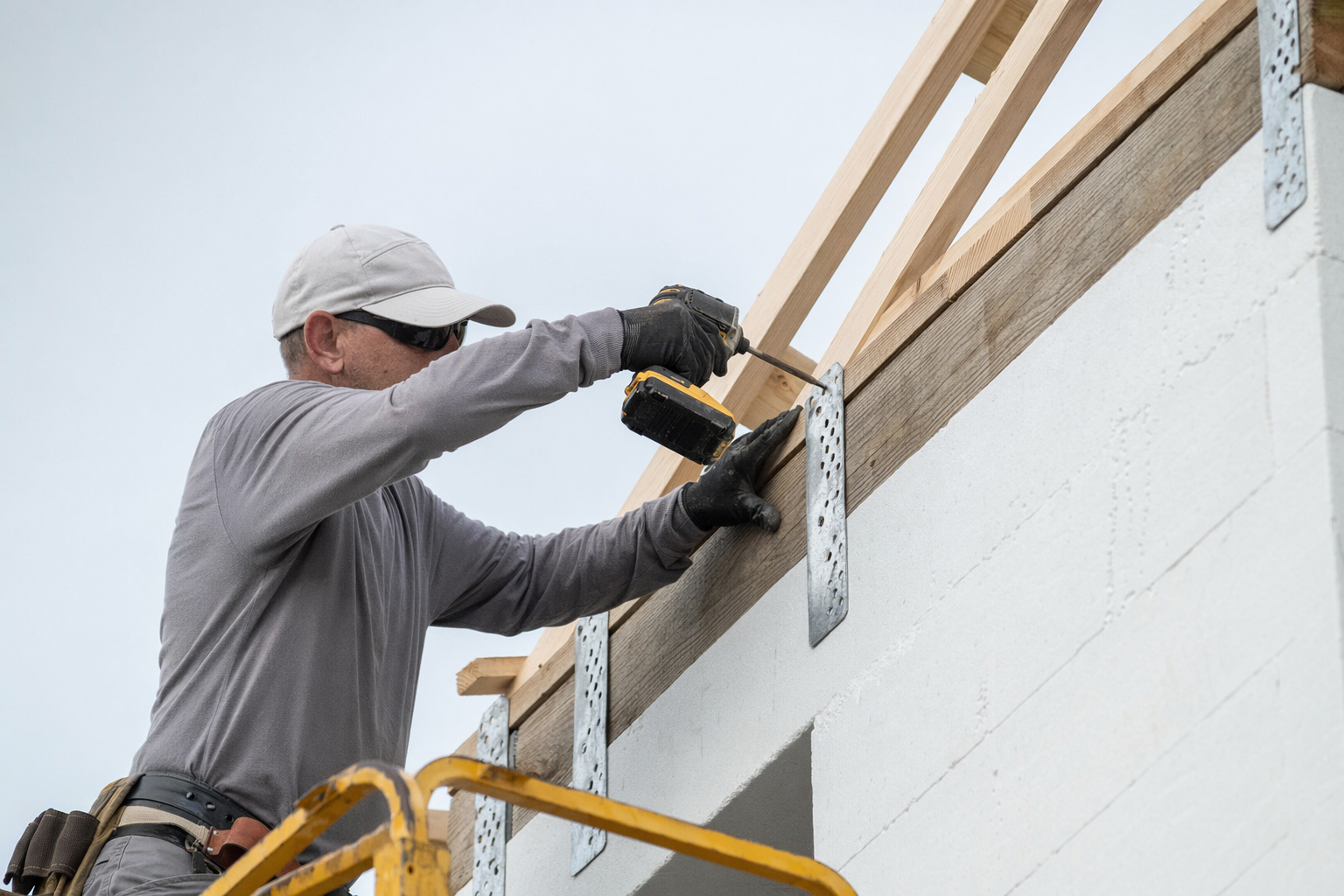
Typical hurricane strap cost range
For many homes, hurricane strap work is often priced in the hundreds to low thousands of dollars, but the real number depends on how many connectors are needed, where they are installed, and how easy the framing is to reach. A small, straightforward job may cost less than a larger home with difficult attic access or repair work.
If straps are being added as part of a broader wind retrofit, the total can be higher because the quote may include other connectors, hardware, or related carpentry. Any price you see online is only a typical illustrative range, not a promise for your house.
A contractor can confirm:
- whether straps or clips are appropriate for your home
- how many connection points need work
- whether any damaged wood or old hardware must be addressed first

What you may pay for installation labor
Labor is often a major part of the price. In many cases, the labor cost depends less on the metal strap itself and more on how long it takes to safely reach each roof-to-wall connection and install it correctly.
You may pay more for labor if the crew has to work in a tight attic, remove and replace finishes, or spend extra time around ducts, wiring, insulation, or limited crawl space. Homes with good access may be faster and less expensive.
When you compare bids, ask whether the labor price includes cleanup, disposal, minor patching, and permit-related visits if permits are required locally. Scope details matter just as much as the headline number.
What affects the total price
Several things can change the final quote. The biggest factors are usually house size, roof shape, framing type, age of the home, and how easy it is for the crew to reach the needed areas.
Other common cost factors include:
- number of connectors needed
- attic or ceiling access
- existing wood condition
- local labor rates
- permit or inspection requirements
- whether this is stand-alone work or part of a larger project
If your home also has other retrofit concerns, a contractor may talk about related work such as foundation bolting or wall bracing. That does not mean every home needs the same package. An on-site assessment is the right way to tell.
Why two homes can get very different quotes
Two houses on the same street can get very different prices because the hidden conditions may be very different. One home may have open attic access and clean framing, while another may have finished ceilings, past repairs, moisture damage, or framing details that take more time.
Older homes can also vary a lot. Some have simple layouts that are easy to work on. Others may have additions, unusual roof lines, or earlier remodels that complicate access and installation.
That is why it helps to be careful with price comparisons from neighbors or online forums. A quote is really about the scope, not just the strap itself.
What to ask when comparing contractor estimates
Try to compare estimates line by line, not just by total price. A lower bid may leave out access work, patching, permits, or some connection points.
Good questions to ask include:
1. What areas of the home will you inspect and access?
2. How many connectors are included in the price?
3. Does the estimate include hardware, labor, cleanup, and any patching?
4. Are permits or inspection fees included, if needed locally?
5. Will you note the scope and price in writing?
You should also verify the contractor's license, bond, and insurance yourself before hiring anyone. If you want to compare a few local options, you can get matched, free through BedrockMatch, then choose whether to move forward with any contractor.
Can hurricane straps be added during other roof or retrofit work?
Sometimes, yes. If you are already opening parts of the roof or doing related strengthening work, adding connectors at the same time may be more efficient than doing it later as a separate job. Whether that makes sense depends on access, scope, and the condition of the existing framing.
For some homeowners, strap work comes up during broader wind or seismic discussions. If your home has other structural questions, you may also want to read about cripple walls or browse more retrofit topics in the help center.
If cost is a concern, ask whether any local or public programs may apply. For seismic work, some California homeowners may check whether they qualify for the Earthquake Brace + Bolt grant, and some areas may have FEMA-related mitigation funding. These programs are not automatic, and eligibility depends on the home, location, and project.
When it makes sense to get local quotes
It makes sense to get local quotes when you live in a storm-prone area, you are already planning roof or exterior work, or a contractor has suggested that your home may benefit from added roof-to-wall connectors. The key word is may: only an on-site assessment can confirm what is appropriate for your house.
Getting two or three written estimates can help you understand the local price range and the differences in scope. Ask each contractor to explain what they can and cannot see during the first visit, and what assumptions are built into the quote.
You stay in control of the decision. BedrockMatch is a free matching service for homeowners, not a contractor or engineer, so the final step is always to review the written proposal carefully and choose the contractor you want, if any.
Always verify a contractor's license, bond, and insurance, and confirm the scope and price in writing before any work starts.