What foundation bolting means for a house
Foundation bolting is a common earthquake-retrofit term for adding or improving the connection between a house and its foundation. It can help a home stay better attached during shaking, but whether it applies to your house depends on an on-site assessment by a licensed professional.
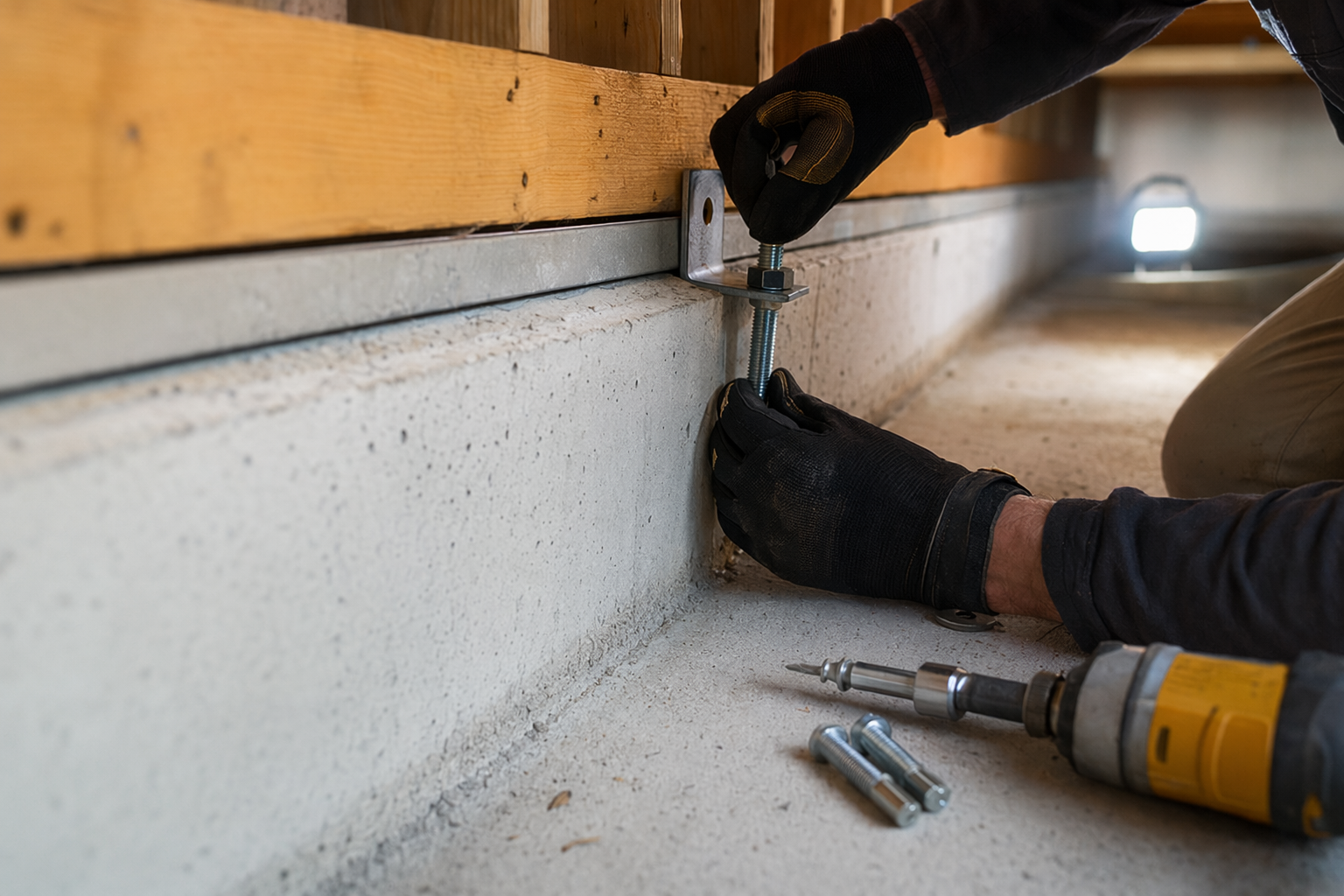
What foundation bolting is in simple terms
In simple terms, foundation bolting means using anchor bolts or similar approved hardware to connect the wood framing of a house more securely to the concrete foundation below it.
Many older houses were built before modern retrofit practices became common, so the connection between the house and the foundation may be limited, weak, or missing in some areas. A retrofit contractor may recommend adding bolts and related hardware to improve that connection.
People sometimes hear this work described as "bolting the house to the foundation." That is a useful shortcut, but the exact method, hardware, and scope vary by home. A contractor or licensed engineer can confirm what is present now and what, if anything, is appropriate for your house.

Why homes in earthquake areas often mention bolting
In earthquake areas, homeowners often talk about bolting because one concern during shaking is whether the house can shift in relation to its foundation. Bolting is one of the retrofit measures that may be discussed when a home is being evaluated.
This topic comes up especially with older wood-frame houses, including homes with short wood walls between the foundation and the main floor. If your home has that type of space, you may also want to read what is a cripple wall.
Bolting is only one part of the picture. Some homes may also have other earthquake-related issues, such as soft-story conditions in parts of the building, which is a different problem. See what is a soft-story building for that topic.
How bolting is commonly done in older houses
The exact approach depends on the house, access, and foundation condition, but in many older homes the work is done from a crawl space or basement area. The contractor inspects the wood member sitting on top of the foundation and the concrete itself, then identifies locations where approved anchors and connectors may be added.
Common parts of the job may include:
- drilling into the concrete foundation
- installing anchor bolts or approved expansion/epoxy-set anchors
- adding plate washers or other hardware where required by the design or scope
- replacing damaged wood in limited areas if needed for the connection
In some homes, bolting is paired with bracing work on short wood walls under the house. In other homes, the contractor may find that access, age, prior repairs, or foundation condition affects what can realistically be done. That is why an on-site assessment matters more than a general description online.
What bolting may and may not address
Bolting may address one specific issue: improving the connection between the house framing and the foundation. That can be an important part of a seismic retrofit plan for some houses.
But bolting does not automatically fix every earthquake weakness in a home. Depending on the building, other issues may still need evaluation, such as:
- weak or damaged cripple walls
- unreinforced masonry or chimney concerns
- soft-story conditions
- deterioration, rot, or prior unpermitted changes
It is also not something to assume you need just because a neighbor had it done. Two houses on the same street can have different foundations, different additions, and different retrofit needs. Only a licensed contractor or engineer who sees the property can tell you whether bolting is relevant and what scope, if any, makes sense.
Typical cost ranges and what affects the price
For a straightforward house, foundation bolting is often discussed in the low-thousands to mid-thousands of dollars, but the real price can vary widely depending on the home, region, and scope. If related work is needed, the total can be higher.
Price is commonly affected by:
- the size of the house and how much perimeter needs work
- whether there is a crawl space or other workable access
- foundation condition and whether repairs are needed first
- whether bolting is being combined with bracing or other retrofit work
- local labor, permit, and inspection requirements
Some homeowners in California check whether they qualify for programs such as the Earthquake Brace + Bolt grant, which may offer up to about $3,000 toward qualifying work. Availability and rules can change, so it is best to check whether you qualify rather than assume funding will apply.
How to find out whether your home should be evaluated
A practical first step is to gather basic information about your home: year built, address, whether you have a crawl space or basement, and any past retrofit paperwork you can find. Photos of the crawl space entry, foundation perimeter, and any visible wood framing may help a contractor understand the setup before a visit.
Then ask for an on-site evaluation from a licensed local retrofit contractor, and ask whether a structural engineer should also be involved. BedrockMatch can help you get matched, free with local contractors, but the decision about scope and price stays with you.
As you compare options, remember these basics:
- verify the contractor's license, bond, and insurance yourself
- ask what work is recommended now versus optional later
- get the scope, materials, permits, and price in writing
If you want more background before calling anyone, you can browse other retrofit topics in the help center.
Questions to ask a local retrofit contractor
When a contractor visits, it helps to ask clear, simple questions so you can compare answers. You do not need to know technical terms to ask for a plain-language explanation.
Useful questions include:
- What did you see under the house that makes you recommend bolting, or not recommend it?
- Is the foundation in a condition that can accept this work?
- Would this project also include cripple-wall bracing or other related work?
- Will permits or inspections be needed here?
- What is included in the written price, and what could change the cost later?
- How long will access to the crawl space or interior areas be needed?
A good contractor should be able to explain the proposed work in everyday language and put the scope in writing. If two bids describe very different scopes, ask each contractor to explain why before you decide who to hire.
Always verify a contractor's license, bond, and insurance, and confirm the scope and price in writing before any work starts.