What is a soft-story building, and why does it matter?
A soft-story building is a home or small building with one level that is much weaker or more open than the floors above it. This matters because, in a strong earthquake, that weaker level may move more than the rest of the structure and can be more vulnerable to damage.
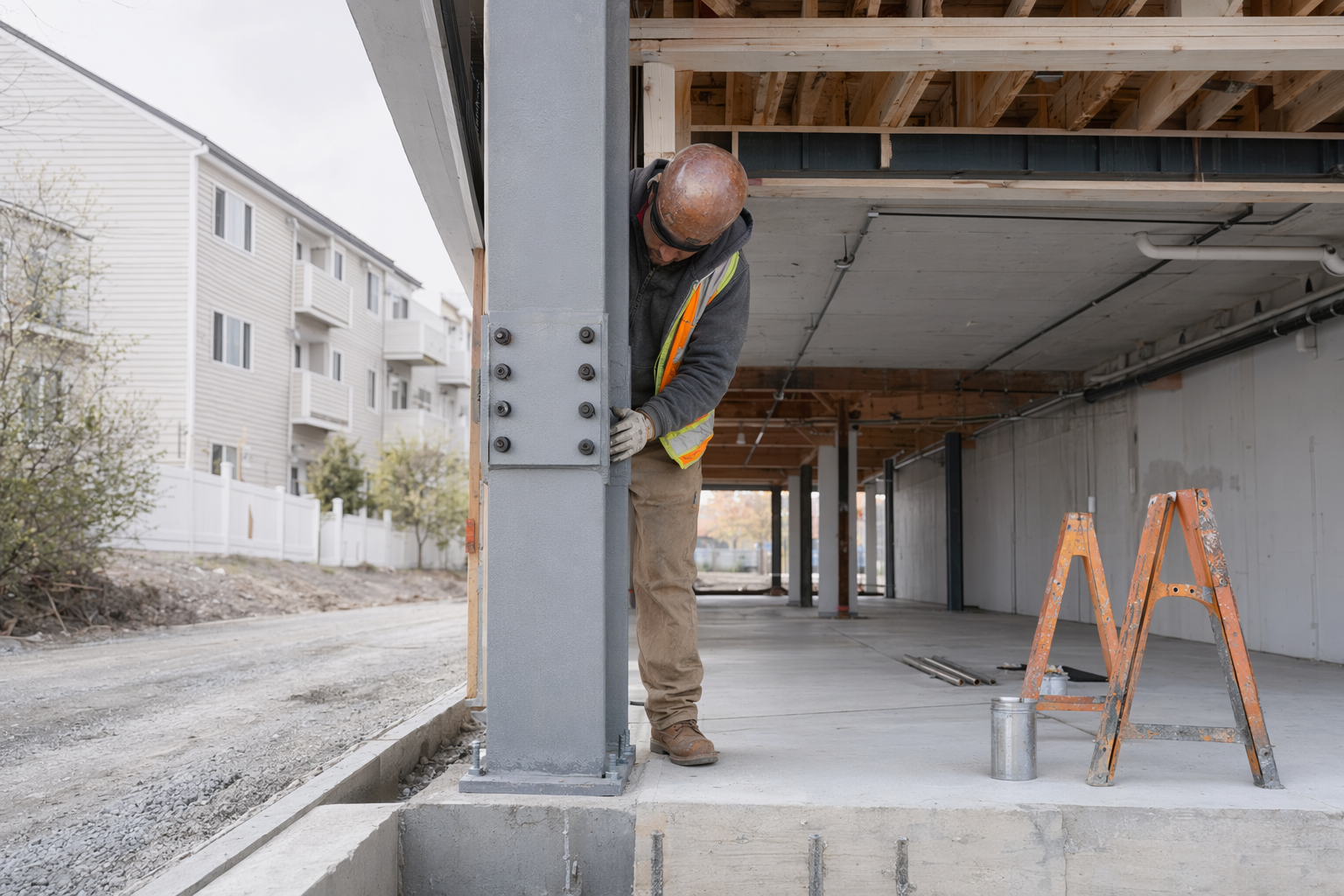
What “soft-story” means in plain language
In plain language, a soft story is a floor that does not resist side-to-side shaking as well as the floors above it. Often this is the first floor, where there may be large openings for parking, wide windows, or fewer walls.
Think of it like a stack where one level is less stiff than the others. During an earthquake, that weaker level may sway more, which can put extra stress on posts, walls, and connections.
Not every home with an open ground floor is automatically a soft-story building. Whether this applies to your property depends on the building's layout, age, materials, and condition, and a licensed professional needs to evaluate it on site.

Why some homes and small buildings have this weakness
Many older homes and small apartment buildings were designed before current seismic practices became common. Some were built with tuck-under parking, large garage openings, or remodeled lower levels that removed or changed walls.
A building may also become more vulnerable over time if there is rot, termite damage, past unpermitted work, or weak connections between framing members. Even small changes can affect how forces move through the structure.
Common situations that can contribute include:
- open parking or carports below living space
- a large garage door opening on one side
- fewer interior walls on the first floor
- older framing details or aging materials
A contractor or licensed engineer can confirm whether these conditions create a real soft-story concern for your building.
Common features homeowners often notice
Homeowners often first hear the term when they notice a very open first floor and more enclosed upper floors. In small multifamily buildings, this may look like parking at street level with apartments above.
In single-family homes, clues can include a large garage opening, long stretches of wall with few braces, or a first level that feels much more open than the rest of the house. That does not mean the home definitely needs a specific retrofit, but it can be worth asking about during an inspection.
If you are trying to understand related parts of the structure, you may also want to read about anchor bolts for a house and browse other topics in the help center.
Why earthquakes can be harder on soft-story structures
Earthquakes push a building from side to side. If one story is much weaker or more flexible than the others, that level can take a larger share of the movement.
When that happens, damage may concentrate at the open or weaker story instead of being spread more evenly through the building. This can affect framing, wall finishes, posts, and the connections that tie the structure together.
That does not mean every soft-story building will fail, and no one can promise how a building will perform in a future earthquake. The actual risk depends on the quake, the soil, the building's condition, and the details of its construction.
How a licensed professional evaluates a property
A proper evaluation usually starts with an on-site visit by a licensed contractor experienced in seismic work, and in some cases a licensed engineer may also be involved. They look at the first-floor layout, wall lengths, openings, framing, connections, and the overall load path.
They may also review visible signs of damage, prior alterations, and whether the building is anchored and braced in other important areas. For example, if your home has cripple walls or an older foundation connection, related work such as foundation bolting may be discussed as part of a broader seismic plan.
A typical evaluation may include:
- measuring wall openings and wall lengths
- checking posts, beams, and hold-down areas
- looking for rot, cracks, or past repairs
- explaining what they can confirm on site and what may require engineering
If cost is a concern, ask whether any public programs may apply. For some qualifying homes, you can check whether programs like California's Earthquake Brace + Bolt or FEMA mitigation grants may help with eligible work.
What retrofit options may be discussed after an inspection
After an inspection, the professional may discuss ways to strengthen the weaker story so it can better resist side-to-side forces. The right approach depends on the property, and only a licensed professional who has seen the building can recommend the actual scope.
Possible options that may be discussed include:
- adding specially designed shear walls
- strengthening existing wall lines or narrow wall sections
- improving connections between framing members
- adding hardware such as hold-downs or other anchorage
- coordinating soft-story work with other seismic upgrades
Some buildings may need only limited work, while others may need a more involved retrofit. Pricing varies widely by access, materials, finishes, permits, and whether engineering is required. Get the scope and price in writing, and compare more than one bid before you decide.
What to ask contractors before you decide
Before hiring anyone, ask clear questions and take notes. You stay in control of the decision, and you should verify the contractor's license, bond, and insurance yourself.
Useful questions include:
- What exactly did you observe on site?
- What work are you recommending, and why?
- Will a licensed engineer be involved?
- What permits may be needed?
- What is included in the written price, and what is not?
- How will you protect finished areas during the job?
- What timeline do you expect?
It is also reasonable to ask whether there are simpler or phased options, and whether the contractor has experience with buildings like yours. If you want to compare local companies, you can get matched, free with vetted contractors, then review written proposals at your own pace.
Always verify a contractor's license, bond, and insurance, and confirm the scope and price in writing before any work starts.