What Is a Cripple Wall on a House?
A cripple wall is a short wall between a home's foundation and the floor above, usually around a crawl space. Many homeowners only hear the term during a retrofit estimate, but it helps to know what it means before you compare bids.
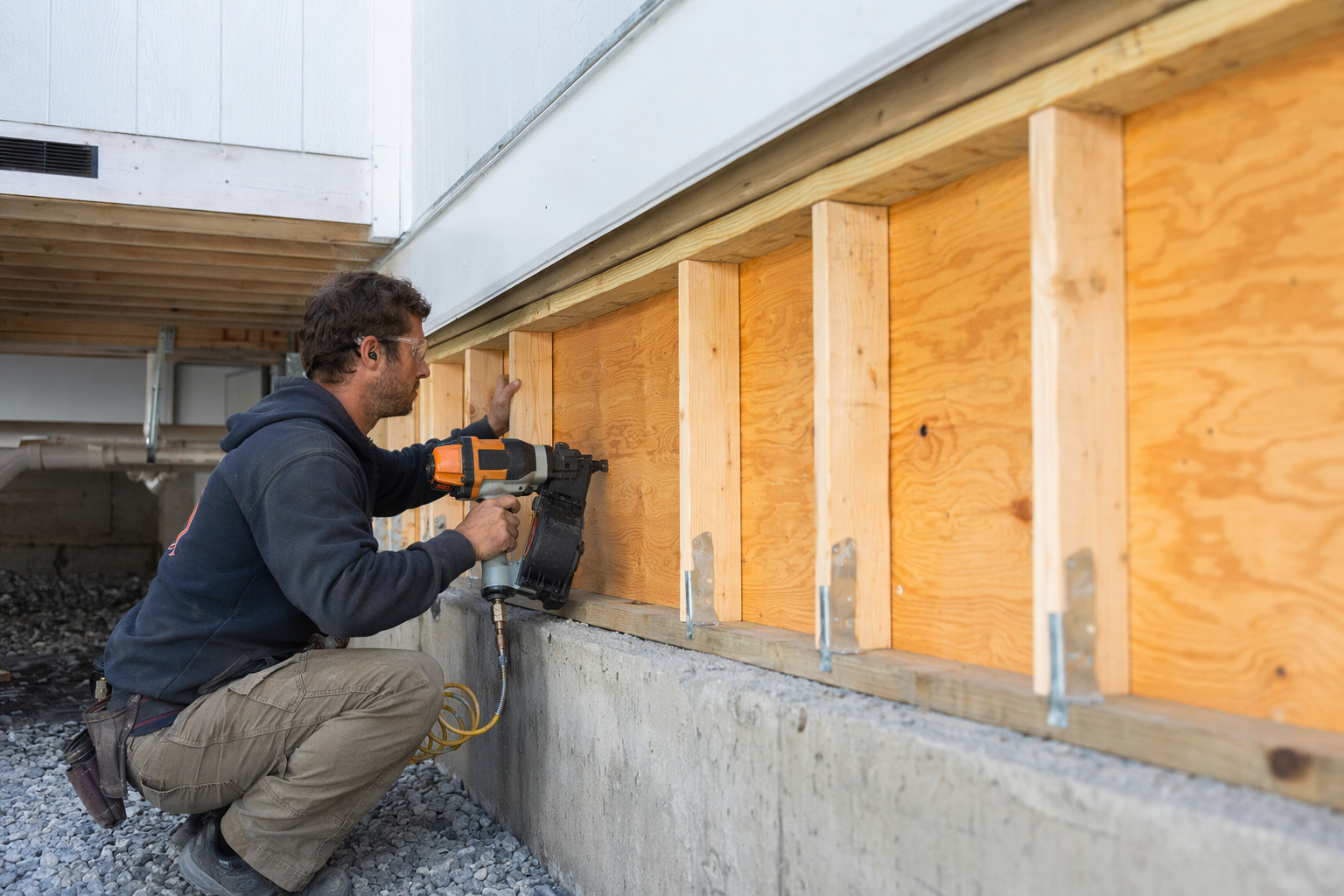
Short answer: what a cripple wall is
A cripple wall is a short wood-framed wall that sits on top of the foundation and supports the floor of the house. It creates extra height between the ground and the main floor, often forming part of a crawl space.
These walls are common in older homes, especially where the house is raised above grade instead of sitting low on a slab. A cripple wall can be a normal part of construction, but its condition and bracing matter. Whether it needs work at your home depends on an on-site assessment by a licensed contractor or engineer.
Homeowners sometimes confuse a cripple wall with other weak first-floor conditions, such as a soft-story building. They are different issues, even though both can come up in seismic retrofit conversations.

Where cripple walls are usually found in a house
Cripple walls are usually found around the perimeter of a crawl space or in short sections under parts of the house where the floor sits above the foundation. You may see them if your home has a raised foundation and a crawl space access door or hatch.
They are often found in older wood-frame homes in earthquake-prone parts of the West Coast, but some raised homes in storm and flood areas may also have short framed walls or similar support areas that need close review. The exact construction can vary by age of home, region, and past remodeling.
If you are not sure what type of foundation you have, a contractor can confirm it during a site visit. BedrockMatch can help you get matched, free with local retrofit contractors, but the contractor should inspect the actual framing before recommending any work.
Why these walls matter in earthquakes and storms
In an earthquake, a weak or unbraced cripple wall may sway or rack from side to side. If that happens, the house above can shift off line, and other parts of the structure may also be affected. In storm conditions, high wind and repeated moisture exposure can also make existing weaknesses more serious, depending on the home's design and condition.
That does not mean every house with a cripple wall is unsafe, or that every cripple wall needs the same upgrade. A licensed contractor or engineer needs to look at the wall height, framing, fasteners, sheathing, foundation connection, and any past damage before saying what work, if any, is appropriate.
Typical retrofit discussions may include items such as:
- adding approved plywood sheathing
- improving connections to the foundation
- fastening framing members more securely
- addressing rot, insect damage, or moisture issues first
If you live in California, it may be worth checking whether you qualify for programs such as Earthquake Brace + Bolt, which can provide up to about $3,000 toward certain qualifying work.
Common signs homeowners notice around a crawl space
Most homeowners do not inspect a cripple wall regularly. They usually notice related problems indirectly, or they spot concerns while looking into the crawl space during plumbing, pest, or moisture work.
Common things people notice include:
- leaning or out-of-plumb short walls
- cracked or damaged wood panels
- loose or missing fasteners
- water stains, rot, or mold smells
- uneven floors above the crawl space
- old bracing that looks patchwork or incomplete
These signs do not prove what repair is needed. For example, an uneven floor can have several causes. A contractor can inspect the crawl space and explain what they see in writing.
How contractors typically evaluate a cripple wall
A retrofit contractor usually starts with a visual inspection of the crawl space and foundation area. They may look at the wall height, stud spacing, condition of the wood, how the framing connects to the mudsill and foundation, and whether there is existing bracing or sheathing.
They may also note access issues, plumbing or ductwork in the way, signs of moisture, and whether other retrofit work could be related, such as hurricane straps or foundation anchoring. The final scope should match the actual house, not a one-size-fits-all template.
Ask the contractor to explain:
1. what they observed
2. what work they recommend
3. what is optional versus necessary to complete their scope
4. what permits or engineering, if any, may be needed in your area
If the project is large, unusual, or includes hidden damage, you may want to ask whether a licensed structural engineer should also review the home.
Questions to ask before hiring a retrofit contractor
Before you sign anything, compare more than price. Make sure the contractor explains the scope clearly and gives you enough detail to compare bids fairly.
Good questions to ask include:
- Are you licensed for this type of work in my state?
- Are you bonded and insured, and can you provide proof?
- What exactly will you install or repair?
- What is included in the written price, and what could change it?
- Will you handle permits if they are required?
- How will you protect plumbing, wiring, and ductwork in the crawl space?
- What warranty do you offer on your workmanship?
You should verify the contractor's license, bond, and insurance yourself, and confirm scope, materials, timeline, and price in writing. You can also browse more homeowner topics in the help center.
When to get a professional inspection
It is smart to get a professional inspection if you know your home has a raised foundation, if you have visible crawl-space damage, or if you are already planning seismic or storm-related upgrades. It is also reasonable to ask for an inspection before buying an older home, after a quake or major storm, or when a contractor working on something else flags a concern.
A prompt inspection can help you understand your options before small issues become more expensive. But only an on-site professional can say whether cripple-wall work applies to your home and what scope makes sense.
If you want local options, BedrockMatch can help you get matched, free. Homeowners do not pay to be matched, and you stay in control of who, if anyone, you hire.
Always verify a contractor's license, bond, and insurance, and confirm the scope and price in writing before any work starts.