What can happen if a house is not bolted to its foundation in an earthquake?
If a wood-frame house is not connected well to its foundation, strong shaking can let the house slide or shift. What happens next depends on the age of the home, the way it was built, the soil, and the strength and length of the earthquake.
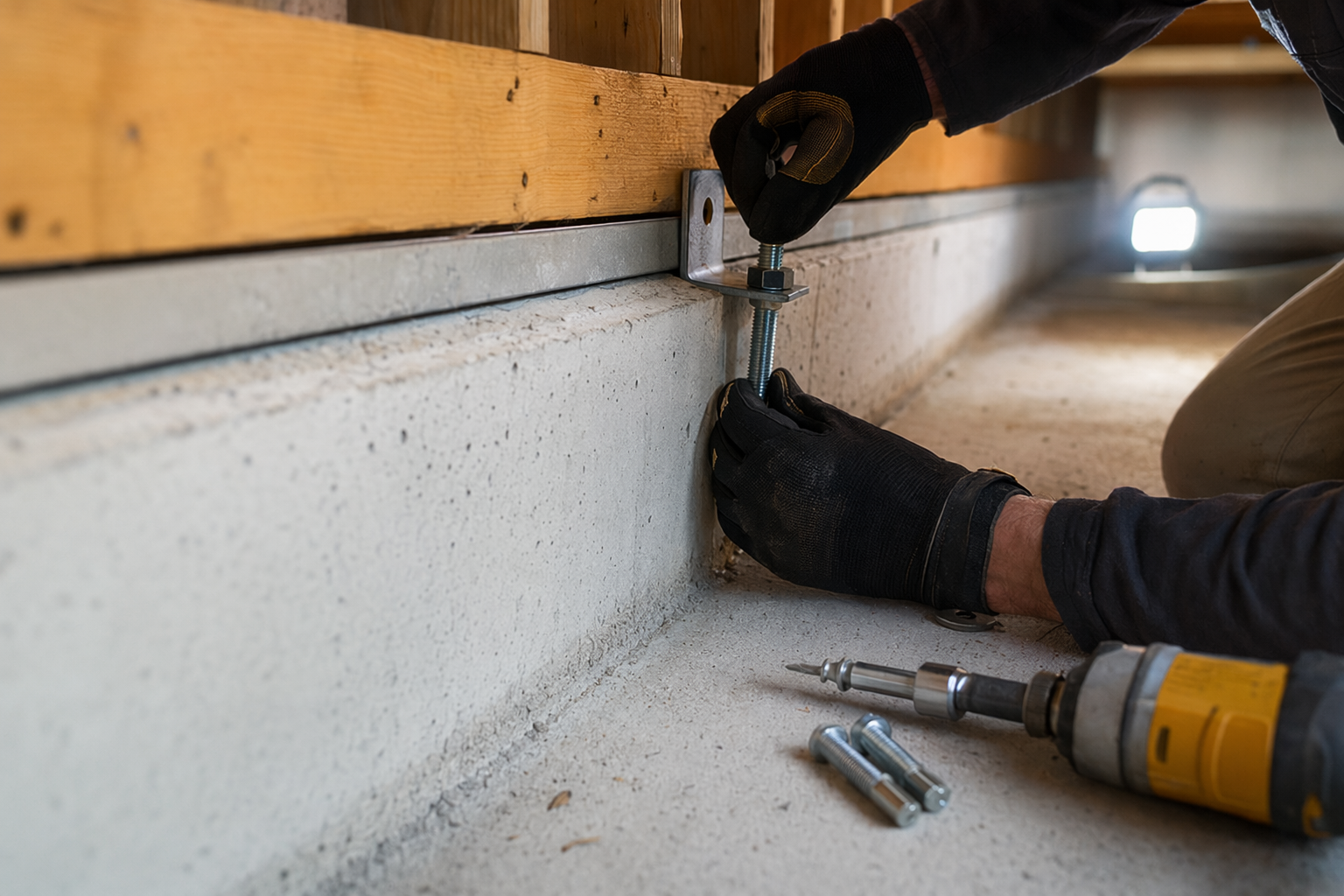
Why foundation bolts matter during shaking
Foundation bolts are metal anchors that help connect the wood framing of a house to the concrete foundation. In an earthquake, that connection can help the house and foundation move together instead of separately.
Without a strong connection, shaking can push the house sideways across the foundation or damage the short wall area between the foundation and the main floor. Contractors often talk about both parts together: bolting the house to the foundation and, when needed, strengthening the cripple wall.
This does not mean every older house is unsafe or that every home needs the same work. A licensed contractor or engineer has to look at the home in person to confirm how it is built and what, if anything, may be recommended.

What can happen when a house is not bolted down
In stronger shaking, an unbolted house may shift enough to crack finishes, pull apart utility connections, or leave parts of the framing out of position on the foundation. In some homes, the movement is small. In others, it can be more serious.
Typical problems contractors look for include:
- the wood sill plate not being anchored to the concrete
- the house sliding a few inches or more on the foundation
- damage to cripple walls under the main floor
- steps, porches, chimneys, or garages separating from the house
- plumbing, gas, or electrical connections being stressed or broken
The exact result varies a lot. The size of the quake, the condition of the home, past remodels, and the type of foundation all matter. That is why broad internet advice can only go so far.
Typical signs of movement or damage after an earthquake
After noticeable shaking, homeowners sometimes see signs that the structure moved, but some signs are subtle and some damage is hidden in the crawl space. Cracks in drywall alone do not prove the house slid off its foundation, and a home can also have movement below the floor that is not obvious from inside.
Possible signs worth asking about include:
- new gaps between the floor and baseboards
- doors or windows that suddenly stick
- leaning or shifted steps at the entry
- cracks in interior finishes near corners or around door frames
- separation where the house meets a porch, chimney, or garage slab
- visible movement in the crawl space or missing anchors
If you suspect movement, a contractor can inspect the crawl space and visible foundation areas. You can also read more about what a visit usually includes at what is an earthquake retrofit inspection.
Which older homes are more likely to be unbolted
Many older wood-frame homes were built before modern anchorage details became common. Homes with raised foundations and crawl spaces are often the ones people ask about, especially if they were built decades ago and have not had a seismic upgrade.
That said, age alone does not answer the question. Some older homes were retrofitted later. Some have partial upgrades. Some have additions built at different times, so one part of the house may be anchored differently than another.
Homes that may deserve a closer look often include:
- older raised-foundation homes with crawl spaces
- homes with short wood stud walls between foundation and floor
- houses that have had additions or major remodeling
- homes in earthquake-prone regions with no clear retrofit records
If your home is a manufactured or mobile home, the risks and anchoring details can be different. See is my mobile home at risk in an earthquake.
How contractors usually evaluate this question
A contractor usually starts with an on-site look at the accessible crawl space, foundation perimeter, and any visible framing at the base of the house. They are trying to confirm what is there now, not guess from the year built alone.
They may look for anchor bolts, mudsill condition, plywood bracing on cripple walls, signs of past movement, and whether access is tight or straightforward. They may also note drainage, moisture, or rot, because those conditions can affect the scope of work.
A typical evaluation often includes:
- whether existing anchor bolts are present and spaced consistently
- whether the crawl space has cripple walls and how tall they are
- whether there is damage, decay, or termite history at the sill area
- how easy the crawl space is to access for labor and materials
- whether permits may be required by the local building department
If the home appears to need engineering because of unusual conditions, additions, steep slopes, or major damage, ask whether a licensed engineer should review it. You can also get matched, free to speak with local contractors who handle this type of work.
What retrofit options may be discussed after an inspection
After an inspection, a contractor may discuss several possible upgrade options. The most common conversation is about adding foundation anchors and, if needed, bracing the cripple walls with plywood or similar approved methods. The exact scope depends on the home and should be confirmed on site.
In some cases, the discussion may also include replacing damaged wood, improving access panels, or addressing conditions that affect the retrofit work, such as moisture or blocked crawl-space access. A contractor can explain what is part of the seismic scope and what is separate repair work.
Cost varies widely by home size, access, existing conditions, and region. For many straightforward raised-foundation homes, homeowners often hear rough ranges from a few thousand dollars to several thousand more when extra repairs, low clearance, or added bracing are involved. These are only typical illustrative ranges, not quotes.
If you live in California, check whether you qualify for programs such as Earthquake Brace + Bolt, which may help with eligible retrofit costs. Some homeowners also check whether FEMA-related hazard mitigation funding is available in their area. Program rules and availability can change.
How to compare bids, permits, and contractor credentials
When you compare bids, look past the total price. Make sure each bid describes the same scope, such as how many anchors are proposed, whether cripple-wall bracing is included, what repairs are excluded, and who handles permit paperwork.
Before you hire anyone, verify the contractor's license, bond, and insurance yourself. Ask for the permit approach in writing, the estimated schedule, payment terms, and how change orders will be handled if hidden conditions are found.
A practical checklist:
- compare written scope line by line, not just price
- ask whether permit fees are included or separate
- confirm who will do the work: employees or subs
- ask for photos or notes from the crawl-space inspection
- confirm cleanup, debris removal, and patching expectations in writing
- verify license, bond, and insurance directly with your state or local sources
You stay in control of who to hire and whether to move forward. If you want more background before talking to companies, visit our help center.
Always verify a contractor's license, bond, and insurance, and confirm the scope and price in writing before any work starts.