What is a shear wall?
A shear wall is a wall built to help a house resist side-to-side force. Homeowners often hear this term during earthquake or wind retrofit conversations, but whether it applies to your house depends on an on-site assessment by a licensed professional.
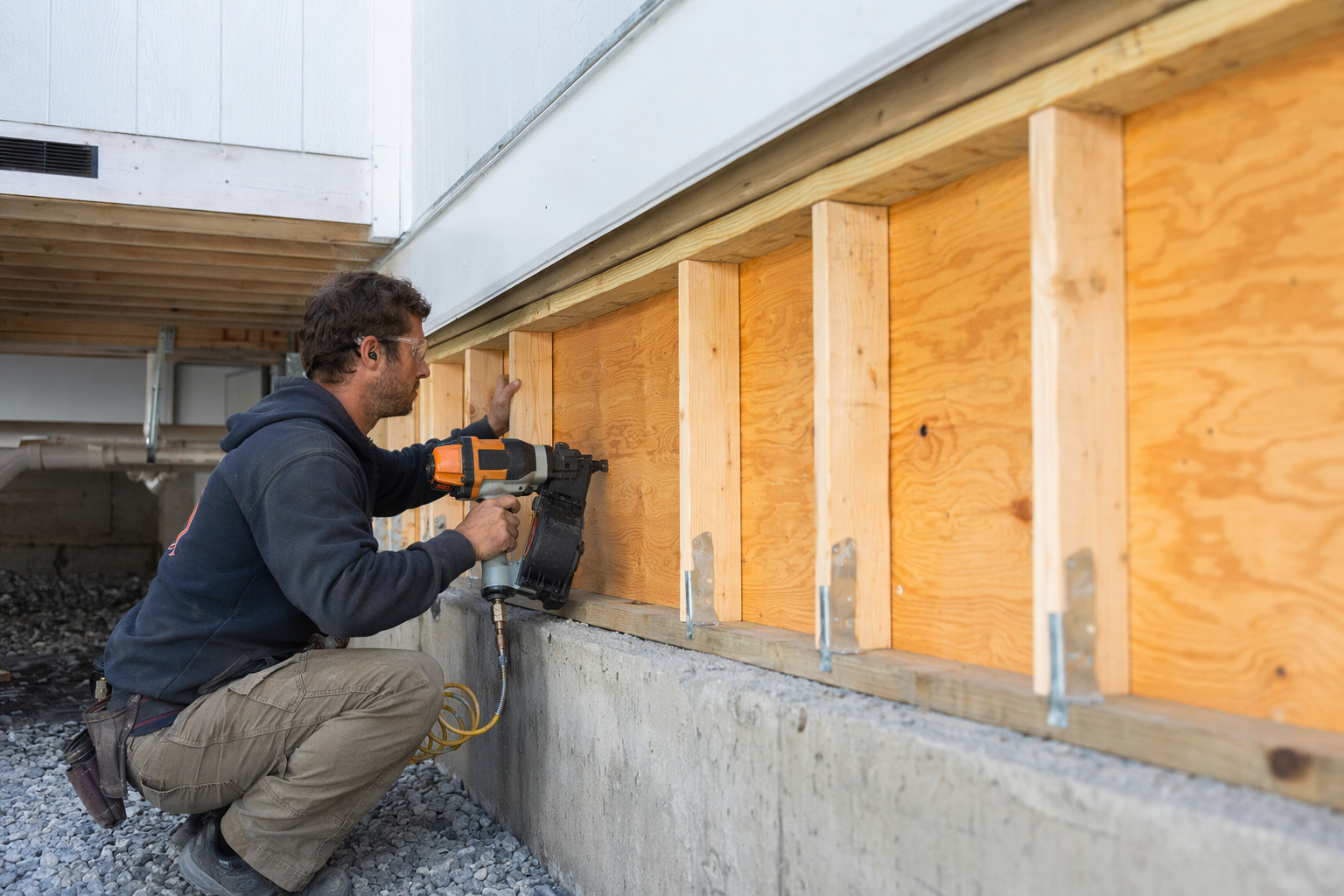
The short answer: what a shear wall does
A shear wall helps a house stay more stable when force pushes it sideways. That force can come from earthquake shaking, strong wind, or storm pressure.
Unlike a basic interior partition wall, a shear wall is meant to transfer side loads down to the floor and foundation through specific materials and connections. A contractor or engineer may talk about wood structural panels, nailing patterns, anchors, and hardware that help the wall act as one stronger system.
In plain language, a shear wall is not just "any wall." It is a wall assembly designed and connected to resist racking, which is the leaning or twisting motion that can happen when a house is pushed from the side.

How a shear wall helps during shaking or high winds
During an earthquake or wind event, homes do not just move up and down. They can also shift sideways. A shear wall helps the structure handle that sideways movement in a more controlled way.
This can be especially important in parts of a house with large openings, weak garage fronts, or layouts that do not have enough stiffness in one direction. A contractor can confirm whether that issue exists in your home after looking at the framing, foundation, and load path.
A shear wall is only one part of a larger system. Other parts may include hold-downs, foundation bolting, and connections between framing members. The right combination depends on the home, region, and scope of work.
Where shear walls are commonly found in a house
Shear walls are often located where they can best help transfer force from the roof or upper floors down to the foundation. In many homes, they may be discussed around garage openings, cripple wall areas, exterior walls, or selected interior walls.
In some retrofit projects, a contractor may recommend strengthening an existing wall rather than adding a completely new wall. In other cases, they may say a different retrofit approach makes more sense. There is no one-size-fits-all answer.
Common places a contractor may review include:
- Walls beside a garage door
- Short walls in a crawlspace or basement area
- Exterior wall lines with few openings
- Areas where upper-story loads need better support
How shear walls differ from regular walls and bracing
A regular wall may simply divide rooms or support finishes like drywall. A shear wall is different because it is intended to resist sideways force and is built or upgraded with specific structural details.
Homeowners also hear terms like bracing, blocking, anchors, and straps. These are related, but they are not all the same thing. For example, bracing can refer to several methods used to stiffen parts of a structure, while a shear wall usually means a more complete wall assembly designed to resist lateral load.
A simple comparison is:
- Regular wall: mainly separates spaces or supports finishes.
- Bracing: a broad term for added support against movement.
- Shear wall: a wall assembly intended to resist side force as part of the home's structural system.
The exact terminology and design should come from a licensed engineer or qualified contractor who has seen the home in person.
Signs a contractor may look at during an inspection
A contractor inspecting for possible retrofit work may look for conditions that suggest the house could use better lateral support. That does not automatically mean your home needs a shear wall. It means they are checking how the structure is put together.
They may pay attention to things like:
- A large garage opening with limited wall space on the sides
- Older framing details or weak connections to the foundation
- Crawlspace or cripple wall conditions
- Past movement, leaning, or cracking that needs closer review
- Remodels that changed wall layout or opening sizes
They may also look at related safety items while discussing overall retrofit work, such as water heater strapping. Final recommendations should be confirmed in writing, with scope and price clearly listed.
Common retrofit situations where shear walls may be discussed
Shear walls are often discussed in retrofit conversations for older homes, homes with soft or weak garage fronts, and homes where the existing wall layout does not provide enough resistance in a key direction. In some storm-prone areas, they may also come up when contractors evaluate wind resistance upgrades.
A common example is a house with a large garage door and only narrow wall sections at the front. Another example is a home where other retrofit items are already being considered, such as foundation anchorage or crawlspace strengthening. Whether shear wall work is appropriate depends on the home's age, shape, framing, and existing condition.
Costs vary widely by region and scope. For some homes, this may be part of a broader retrofit project rather than a stand-alone job. If you are in California, check whether you qualify for programs like Brace + Bolt, which may help with certain seismic retrofit costs for qualifying homes. If you want to compare local options, you can get matched, free.
Questions to ask before you hire anyone
Before you sign a contract, ask the contractor to explain why they are recommending shear wall work for your house and what problem they believe it addresses. A good explanation should be specific to your home, not just a generic sales pitch.
Helpful questions include:
- What conditions did you see on-site?
- Is this recommendation based on an engineer's design or your field assessment?
- What exact materials and hardware are included?
- Will permits be needed in my area?
- What parts of the wall, finishes, or garage area will be opened or repaired?
- What is excluded from the price?
- Can you put the full scope, schedule, and payment terms in writing?
Also verify the contractor's license, bond, and insurance yourself. The homeowner keeps control over who to hire, and it is smart to compare more than one written proposal. If you want more background first, browse our help center.
Always verify a contractor's license, bond, and insurance, and confirm the scope and price in writing before any work starts.