What is a hold-down in a seismic retrofit?
A hold-down is one of the metal connectors a contractor may use in a seismic retrofit to help certain walls stay attached to the foundation when the house shakes. Not every home needs one, and whether it applies to your house depends on an on-site assessment by a licensed contractor or engineer.
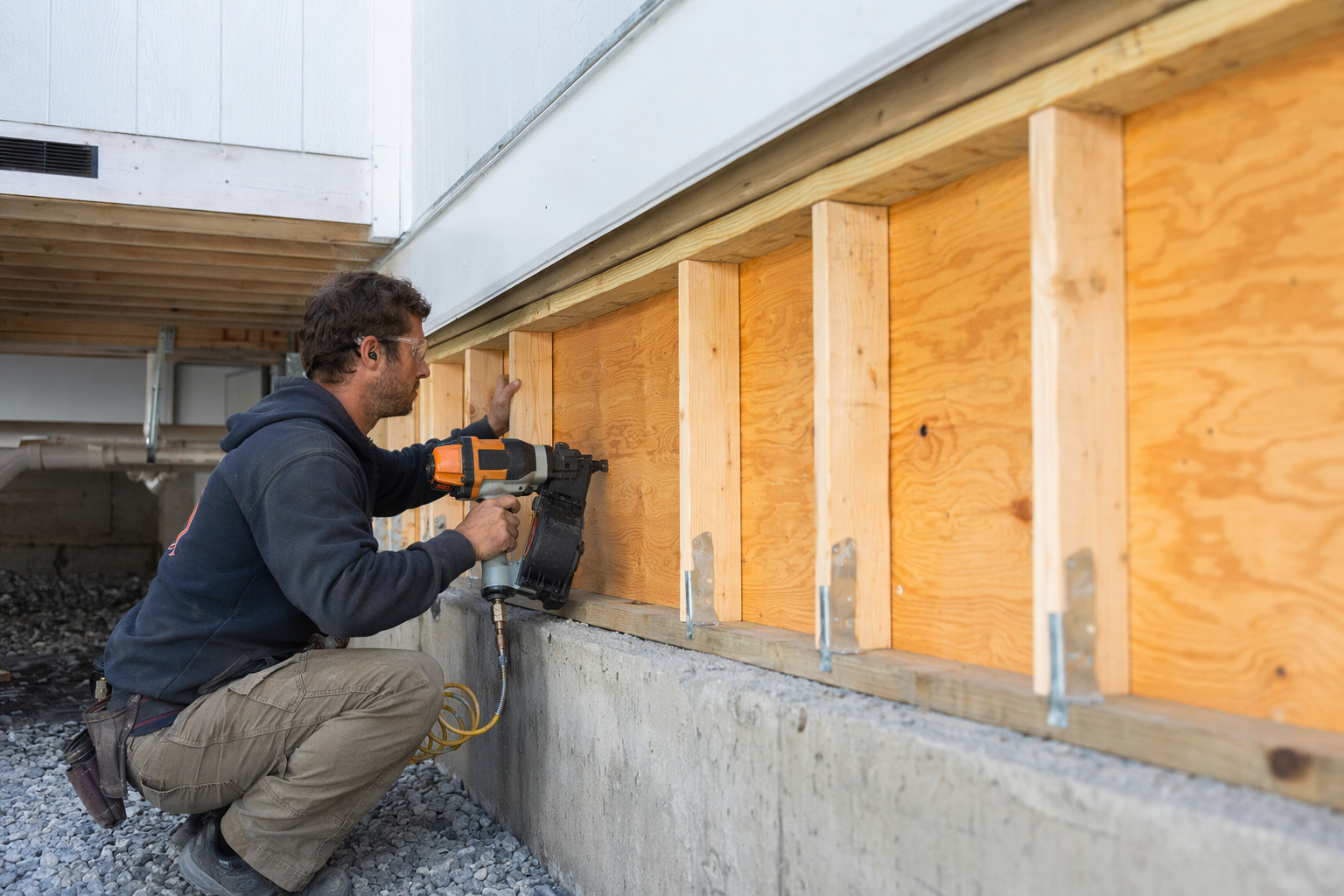
The short answer: what a hold-down is
A hold-down is a heavy metal connector that helps tie part of a wood-framed wall down to the foundation or another strong framing member. In simple terms, it helps resist the wall end lifting upward during earthquake movement.
You will usually not notice a hold-down unless a contractor points it out in a crawl space, basement, or garage wall. It is usually installed with bolts or threaded rods and is designed to work as part of a larger retrofit system, not as a stand-alone fix.
If you are comparing retrofit proposals, it helps to know that "hold-down" is a hardware term, not a complete retrofit by itself. A contractor can confirm whether your home would benefit from one after inspecting the framing, foundation, and access conditions.

What problem a hold-down is meant to address
During an earthquake, a braced wall can be pushed from side to side. When that happens, the ends of the wall may try to rock or lift at one end while pressing down at the other. A hold-down is meant to help control that uplift at the wall end.
This matters most where the wall is carrying lateral force and needs a stronger connection path to the foundation. Without the right connectors, the wall may not perform the way the retrofit designer or contractor intends.
A simple way to think about it is:
- plywood or other bracing helps the wall resist sideways movement
- anchor bolts help attach the wall base to the foundation
- hold-downs help resist uplift at critical wall ends
The exact need depends on the house layout, foundation type, cripple walls, openings, and existing connections. A licensed engineer or retrofit contractor should decide that after seeing the home in person.
Where hold-downs are commonly installed
Hold-downs are often found at the ends of braced wall sections, especially in crawl spaces or basements where a contractor is strengthening short wood-framed cripple walls. They may also be used in some garage or lower-level wall areas where there are large openings and limited wall length.
Common locations can include:
- at the end of a plywood-braced cripple wall panel
- near garage door openings where short wall segments carry force
- in basement or raised-foundation areas with accessible framing
Not every raised foundation house has hold-downs, and not every retrofit proposal needs them. Some homes mainly need foundation bolting and selected bracing, while others may need additional connectors depending on the framing details.
If you are not sure what part of your house a proposal refers to, ask the contractor to mark the exact wall segments on a sketch or photo before you approve the work.
How hold-downs differ from anchor bolts and plywood bracing
These items are related, but they do different jobs.
Anchor bolts attach the wood sill plate to the concrete foundation. Plywood bracing helps a wall act more like a stiff panel against sideways force. Hold-downs are connectors used at key wall ends to help resist uplift or overturning.
In many retrofit projects, these parts work together. A contractor may install bolts along the base, plywood on the face of the wall, and hold-downs at one or both ends where the wall needs a stronger tie-down connection.
That does not mean every braced wall automatically needs hold-downs. The right combination depends on the house and the retrofit design. If you are also looking at other earthquake-safety items, our help center has plain-language articles on related topics.
When a contractor might recommend one
A contractor might recommend hold-downs when a wall is being braced and the wall ends need added uplift resistance. This can come up in older homes with raised foundations, homes with weak cripple walls, or homes with large openings that leave only short wall segments to do the work.
A recommendation may also depend on things like:
- the height and condition of the cripple wall
- how much continuous wall length is available
- the condition of the existing sill plate and foundation
- whether the framing is accessible without major finish removal
Only an on-site assessment can tell whether that recommendation makes sense for your house. If cost is a concern, ask whether the proposed work may fit a grant-eligible scope and check whether you qualify for programs such as California's Brace + Bolt or certain FEMA-supported mitigation programs.
If you want estimates from local retrofit specialists, you can get matched, free. BedrockMatch is a matching service, and you choose whether to hire anyone.
What installation usually involves
Installation usually starts with access and inspection. The contractor looks at the foundation, sill plate, studs, sheathing plan, and any obstructions such as pipes, ducts, or limited crawl space room. They may need to remove small areas of finish in some cases, but many raised-foundation jobs are done from the crawl space.
Typical steps may include:
- locating the braced wall segment and wall ends
- drilling and installing anchors or threaded rods into concrete where needed
- fastening the hold-down hardware to framing members
- adding or coordinating plywood bracing and other connectors
- checking clearances and tightening hardware to the manufacturer's requirements
The exact method varies by hardware type, foundation condition, and wall configuration. Ask for the scope in writing, including what is included, what access is needed, and whether patching or cleanup is part of the price.
If your retrofit list also includes non-structural safety work, you may want to read about water heater strapping or masonry chimney bracing.
Questions to ask before you approve the work
Before signing, ask the contractor to explain in plain language why the hold-downs are being proposed and where they will go. You do not need to know engineering terms, but you should understand the basic purpose and the exact locations.
Useful questions include:
- What problem are the hold-downs solving in my house?
- Where exactly will they be installed?
- What other retrofit parts are included with them?
- Will this require permits in my area?
- What access or finish removal is needed?
- What is the total price, and what is excluded?
- Who is responsible for cleanup, patching, and inspection coordination?
Also verify the contractor's license, bond, and insurance yourself, and make sure the final scope and price are written clearly. The homeowner keeps control over who to hire and what work to approve.
Always verify a contractor's license, bond, and insurance, and confirm the scope and price in writing before any work starts.